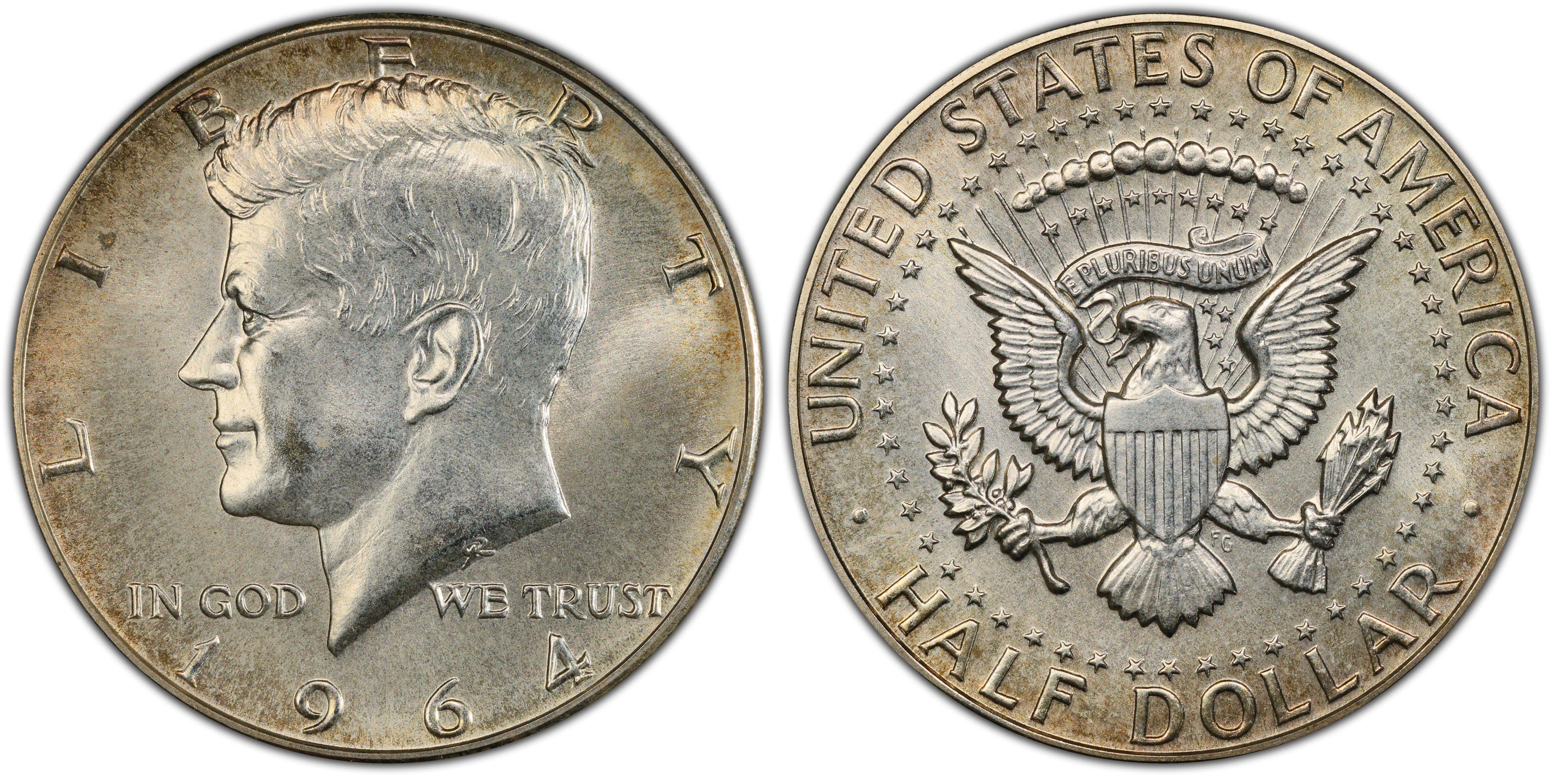
1964 50C SMS (Special Strike)
Series: (None)
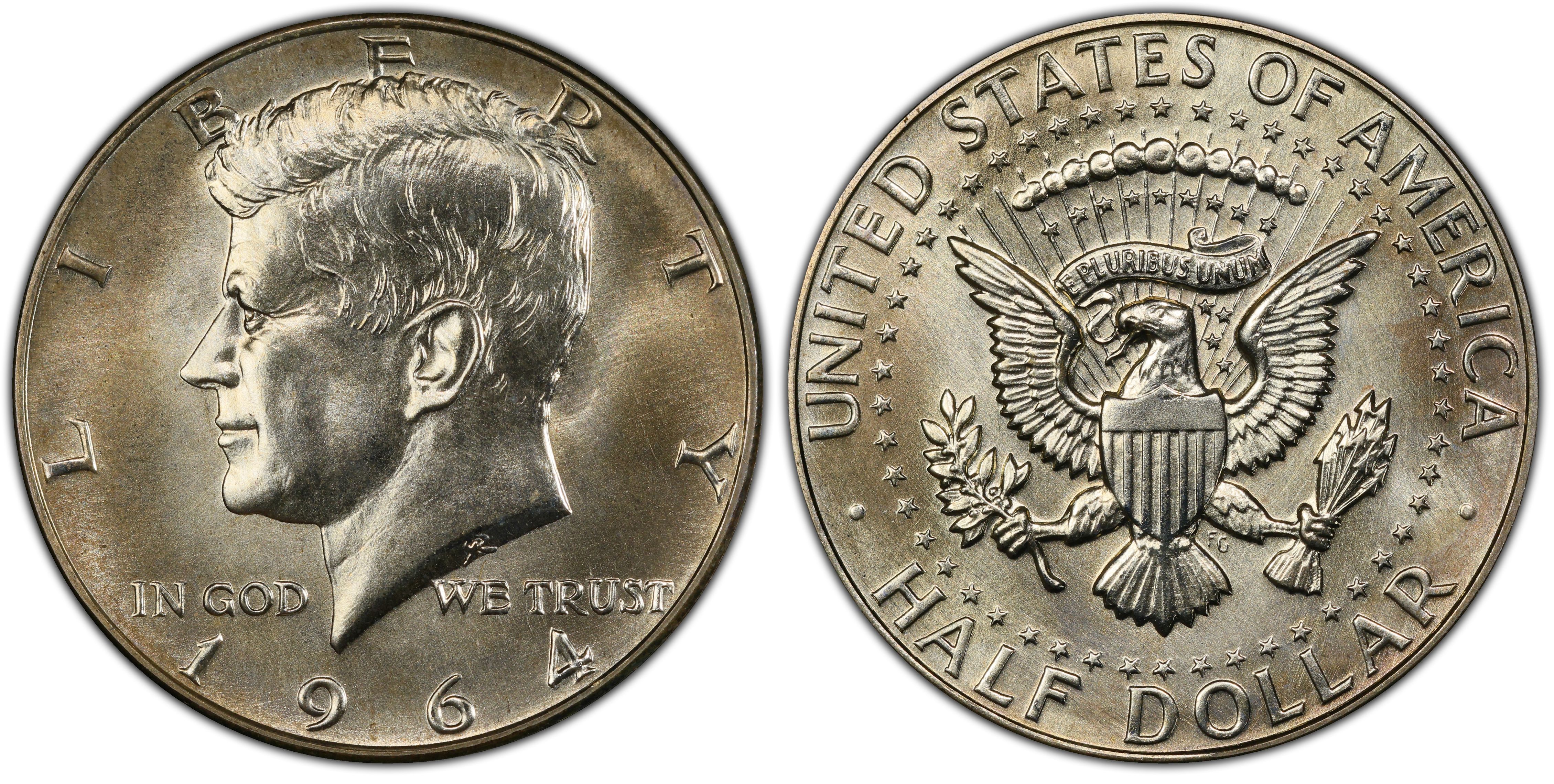
PCGS SP69
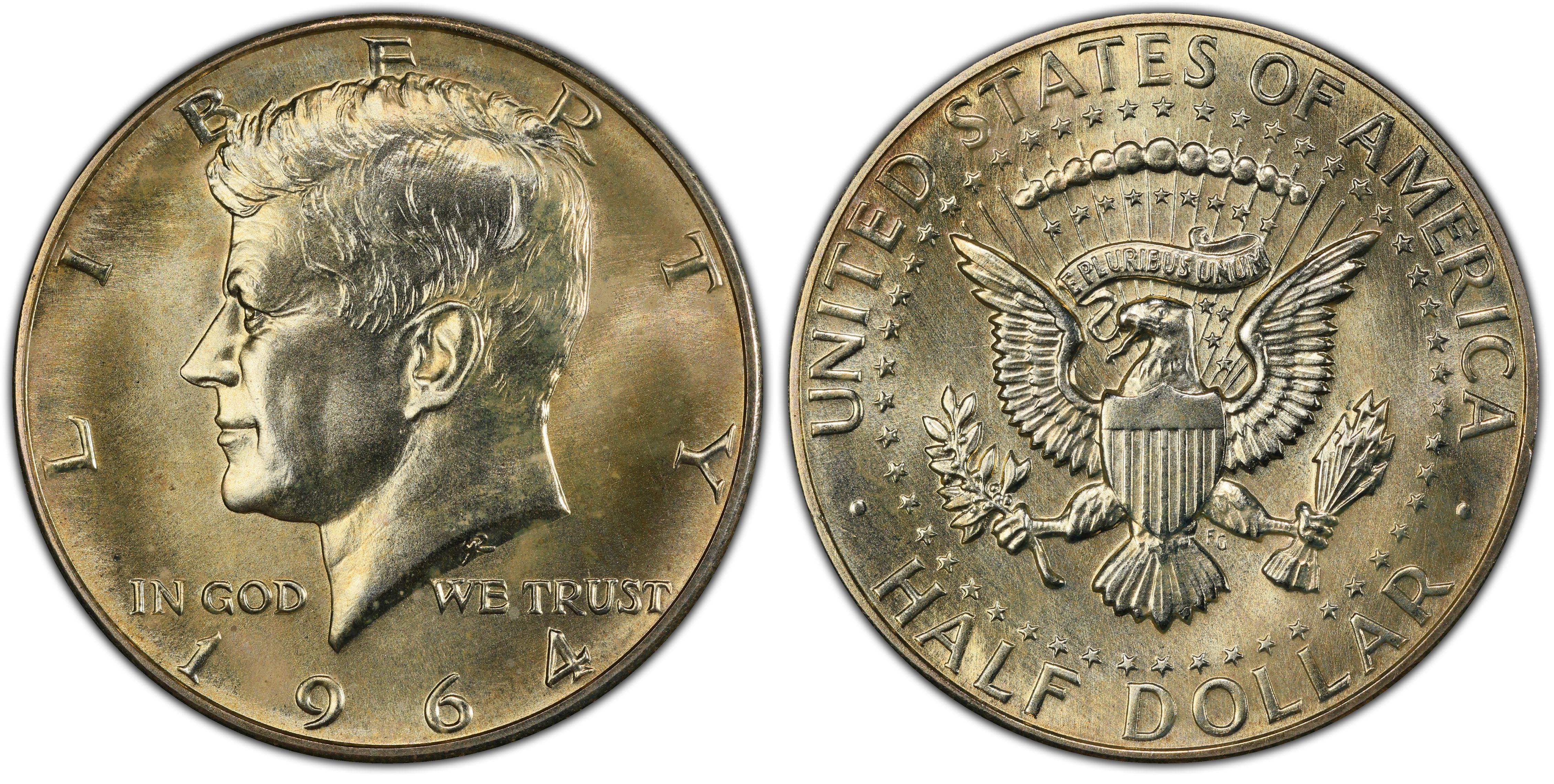
PCGS SP68
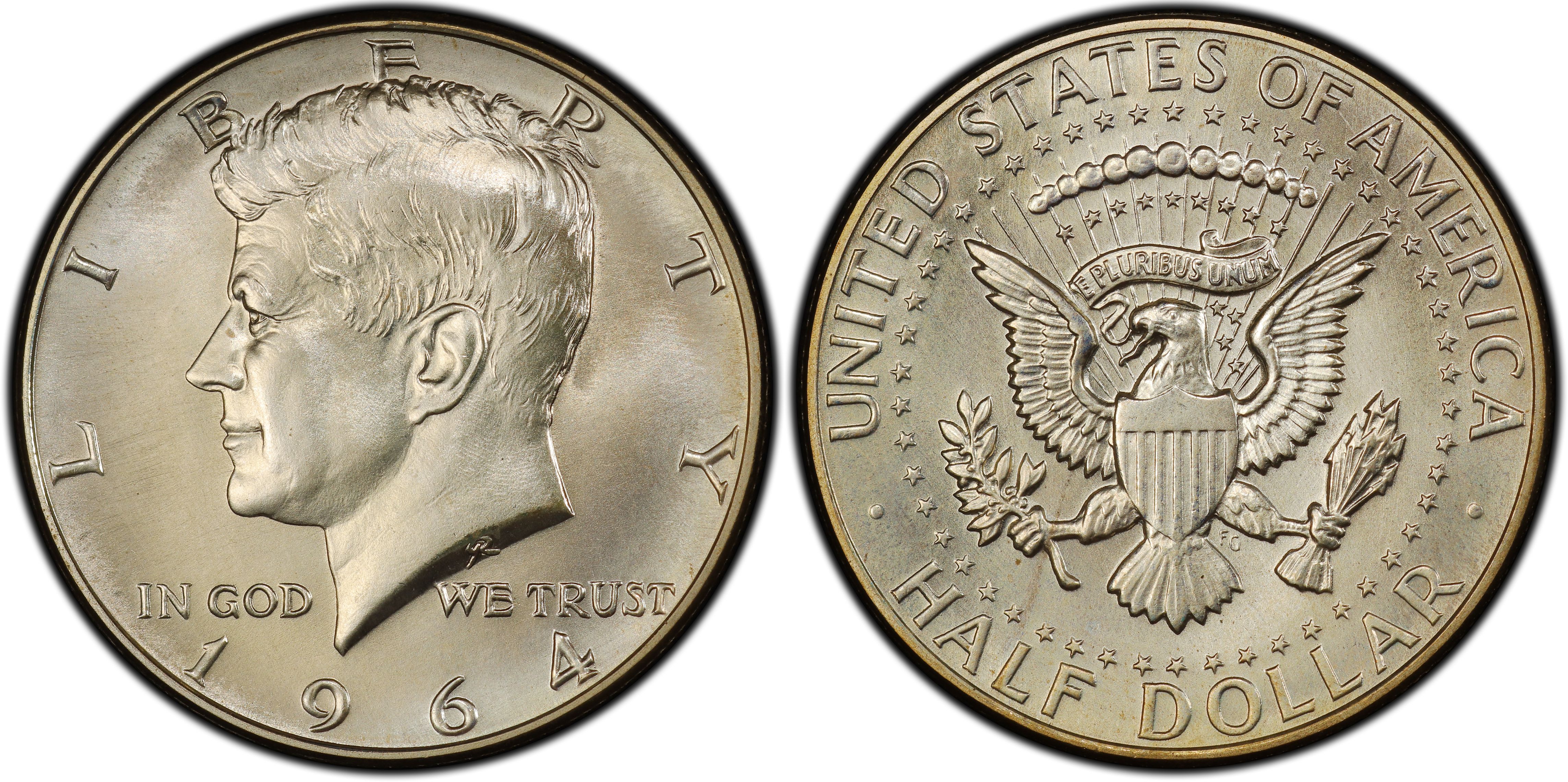
PCGS SP68
- PCGS #:
- 6844
- Designer:
- Roberts/Frank Gasparro
- Edge:
- Reeded
- Diameter:
- 31.00 millimeters
- Weight:
- 12.50 grams
- Mintage:
- 3,950,762
- Mint:
- Philadelphia
- Metal:
- 90% Silver, 10% Copper
- Auction Record:
- $156,000 • SP68 • 08-20-2019 • Stack's Bowers
Condition Census What Is This?
|
#1 PCGS SP69
As PCGS SP69 #10132710. Stack's Bowers, January 22, 2013, Lot 13265 - $135,000 Reserve Not Met. Offered as a complete PCGS-graded 1964 Special Mint Set. David Schweitz to Western collector, April 2013 - $151,200. |
|
#2 PCGS SP68
|
|
#2 PCGS SP68
As NGC SP69 #1727946-029. As PCGS SP68 #37846452. Stack's Bowers, August 15, 2019, Lot 5231 - $156,000; Dell Loy Hansen. |
|
#2 PCGS SP68
As NGC SP69 #1622190-002. Heritage Auctions, May 2004, Lot 7926; Heritage Auctions, July 2016, Lot 3908 - Withdrawn. As PCGS SP68 #02407076. |
| #2 PCGS SP68 |
| #2 PCGS SP68 |
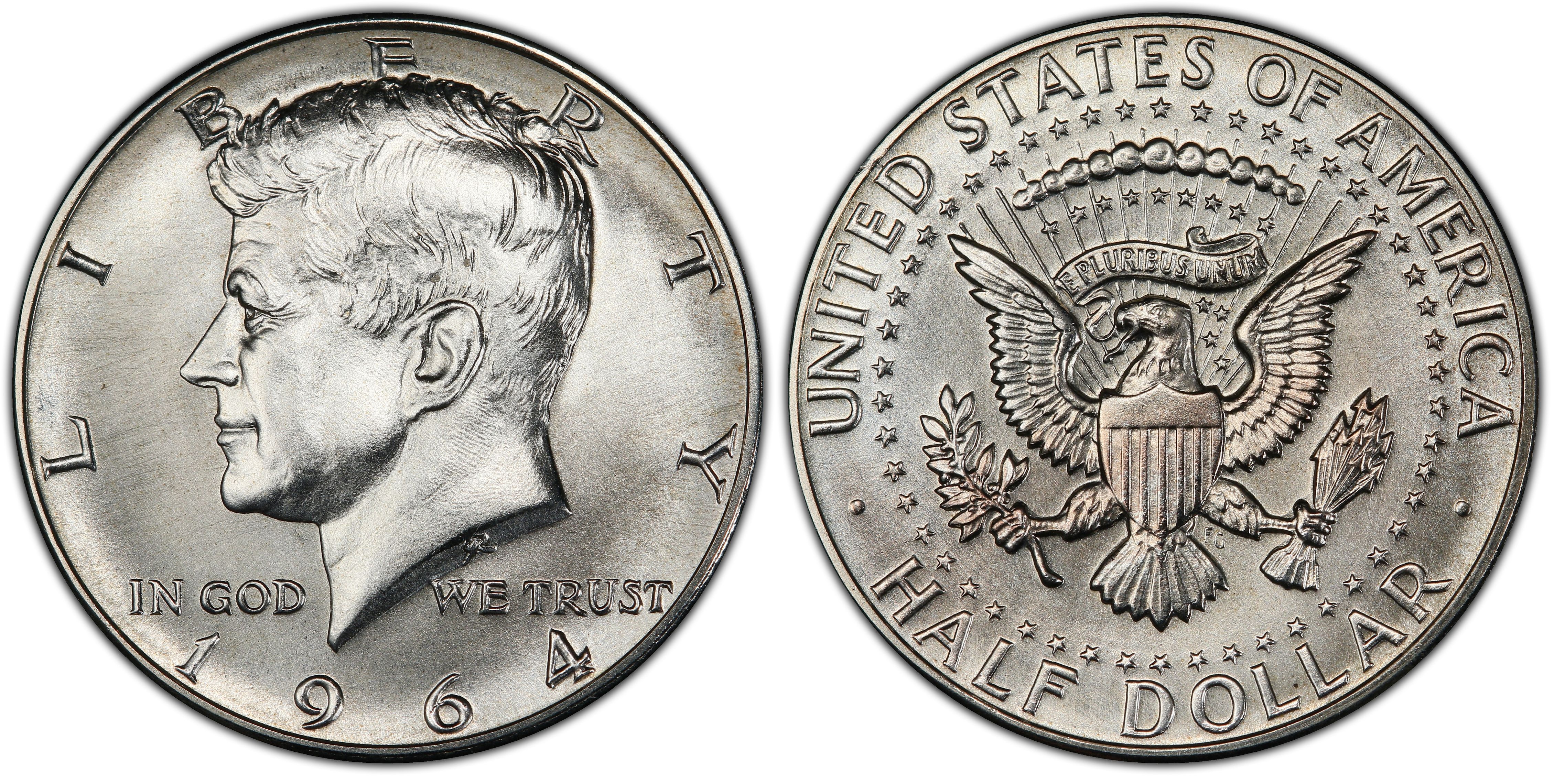 #7 PCGS SP67+
As PCGS MS67 SMS #10081826. Heritage Auctions, January 8, 2010, Lot 2793 - $16,100; D. Brent Pogue, July 28, 2019; The D. Brent Pogue Estate. As PCGS SP67+ #38634066. "The D. Brent Pogue Collection, Part VII," Stack's Bowers, March 20, 2020, Lot 7301 - $60,000. As PCGS SP67+ #43368352. Legend Rare Coin Auctions, September 2, 2021, Lot 302 - $99,875; Heritage Auctions, May 8, 2022, Lot 3769 - $48,000; GreatCollections, June 19, 2022, Lot 1175843 - $56,250. |
 #7 PCGS SP67+
As PCGS SP67 #83208890. GreatCollections, May 12, 2019, Lot 697949 - $87,187.50. As PCGS SP67+ #38574690. Legend Rare Coin Auctions, April 21, 2021, Lot 227 - $96,937.50. |
 #9 PCGS SP67
|
 #9 PCGS SP67
Heritage Auctions, April 25, 2019, Lot 3760 - $108,000. Sold as an individual lot alongside the other four pieces of an original set of 1964 Special Mint Set coins. |
|
#9 PCGS SP67
Mitchell Spivack; "Wondercoins' Top 100 Modern Coins Set (Spivack)" (PCGS Set Registry) |
 #9 PCGS SP67
|
| #9 PCGS SP67 |
The 1964 Kennedy Half Dollar Specimen Strike
A group of five coins appeared together in a May 1990 Stack's auction as an individual lot. The lot was not illustrated; only because the coins were atypical for 1964 issues did the assortment warrant inclusion in a Stack's sale. On the basis of the catalog description and subsequent lot viewings, the set sold for $715.
AN UNUSUAL 1964'P' SET
1352. 1964'P' Cent through Half Dollar. Choice Brilliant Uncirculated. Nearly all show evidence of die refinishing at the Mint. The 1¢ is red gold with planchet striations on the obverse, the reverse fully struck up. The 5¢ has pale pastel iridescence and a mirror rim like a 1941 coin. The 10¢ has light russet toning on a satiny surface with faint striations. The 25¢ has normal lustre. The 50¢ has a fully satiny obverse and a somewhat reflective reverse. The strike on all the coins is far sharper than is seen even on the Special Mint Sets. We suspect that these were struck as an experiment to determine the sort of finish the Mint would use from 1965 to 1967.
Auction catalogers serve as both numismatists and salespeople, and the description for Lot 1352 certainly did a bit of both. The description of the individual coins presents detailed numismatic information that would likely escape memory unless one were a specialist in the series. The comparison to Special Mint Sets, however, shaped market perception and it is what sold this "unusual" set for nearly 100 times the going rate of a standard five-coin set of 1964 business strikes. This exact framing reappeared repeatedly as additional sets surfaced at auction between 1990 and 1995.
Prompted by the phrase "far sharper than is seen even on the Special Mint Sets," the market's understanding of the coins drifted into a compelling narrative: We believe these were prototypes struck before the SMS coins were minted in 1965—trial pieces, if you will. It was an alluring hypothesis that contextualized the distinctiveness of the coins, which do indeed possess a fabric and surface finish unlike standard circulation-quality pieces.
The Adams and Merkin Connection
What explains this?
It appears that inside information was circulating through the professional numismatic community at the time. According to a account that Harvey Stack shared with John W. Dannreuther and others, and corroborated in 2024 by dealer Steve Blum via Mark Feld, the coins offered through Stack's originated from former Mint Director Eva Adams, who provided them to New York coin dealer Lester Merkin. Adams served as Director of the Mint from 1961 to 1969 during a tenure marked by immense change. Faced with the challenges of meeting commercial demand for U.S. coinage and the rising cost of silver, Adams oversaw the historical transition from silver to clad coinage. Following the assassination of President John F. Kennedy on November 22, 1963, she directed the lightning-fast creation of the half dollar to honor the fallen president. Adams closed out her term by overseeing the opening of the fourth Philadelphia Mint at 5th and Arch Streets in August 1969. Following her government service, she enjoyed a second career as a hobby ambassador, serving on the American Numismatic Association's Board of Governors from 1971 to 1975.
Physical evidence strongly reinforces the connection between Adams, Merkin, and these unusual strikes. The coins linked to Merkin share the same distinct fabric — and in some cases, the same die flaw (a strike-through on the chief, high on the federal shield on the reverse of the Kennedy Half Dollar) — as the specimen example preserved in the Smithsonian's National Numismatic Collection, proving they were struck from the exact same dies in close succession.
When Were the Specimen Strikes Made?
Following President Kennedy's death, the Mint worked with unprecedented swiftness to redesign the half dollar. While legislation authorizing the change moved through Congress, the finishing touches on the design and consultations with Jacqueline Kennedy were well underway. Chief Engraver Gilroy Roberts adapted his 1961 Kennedy Presidential Medal (#532681) portrait for the obverse, while Assistant Engraver Frank Gasparro adapted the Presidential Seal for the reverse.
Early trial strikes were presented to Mrs. Kennedy on December 17, 1963. She requested that Roberts soften the detail in her late husband's hair, leading to revisions on subsequent dies. Proof production began in early January 1964; early proof strikes featuring the original, unedited design are known today as the "Accented Hair" variety (#6801), while the edited design accounts for the vast majority of 1964 Kennedy Half Dollar Proofs (#6800). Mass production for circulation began on January 30, 1964, at the Denver Mint, followed shortly by the Philadelphia Mint. A ceremonial striking ceremony was held at both the Philadelphia and Denver Mints of February 11, even though business strike production was already underway.
As was annual practice since the Mint Cabinet was transferred to the Smithsonian Institution, the Mint provided the National Numismatic Collection with representative examples of each year's coinage and medal issues. Numismatic researcher Alex Schultz analyzed these coins alongside original Mint accession documentation for his November 2024 The Numismatist feature, "The 1964 Special Mint Sets: Special or Not?"
Schultz revealed that the Mint officially transferred 20 coins of "regular coinage," along with two 1964 Proof Sets and two 1964 Assay Commission Medals, on March 30, 1964 — just eleven days after the earliest recorded delivery of regular 1964 half dollars to the Federal Reserve.
This date is critical: it indicates that the Mint's primary objective in early 1964 was releasing the new coin to a waiting public, not conducting experimental work on finishes for the 1965–1967 Special Mint Sets. Furthermore, the Mint categorized these pieces simply as "regular coinage" in transfer documents. While Assistant Mint Director Frederick W. Tate could have formally designated them as special strikings, Mint officials likely saw no need to apply nuanced non-standard nomenclature to 20 carefully handled coins destined for the nation's museum collection.
What the Coins Reveal
Numismatics is often a forensic science. Even when official documentation is sparse, the physical coin communicates its history directly.
Setting aside the long-held theory that these were experimental prototypes for the 1965–1967 Special Mint Sets, several physical truths emerge:
- The coins were produced using freshly polished dies and specially handled planchets.
- They represent initial strikes off new dies. Details are sharp. Planchets and dies were specially prepared.
- Following ejection, the coins were individually handled with exceptional care to prevent contact marks.
- Eva Adams had access to the coins and put several sets away.
The matching physical features between the Smithsonian's set and the commercially known "Adams-Merkin" sets prove they share a single, specific origin. Furthermore, as Steve Roach and Jeff Garrett documented in their August 2013 Coin World feature, "Hidden in Plain Sight: Smithsonian Reveals Modern Era Treasures," the Smithsonian holds several other "off-the-books" presentation specimens. I personally reviewed a 1971 Eisenhower Dollar (#7406) exhibiting specimen characteristics during a 2016 visit.
While the theory of "SMS experimental strikes" can be safely put to rest as the Mint already possessed the technical capability to produce high-grade proof finishes, discussion will continue regarding whether these pieces should be classified as true Specimen strikes or simply early business strikes given VIP handling. The physical evidence demonstrates that the Smithsonian examples and the Adams-Merkin coins share an identical, deliberate production origin.
As for the remaining mysteries? Perhaps some details will remain unwritten. And that is okay. After all, no one ever recorded what flavor of ice cream 15-year-old Hallie Daggett bought with her 1894-S Barber Dime (#4805).
* * *