1883-S $1 (Regular Strike)
Series: Morgan Dollars 1878-1921

PCGS MS66

PCGS MS65+
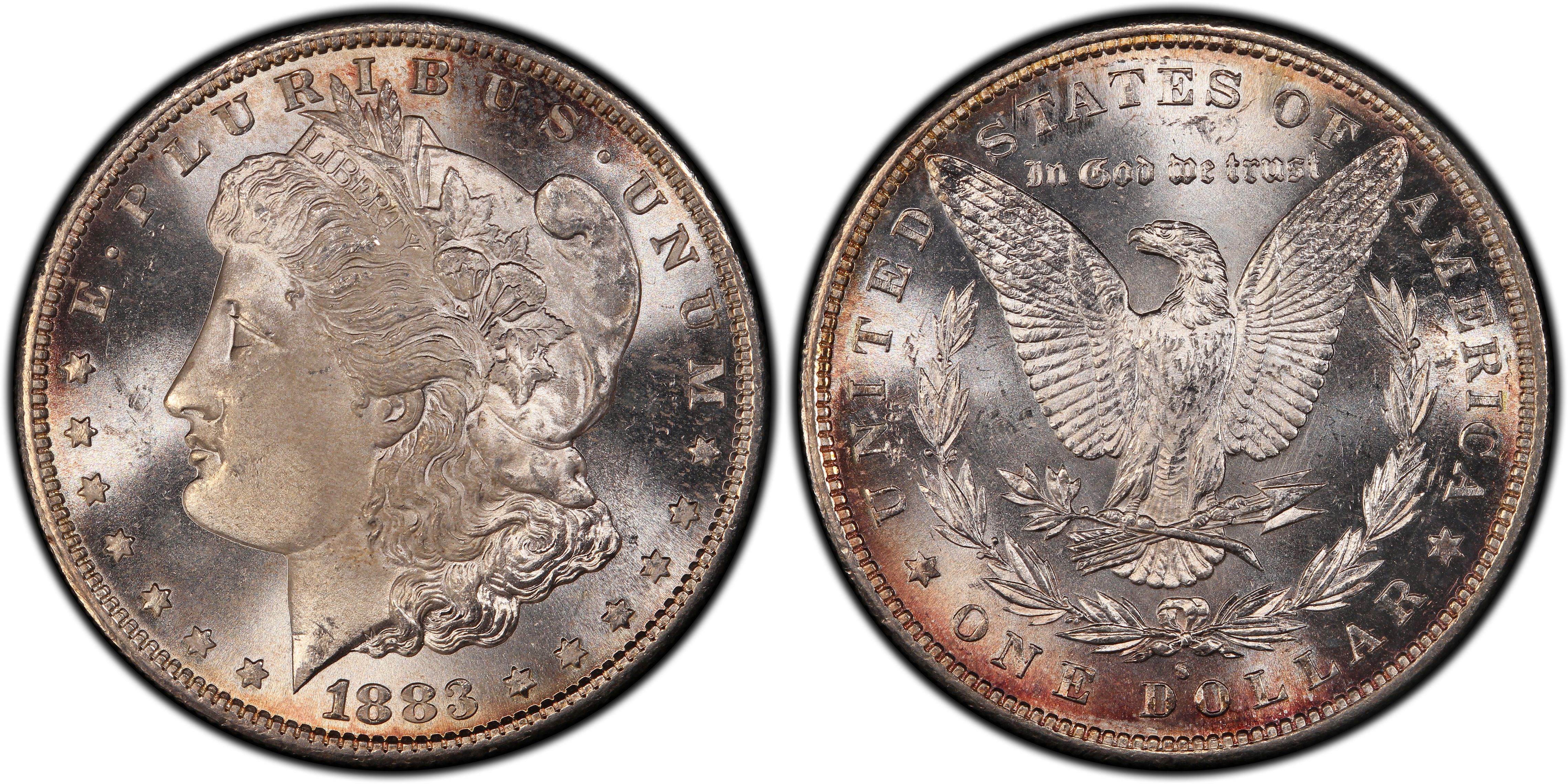
PCGS MS65+
- PCGS #:
- 7148
- Designer:
- George T. Morgan
- Edge:
- Reeded
- Diameter:
- 38.10 millimeters
- Weight:
- 26.73 grams
- Mintage:
- 6,250,000
- Mint:
- San Francisco
- Metal:
- 90% Silver, 10% Copper
- Auction Record:
- $74,750 • MS67 • 07-26-2003 • Heritage Auctions
Die Varieties
- 1883-S $1 VAM 1
- 1883-S $1 VAM 1, PL
- 1883-S $1 VAM 1, DMPL
- 1883-S $1 VAM 2
- 1883-S $1 VAM 2, PL
- 1883-S $1 VAM 2, DMPL
- 1883-S $1 VAM 3
- 1883-S $1 VAM 3, PL
- 1883-S $1 VAM 3, DMPL
- 1883-S $1 VAM 4
- 1883-S $1 VAM 4, PL
- 1883-S $1 VAM 4, DMPL
- 1883-S $1 VAM 5
- 1883-S $1 VAM 5, PL
- 1883-S $1 VAM 5, DMPL
- 1883-S $1 VAM 6
- 1883-S $1 VAM 6, PL
- 1883-S $1 VAM 6, DMPL
- 1883-S $1 VAM 7
- 1883-S $1 VAM 7, PL
- 1883-S $1 VAM 7, DMPL
- 1883-S $1 VAM 8
- 1883-S $1 VAM 8, PL
- 1883-S $1 VAM 8, DMPL
Rarity and Survival Estimates Learn More
| Survival Estimate | |
|---|---|
| All Grades | 199,900 |
| 60 or Better | 19,900 |
| 65 or Better | 94 |
| Numismatic Rarity | |
|---|---|
| All Grades | R-1.9 |
| 60 or Better | R-2.8 |
| 65 or Better | R-8.0 |
| Relative Rarity By Type All Specs in this Type | |
|---|---|
| All Grades | 33 / 117 TIE |
| 60 or Better | 31 / 117 TIE |
| 65 or Better | 21 / 117 TIE |
| Relative Rarity By Series All Specs in this Series | |
|---|---|
| All Grades | 33 / 117 TIE |
| 60 or Better | 31 / 117 TIE |
| 65 or Better | 21 / 117 TIE |
Condition Census What Is This?
|
#1 PCGS MS67
The California Collection. |
|
#2 PCGS MS66
Wayne Miller; Jack Lee; "The Arno Collection," Heritage Auctions, January 9, 2009, Lot 4963 - $40,250. A decade before the founding of PCGS, Wayne Miller was already a pioneer in collecting super-premium Morgan Dollars. This choice specimen features faint plum-colored patination along the right obverse periphery. |
| #2 PCGS MS66 |
 #4 PCGS MS65+
GreatCollections, February 14, 2021, Lot 946302 - $42,361.88; GreatCollections, May 24, 2026, Lot 2142189 - $29,250. |
|
#4 PCGS MS65+
Heritage Auctions, October 2, 2025, Lot 3084 - $37,200. |
 #4 PCGS MS65+
As PCGS MS65 #04223609. "Historic Coins and Medals Featuring Magnificent Morgan Silver Dollars from the Collection of Ralph and Lois Stone," Sotheby's, May, 21, 2018, Lot 67 - $50,000; Wurt I; As PCGS MS65+ #04223609. Heritage Auctions, January 15, 2023, Lot 3779 - $60,000. Sotheby's sale of the Ralph and Lois Stone Collection brought strong prices against estimates. The coins had been off the market for some time and dealers and collectors flocked to take advantage of this "fresh" deal. Frosty and brilliant save for a small toning spot next to the eagle's left wing. |
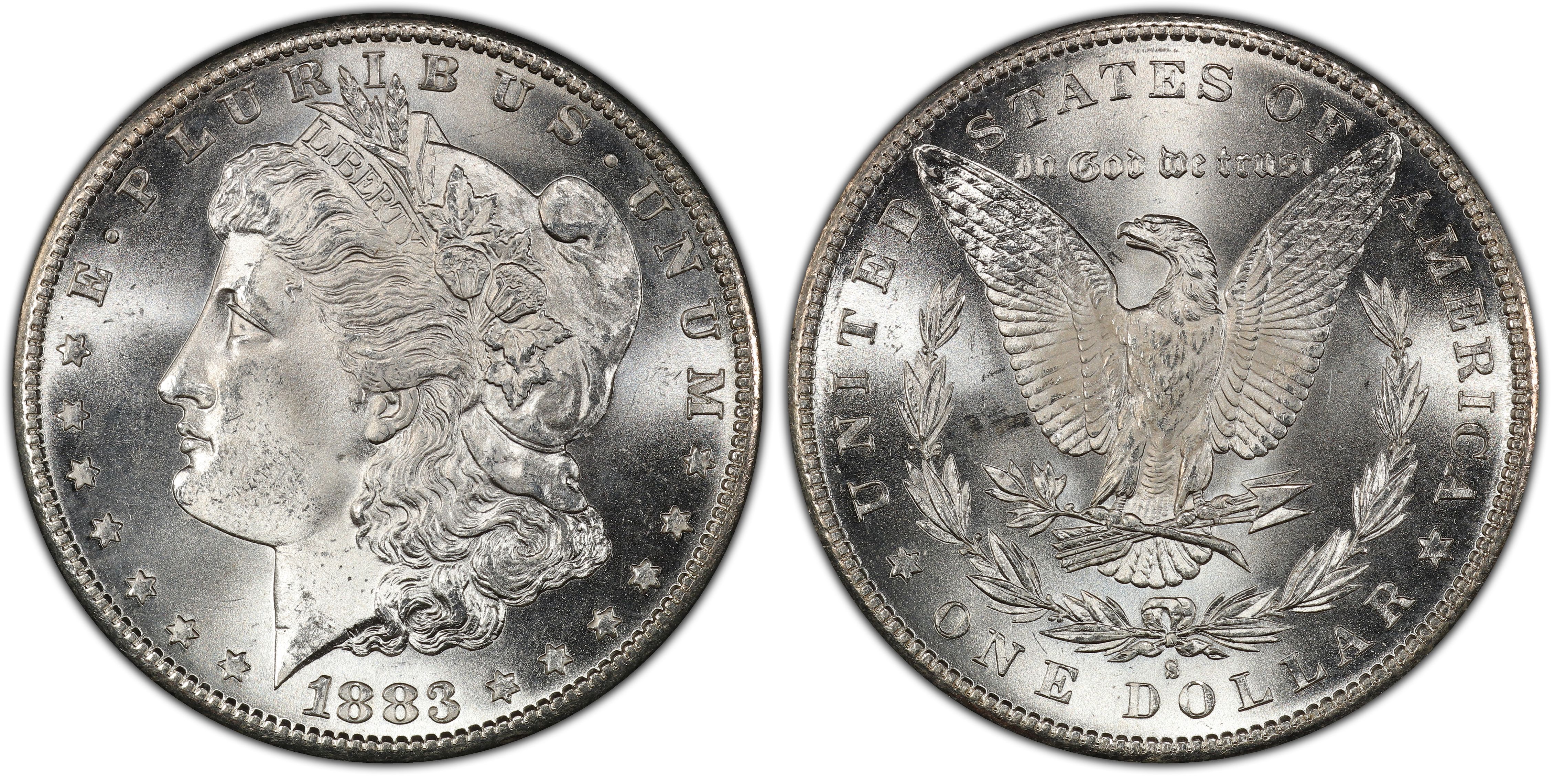 #4 PCGS MS65+
As NGC MS66 #172088-001. "The Dr. Joseph A. Murphy Collection," Heritage Auctions, January 10, 2019, Lot 4559 - $44,400. As PCGS MS65+ #37914585. |
|
#4 PCGS MS65+
As PCGS MS65+ #36302594. The Vanderbilt Collection. As PCGS MS65+ #44550109. "The Magnificent Morgans Collection" (PCGS Set Registry). |
The 1883-S Morgan Dollar
With a generous original mintage of 6,250,000 coins, the 1883-S Morgan Dollar (#7148) looks like a relatively common issue on paper. In reality, it is one of the most notorious "condition rarities" in the entire series. While readily available in circulated grades, it becomes exceptionally rare in Mint State.
This scarcity exists because the 1883-S was completely missing from the massive Treasury Department vault releases that flooded the coin market during the 1960s. While those vault discoveries transformed other former rarities into common coins, the 1883-S remained locked in obscurity. Numismatists believe this occurred because the coin either circulated heavily along the West Coast at the time of issue, or the majority of the unreleased San Francisco strike was permanently melted down under the Pittman Act of 1918.
Saved by the "Silver Dollar King"
The vast majority of the uncirculated and About Uncirculated (AU) examples known today survived thanks to a single eccentric investor: LaVere Redfield. Known as the "Silver Dollar King," the Nevada multi-millionaire amassed an enormous hoard of silver dollars in his Reno basement. When the Redfield hoard was sold in 1976 to film producer Steven Markoff for $7.3 million (nearly $40 million adjusted for inflation), it contained 680 canvas bags totaling 407,000 silver dollars, roughly 85% of which were uncirculated. While the hoard almost single-handedly saved the 1883-S from near-extinction in Mint State, these coins were heavily tumbled; as a result, surviving Redfield 1883-S Morgans frequently exhibit severe bag marks and surface abrasions. Despite a few small additional hoards trickling into the market in the 1990s, pristine examples remain incredibly elusive.
Collecting the 1883-S Morgan Dollar
The value of the 1883-S Morgan Dollar and the difficulty of acquiring one are heavily dependent on condition. As of July 2026, examples graded PCGS AU55 and below generally trade for under $500. Nearly half of all PCGS-certified examples fall into the AU category, while just over a thousand have achieved PCGS MS62, which represents the typical Mint State grade for this issue.
To put this scarcity into perspective, the 1882-S Morgan Dollar (PCGS #7140), struck just one year prior, is 39 times more common in its typical grade of PCGS MS64. Even more striking, the 1881-S (PCGS #7130) is 121 times more common in its own typical grade of PCGS MS64.
Gems are exceptionally rare, as are Prooflike (PL) and Deep Mirror Prooflike (DMPL) coins. For these latter two categories, public auction records often offer an incomplete picture of the market because a significant number of these high-end pieces trade strictly through private transactions.
The baseline benchmark for this issue was established during the legendary 1997 Bowers and Merena auction of the Louis E. Eliasberg, Sr. Collection, where the spectacular Clapp-Eliasberg specimen, sold raw at the time, fetched an astounding $137,500. That record was shattered in 2009 when the very same coin, by then certified as PCGS MS67+PL, commanded $161,000 in a Heritage Auctions sale.
A Note About the Population Reports
The PCGS Population Report lists eight examples graded PCGS MS63PL as of July 14, 2026. However, we have intentionally chosen to display only two of these coins in our Condition Census table. The remaining six pieces were graded in the early days of PCGS, between 1986 and 1990, and no public auction records exist to match their certification numbers. While it is possible a few remain tucked away in vintage holders, it is far more likely that most were cracked out and resubmitted over the years, creating "ghost" numbers in the report. Collectors should keep this in mind when evaluating the true availability of this key issue.
* * *