1901 25C, DCAM (Proof)
Series: Barber Quarters 1892-1915

PCGS PR67DCAM

PCGS PR67DCAM
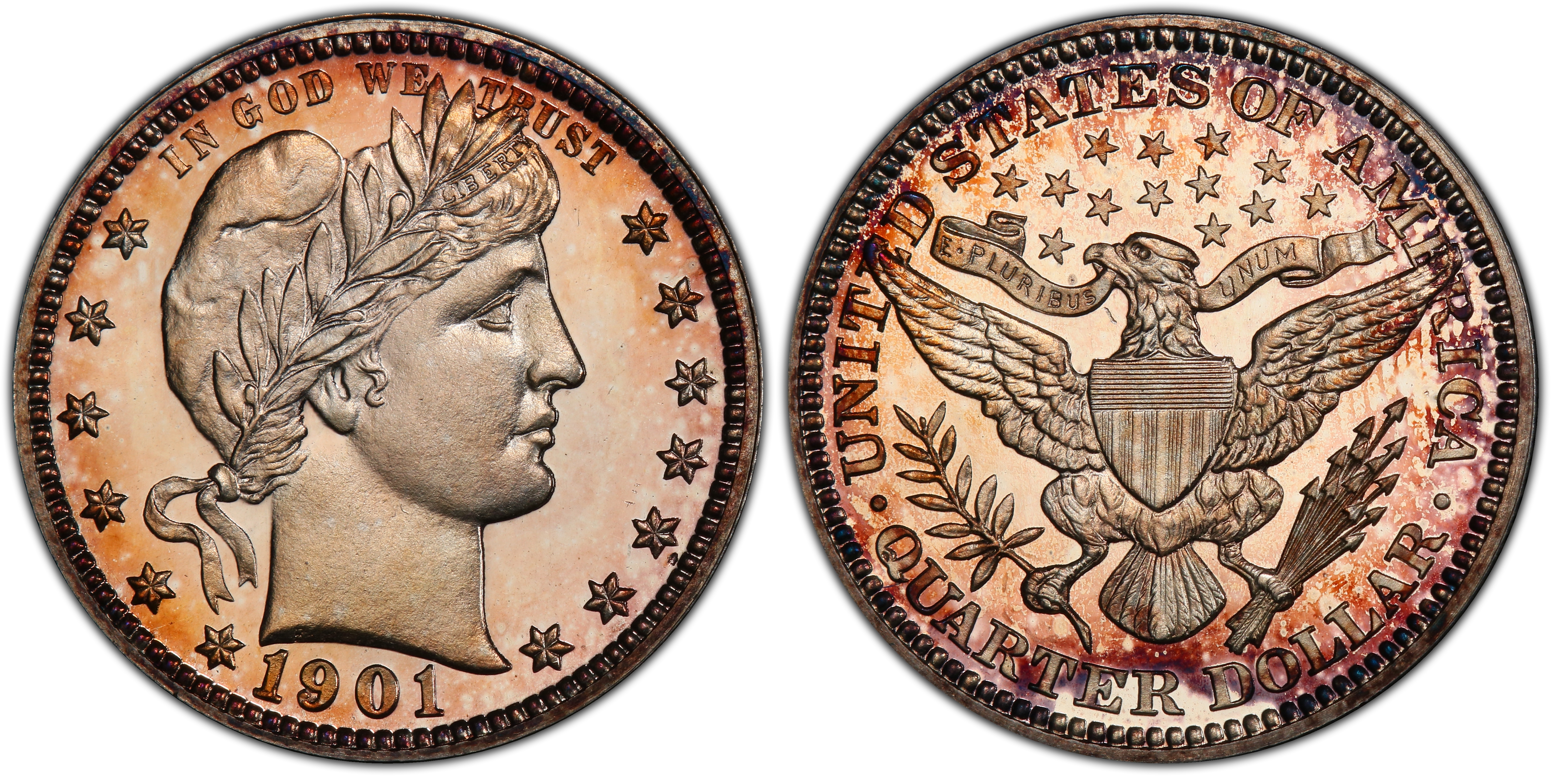
PCGS PR66+DCAM
- PCGS #:
- 95687
- Designer:
- Charles E. Barber
- Edge:
- Reeded
- Diameter:
- 24.30 millimeters
- Weight:
- 6.30 grams
- Mintage:
- 813
- Mint:
- Philadelphia
- Metal:
- 90% Silver, 10% Copper
- Auction Record:
- $11,456 • PR67 • 10-18-2012 • Heritage Auctions
Condition Census What Is This?
| #1 PCGS PR67DCAM |
|
#1 PCGS PR67DCAM
|
|
#1 PCGS PR67DCAM
|
|
#4 PCGS PR66+DCAM
|
 #5 PCGS PR66DCAM
|
 #6 PCGS PR65DCAM
|
The 1901 Barber Quarter Proof
When the United States Mint moved into its new facility in late 1901, the newfound space and technological innovations allowed for a much more efficient production process. Leading up to this transition, Barber made a number of small revisions to his namesake designs. The 1901 Barber Quarter Proof (#5687) utilizes the Type III reverse hub, where the eagle's wingtips extend past the tops of the letters. Additionally, the pointed edges at the top of the shield were softened and the border denticles were strengthened. While these details may evade the casual observer, a side-by-side comparison with a 1900 Barber Quarter Proof (#5686) will reveal the extent to which these subtle changes impacted the coinability and aesthetics of late-period Barbers.
The 1901 Barber Quarter Proof is primarily found with some degree of toning over brilliant surfaces. In lower proof grades, collectors should expect to find a reduction in the coin's reflectivity as well as incidental impairments such as lintmarks and faint hairlines. At the Gem level or above, these issues are greatly minimized, providing this 125-plus-year-old coin the opportunity to truly demonstrate the simple, yet distinguished beauty of Barber's quarter-dollar design. Cameos make up about 22% of the PCGS population for the date, while Deep Cameos are elusive, with only a handful certified after 40 years of PCGS grading activity. These figures stand in striking contrast to the 1902 issue, which is seldom encountered with any cameo frost.
* * *