1850 $5 Baldwin & Co. (Regular Strike)
Series: (None)
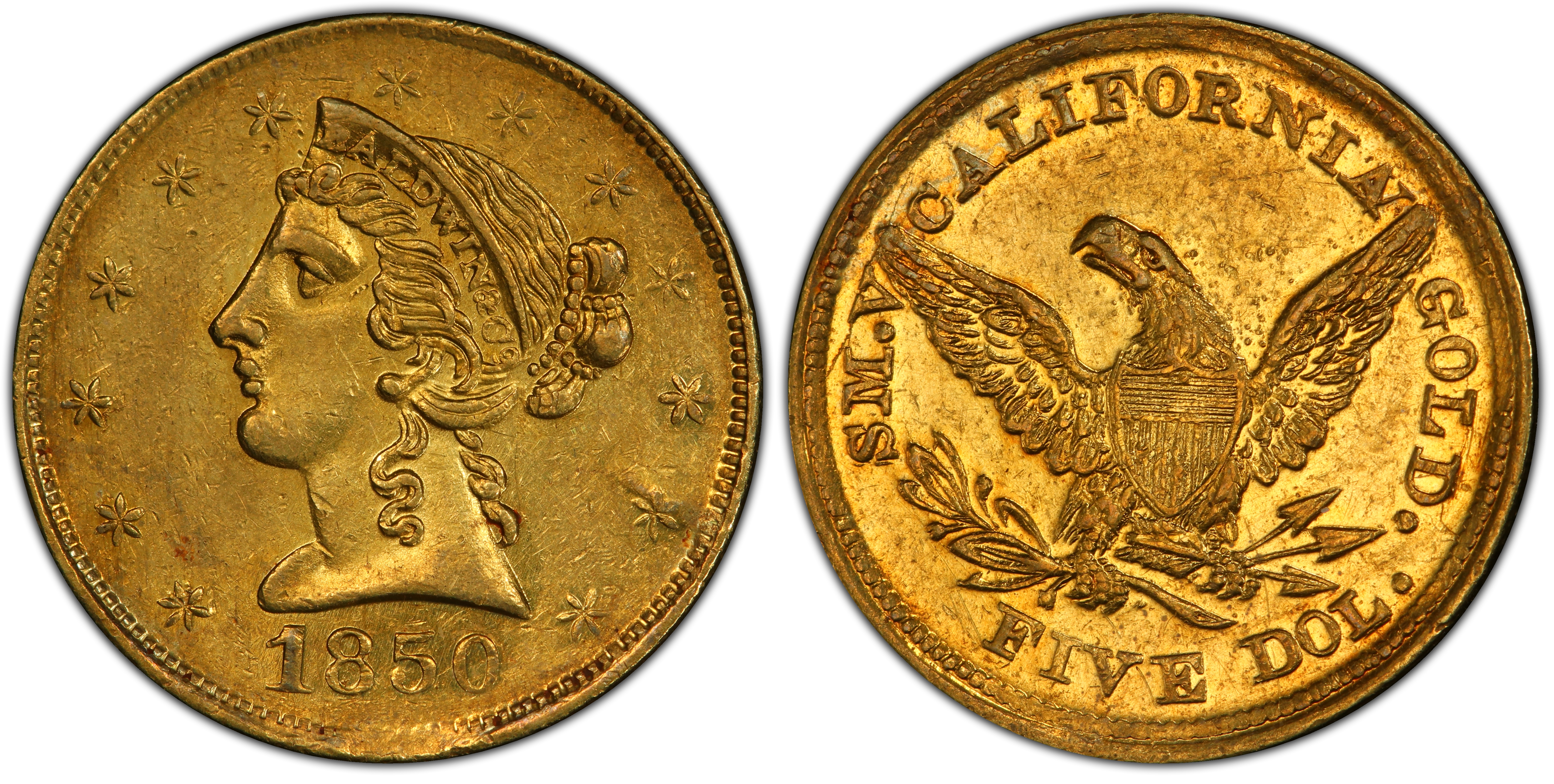
PCGS MS61

PCGS MS61

PCGS AU58
- PCGS #:
- 10025
- Designer:
- N/A
- Edge:
- N/A
- Diameter:
- N/A
- Weight:
- N/A
- Mintage:
- N/A
- Mint:
- Philadelphia
- Metal:
- Other
- Auction Record:
- $204,000 • MS61 • 01-16-2022 • Heritage Auctions
Major Varieties
- 1850 $5 Baldwin & Co.
Condition Census What Is This?
| #1 MS63 estimated grade |
|
#2 MS61 PCGS grade
Possibly from Stack's 6/1983:826 - Pacific Coast 6/1987:1816 - Superior Galleries "A. Bernard Shore Collection" 1/1988:4635 - Goldbergs 1/2004:3498, $28,750 |
|
#2 MS61 PCGS grade
Riverboat Collection - Heritage 4/2014:5435, $82,250 |
| #4 AU58 PCGS grade |
| #4 AU58 PCGS grade |
|
#6 AU55 PCGS grade
Goldbergs 5/2006:4243, $33,350 |
 #6 AU55 PCGS grade
|
 #6 AU55 PCGS grade
|
| #6 AU55 PCGS grade |
| #6 AU55 estimated grade |
In 1850, George C. Baldwin and Thomas S. Holman formed Baldwin & Co. and purchased the coining operation of F.D. Kohler & Co. Baldwin & Co.'s first issues were $5 and $10 gold coins dated 1850. In 1851, Baldwin & Co. issued $10 and $20 gold coins. Unfortunately, an official assay revealed that Baldwin's coins contained less gold than their stated value, and all confidence in their coins disappeared (this was not an unusual circumstance, as most of the other private assayers suffered the same fate).
The 1850 Baldwin & Co. $5 gold piece is very rare, primarily because most were melted down in later years because of the public's refusal to accept them. All examples appear to have been made from the same dies, which can be identified by an inverted A underneath the final A in CALIFORNIA on the reverse (Kagin claimed mistakenly that inverted A;s appeared beneath BOTH A's in CALIFORNIA). Late states of the dies show several cracks, one of which results eventually in a triangular cud at the upper right obverse edge.
Mint State examples are extremely rare, led by a remarkable NGC MS64.