1850 $10 Baldwin & Co. (Regular Strike)
Series: (None)
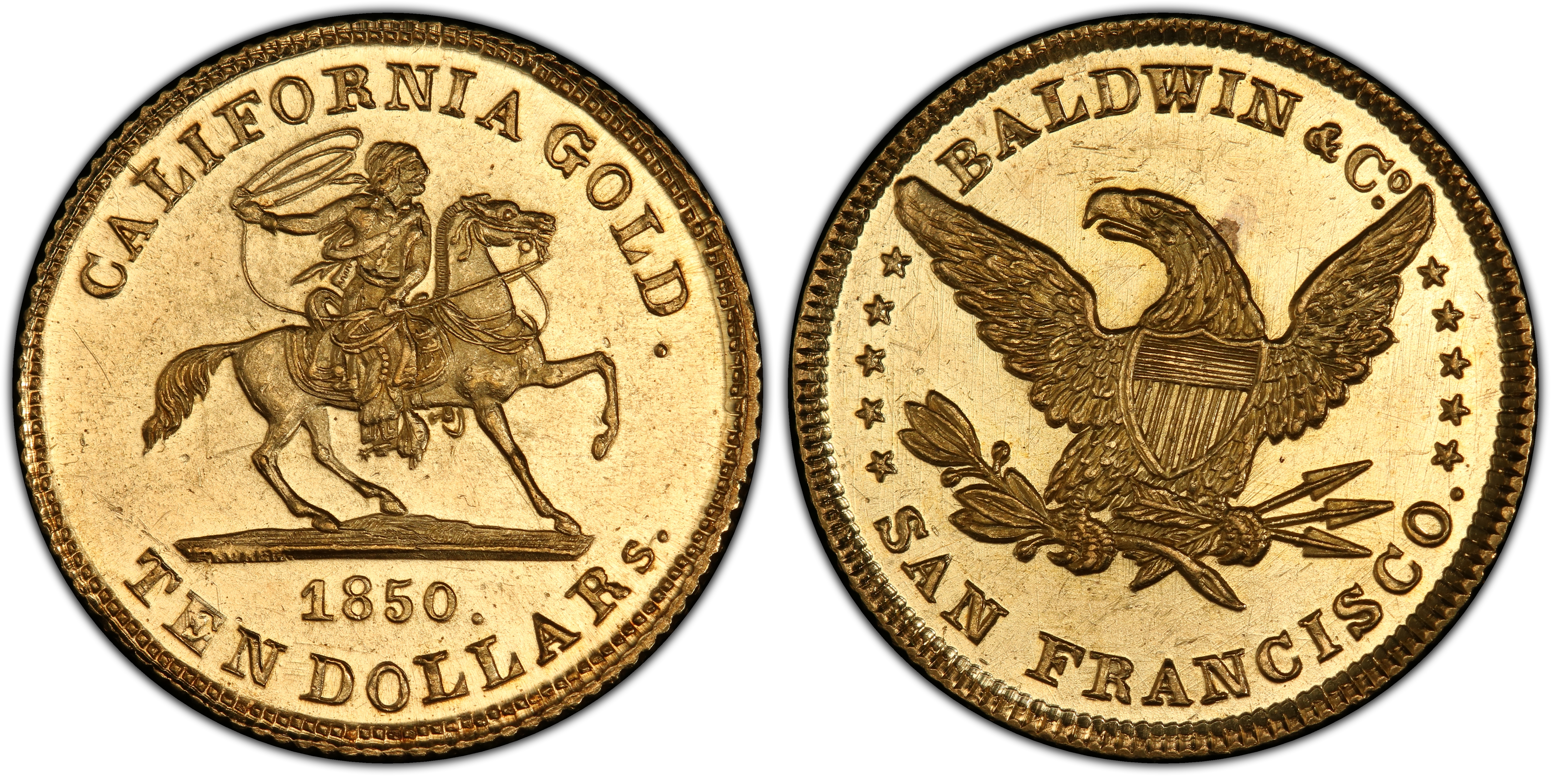
PCGS MS64+


- PCGS #:
- 10028
- Designer:
- N/A
- Edge:
- N/A
- Diameter:
- N/A
- Weight:
- N/A
- Mintage:
- N/A
- Mint:
- Philadelphia
- Metal:
- Other
- Auction Record:
- $1,260,000 • MS63+ • 11-26-2024 • Stack's Bowers
Major Varieties
- 1850 $10 Baldwin & Co.
Condition Census What Is This?
| #1 MS64 PCGS grade |
| #1 MS64 PCGS grade |
|
#3 MS63 estimated grade
Goldbergs 5/2005:1215, $195,500 - Stack's/Bowers 8/2011:7554, $281,750 |
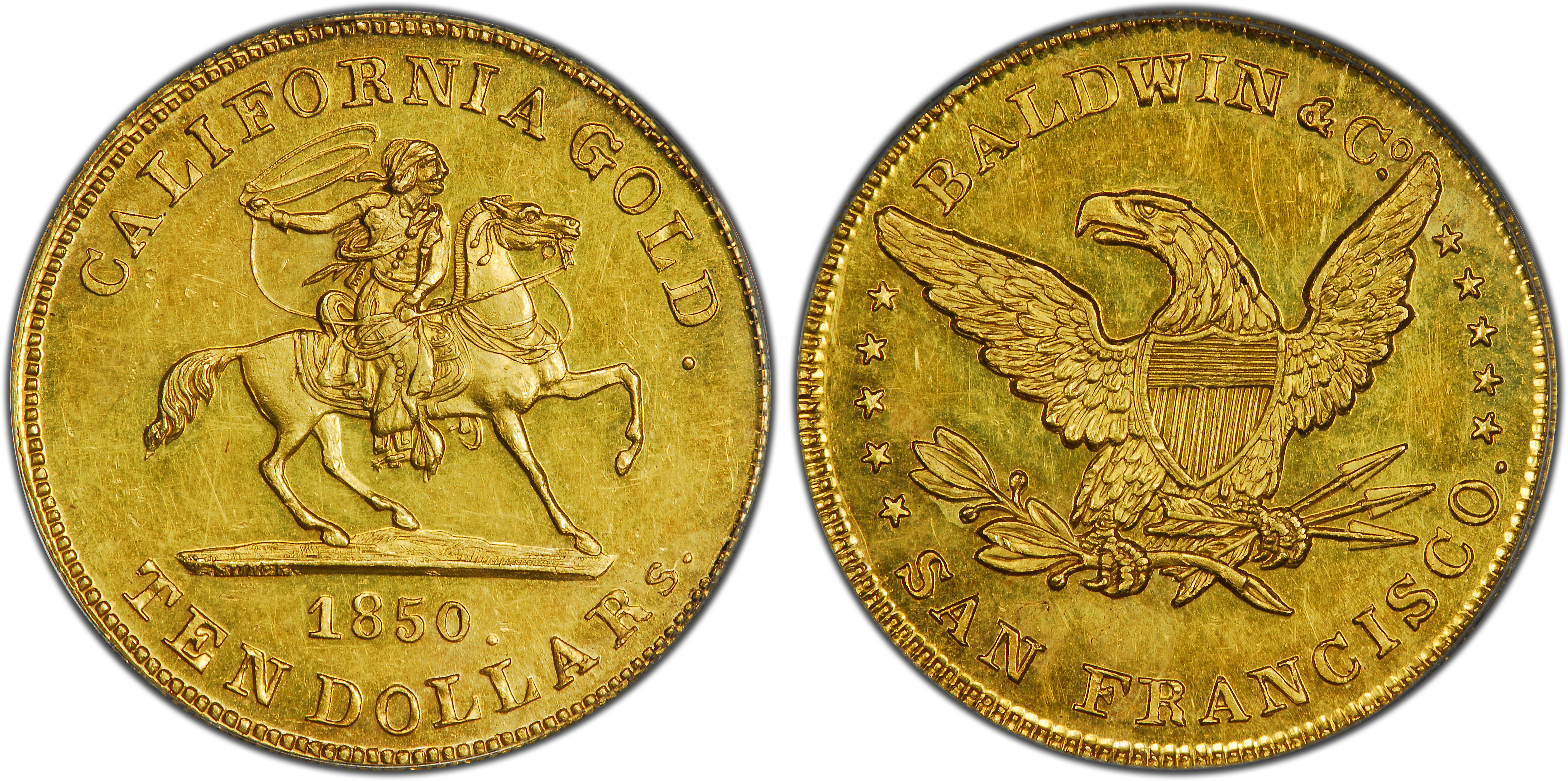 #4 MS62+ PCGS grade
|
| #5 MS62 PCGS grade |
|
#6 MS61 PCGS grade
Riverboat Collection - Heritage 4/2014:5436, $381,875 |
| #6 MS61 PCGS grade |
| #8 AU55 PCGS grade |
| #9 AU53 PCGS grade |
| #10 AU50 PCGS grade |
In 1850, George C. Baldwin and Thomas S. Holman formed Baldwin & Co. and purchased the coining operation of F.D. Kohler & Co. Baldwin & Co.'s first issues were $5 and $10 gold coins dated 1850. In 1851, Baldwin & Co. issued $10 and $20 gold coins. Unfortunately, an official assay revealed that Baldwin's coins contained less gold than their stated value, and all confidence in their coins disappeared (this was not an unusual circumstance, as most of the other private assayers suffered the same fate).
The 1850 Baldwin & Co. $10 gold piece features a cowboy (or Spanish vaquero) on the obverse. This unusual design deviated from many of the other privately issued gold coins of the period in that it did not attempt to mimic the gold pieces issued by the federal government. This was often done to promote circulation and to prevent someone from questioning the veracity of a particular coin. The cowboy design is very popular with collectors today, and its rarity is an added bonus.
PCGS has certified less than a dozen examples of this type, and most of those are Uncirculated, indicating a high degreee of collector influence over the surviving population. Most Mint State examples are low-end (MS62 or lower), but the PCGS Pop Report shows two at the MS64 level. A very pleasing example resides in the National Numismatic Collection at the Smithsonian Institution.