1851 "887" $50 RE Augustus Humbert (Proof)
Series: (None)

PCGS PR65
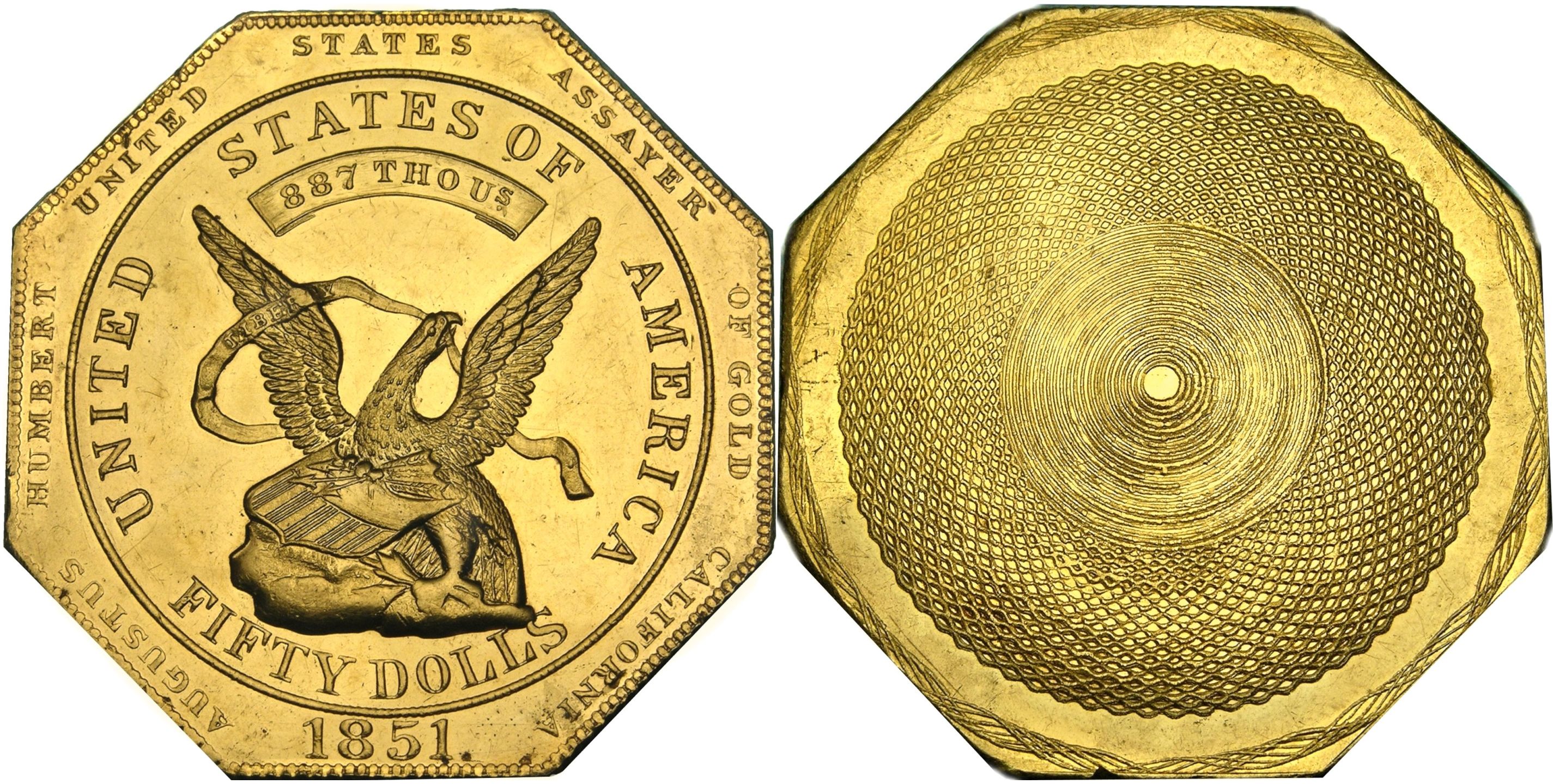
Image courtesy of the National Numismatic Collection at the Smithsonian Institution
- PCGS #:
- 10215
- Designer:
- N/A
- Edge:
- N/A
- Diameter:
- N/A
- Weight:
- N/A
- Mintage:
- N/A
- Mint:
- Philadelphia
- Metal:
- Gold
- Auction Record:
- N/A
Major Varieties
- 1851 "887" $50 RE Augustus Humbert
Go To Grade
Current Auctions - PCGS Graded
Current Auctions - NGC Graded
For Sale Now at Collectors Corner - PCGS Graded
For Sale Now at Collectors Corner - NGC Graded
Rarity and Survival Estimates Learn More
| Survival Estimate | |
|---|---|
| All Grades | 1 |
| 60 or Better | 1 |
| 65 or Better | |
| Numismatic Rarity | |
|---|---|
| All Grades | R-10.0 |
| 60 or Better | R-10.0 |
| 65 or Better | R-10.1 |
| Relative Rarity By Type All Specs in this Type | |
|---|---|
| All Grades | 1 / 1 |
| 60 or Better | 1 / 1 |
| 65 or Better | 1 / 1 |
| Relative Rarity By Series All Specs in this Series | |
|---|---|
| All Grades | N/A |
| 60 or Better | N/A |
| 65 or Better | N/A |
Condition Census What Is This?
|
#1 PR65 PCGS grade
Augustus Humbert - Capt. Andrew C. Zabriskie Collection - Col. James W. Ellsworth - purchased in 1923 by John Work Garrett - Garrett Collection - Johns Hopkins University - Bowers & Ruddy 3/1980:897, $500,000 - Art Kagin |
David Hall:
The unique magnificent proof from the Garrett collection (pictured above) is thought to have been from the personal holdings of Augustus Humbert. This coin sold in the 1980 Garrett auction to Art Kagin for $500,000, an enormous amount at that time.