1872 1C, BN (Regular Strike)
Series: Indian Cents 1859-1909

PCGS MS66BN
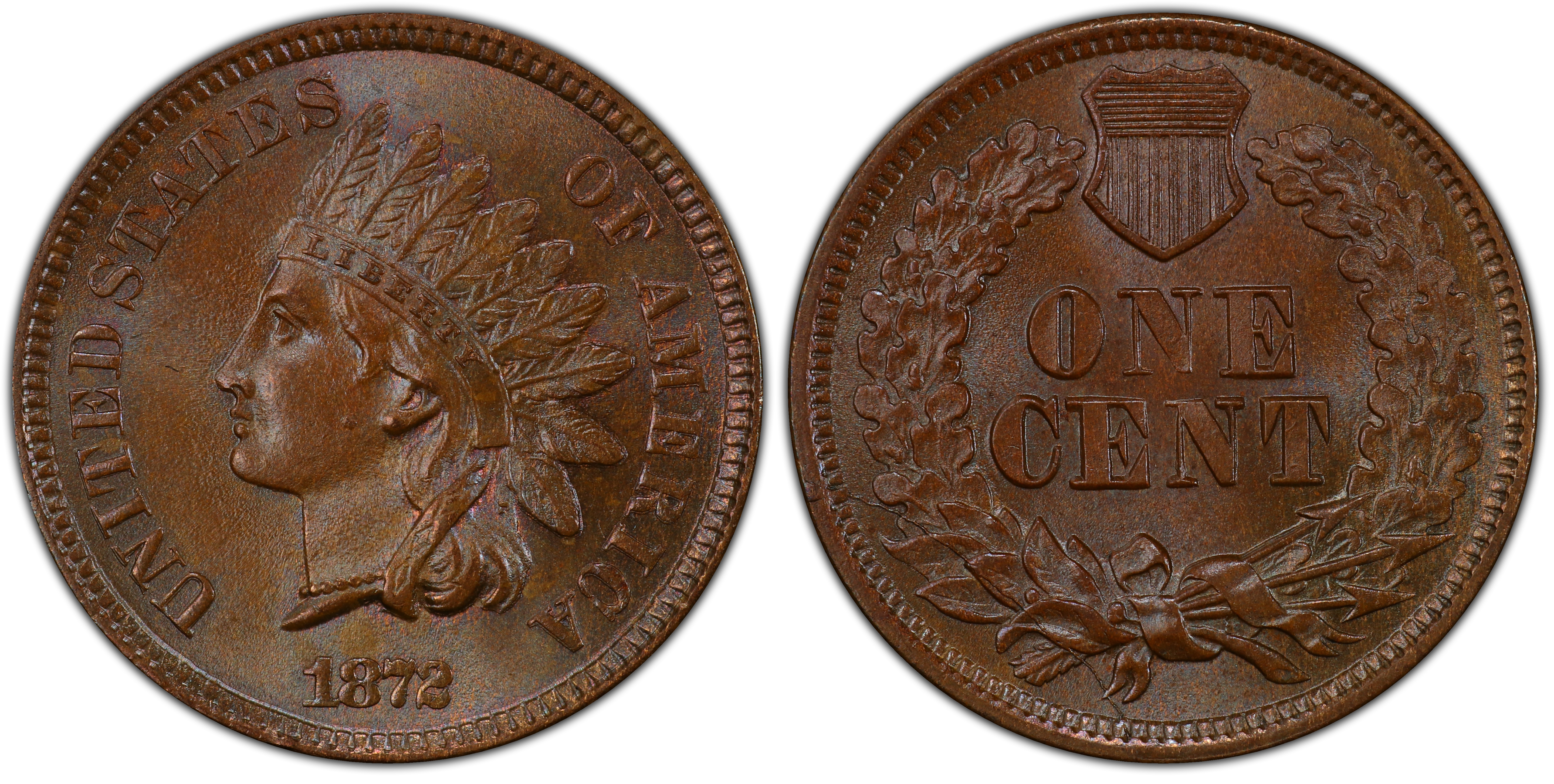
PCGS MS66BN
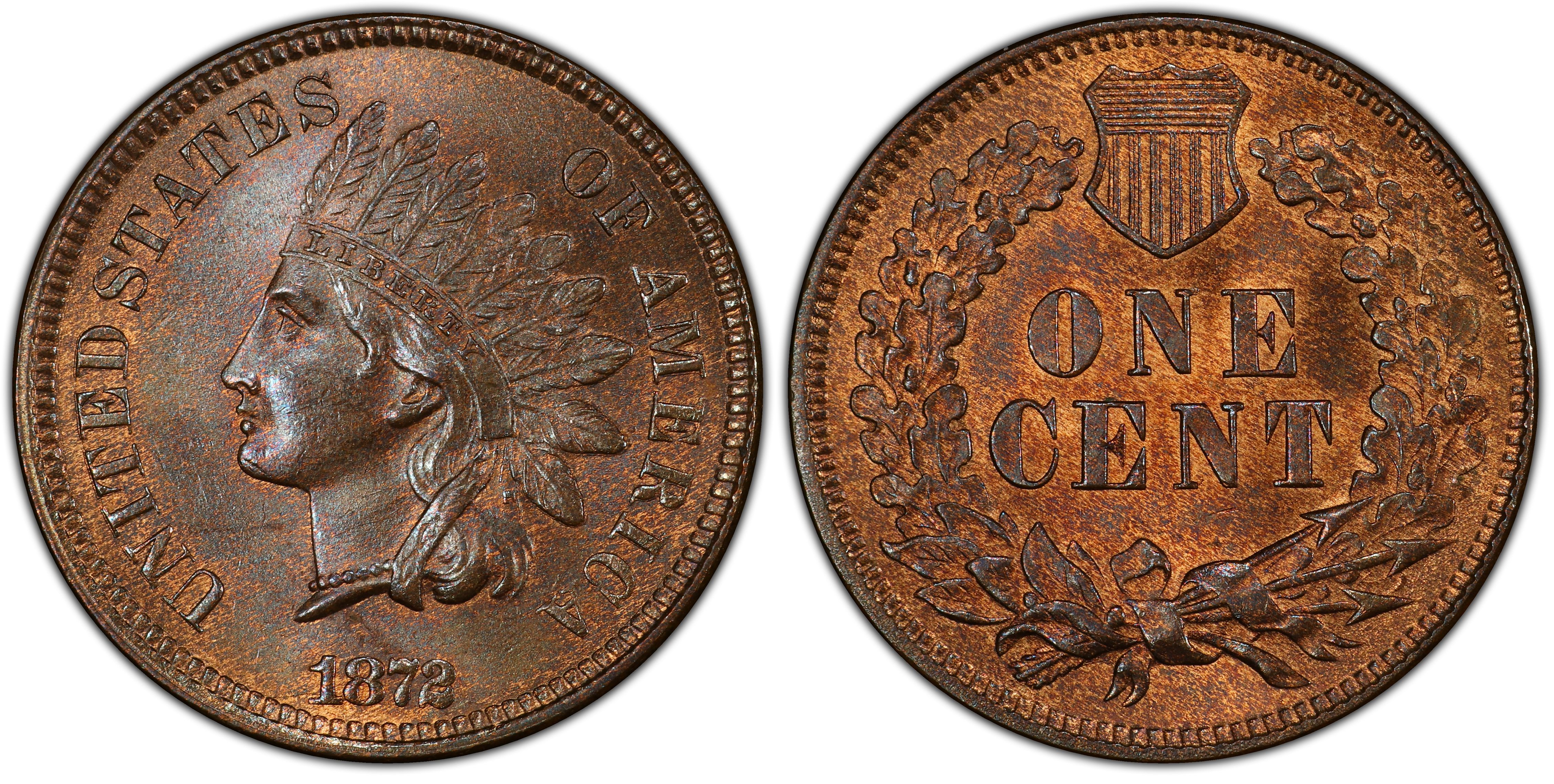
PCGS MS66BN
- PCGS #:
- 2103
- Designer:
- James Barton Longacre
- Edge:
- Plain
- Diameter:
- 19.00 millimeters
- Weight:
- 3.11 grams
- Mintage:
- 4,042,000
- Mint:
- Philadelphia
- Metal:
- 95% Copper, 5% Tin and Zinc
- Auction Record:
- $3,300 • CH BU • 10-14-1997 • Stack's
Rarity and Survival Estimates Learn More
| Survival Estimate | |
|---|---|
| All Grades | 6,000 |
| 60 or Better | 180 |
| 65 or Better | 12 |
| Numismatic Rarity | |
|---|---|
| All Grades | R-3.8 |
| 60 or Better | R-7.2 |
| 65 or Better | R-9.5 |
| Relative Rarity By Type All Specs in this Type | |
|---|---|
| All Grades | 48 / 55 TIE |
| 60 or Better | 29 / 55 TIE |
| 65 or Better | 10 / 55 TIE |
| Relative Rarity By Series All Specs in this Series | |
|---|---|
| All Grades | 48 / 55 TIE |
| 60 or Better | 29 / 55 TIE |
| 65 or Better | 10 / 55 TIE |
Condition Census What Is This?
|
#1 PCGS MS66BN
Heritage Auctions, April 29, 2018, Lot 4543 - $2,880; "The Arizona Indians Collection" (PCGS Set Registry). |
|
#1 PCGS MS66BN
|
1872 Indian Cent
The United States Mint produced more than four million business-strike 1872 Indian Cents (BN #2103), along with approximately 950 Proofs (#BN #2303). When adding an example of this date to their coin cabinets, period collectors typically sought out the Proof version. Today, the two versions are collected separately.
Compared to the robust cent mintages following the Civil War, the Mint's 1872 output was subdued. In the Annual Report of the Director of the Mint, Director James Pollock documented the impact of the Act of March 3, 1871. This legislation authorized the Secretary of the Treasury to redeem copper, bronze, and copper-nickel minor coins in lots of $20 or more to relieve commerce of excess small change. The small change surplus was itself the Treasury's way of replacing fractional paper currency. All of these measures were undertaken to resume the normal flow of specie—a goal codified into law on January 14, 1875, and made effective on January 1, 1879. For a nation where nearly half of the territory was still governed under Reconstruction, rebuilding a debt-laden economy was as complex a task as the Treasury had ever undertaken.
Regarding these mass redemptions, Mint statistical tables record that during 1872 alone, the Treasury redeemed and melted 5,635,999 bronze cents and 5,751,073 copper-nickel cents. For the copper-nickel cents struck from 1859 to 1864, this culling accounted for roughly 4% of the total mintage.
Notable 1872 Indian Cent Varieties
PCGS attributes two popular varieties of the 1872 Indian Cent: a Repunched Date (FS-301, Snow-1, BN #37495) and the Shallow N (FS-901, #404546). On the Shallow N, the letter "N" in the word "ONE" shows less definition than it does on the Bold N (standard) reverse. The Mint introduced a new reverse hub in 1870, but it continued to deploy leftover Shallow N dies intermittently through 1872.
Vintage Market Snippet
In an advertisement in the July 1964 issue of Numismatic Scrapbook Magazine, Oklahoma dealer Roy L. Baker offered a Brilliant Uncirculated 1872 Indian Head Cent for $255. Today, a PCGS MS63RD example would likely fetch over $5,000.
* * *