1909 1C Indian, BN (Regular Strike)
Series: Indian Cents 1859-1909
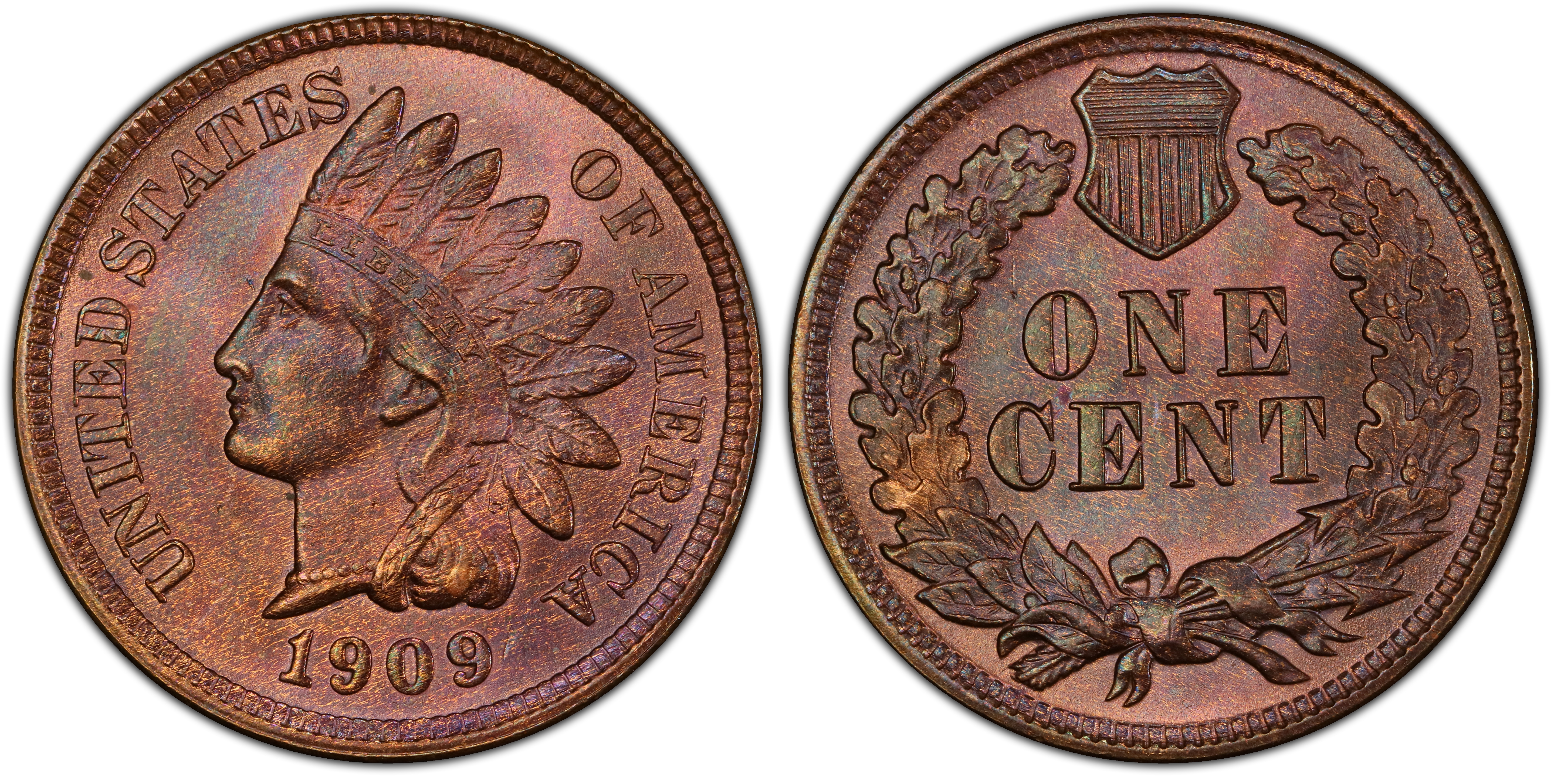
PCGS MS66+BN
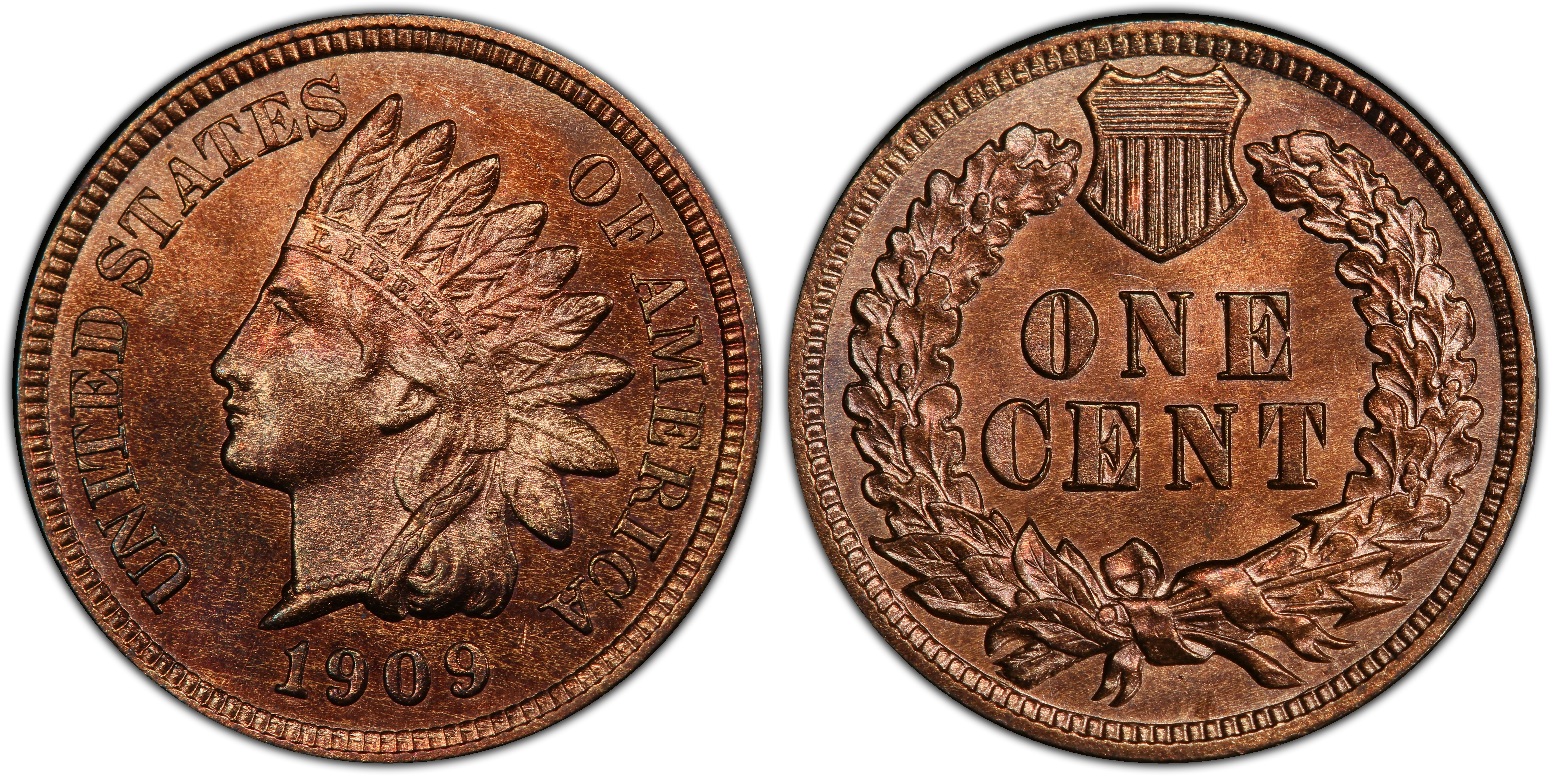
PCGS MS66BN

PCGS MS66BN
- PCGS #:
- 2235
- Designer:
- James Barton Longacre
- Edge:
- Plain
- Diameter:
- 19.00 millimeters
- Weight:
- 3.11 grams
- Mintage:
- 14,368,470
- Mint:
- Philadelphia
- Metal:
- 95% Copper, 5% Tin and Zinc
- Auction Record:
- $3,600 • MS64BN • 04-03-2024 • Stack's Bowers
Rarity and Survival Estimates Learn More
| Survival Estimate | |
|---|---|
| All Grades | 4,000 |
| 60 or Better | 200 |
| 65 or Better | 15 |
| Numismatic Rarity | |
|---|---|
| All Grades | R-4.2 |
| 60 or Better | R-7.0 |
| 65 or Better | R-9.3 |
| Relative Rarity By Type All Specs in this Type | |
|---|---|
| All Grades | 13 / 55 TIE |
| 60 or Better | 33 / 55 TIE |
| 65 or Better | 24 / 55 TIE |
| Relative Rarity By Series All Specs in this Series | |
|---|---|
| All Grades | 13 / 55 TIE |
| 60 or Better | 33 / 55 TIE |
| 65 or Better | 24 / 55 TIE |
Condition Census What Is This?
|
#1 PCGS MS66+BN
"The Arizona Indians" (PCGS Set Registry). |
 #1 PCGS MS66BN
GreatCollections, August 9, 2015, Lot 294105 - $309.38; "The Brown Bronze Beauties + Collection" (PCGS Set Registry). |
|
#1 PCGS MS66BN
|
The 1909 Indian Cent
The year 1909 marked the 50th and final year of James Barton Longacre’s Indian Cent design before the U.S. Mint transitioned to Victor David Brenner’s Lincoln Wheat Cent. Philadelphia handled the bulk of the year's production, striking 14,368,470 coins starting on January 2, 1909. Notably, 1909 was the first year the date was hubbed directly into the master dies — a technical innovation designed to eliminate hand-punched overdates.
Noteworthy First Strike
A historic 1909 Philadelphia cent, purported to be the very first specimen struck by coiner Rhine R. Freed, sold at Stack’s Bowers on March 27, 2024, for $3,600 (complete with its original presentation card).
Known Varieties
Indian Cent expert Rick Snow attributes two distinct obverse varieties in his Flying Eagle & Indian Cent Attribution Guide:
- Master Die Doubled Initial (FS-101): Features doubling on Longacre’s "L" initial. Despite its inclusion in the Cherrypickers' Guide, this common master die issue affected numerous dies and carries little collector premium.
- Minor Doubled Die: Displays light, subtle doubling on the obverse lettering.
PCGS attributes the FS-101 through our variety service.
* * *