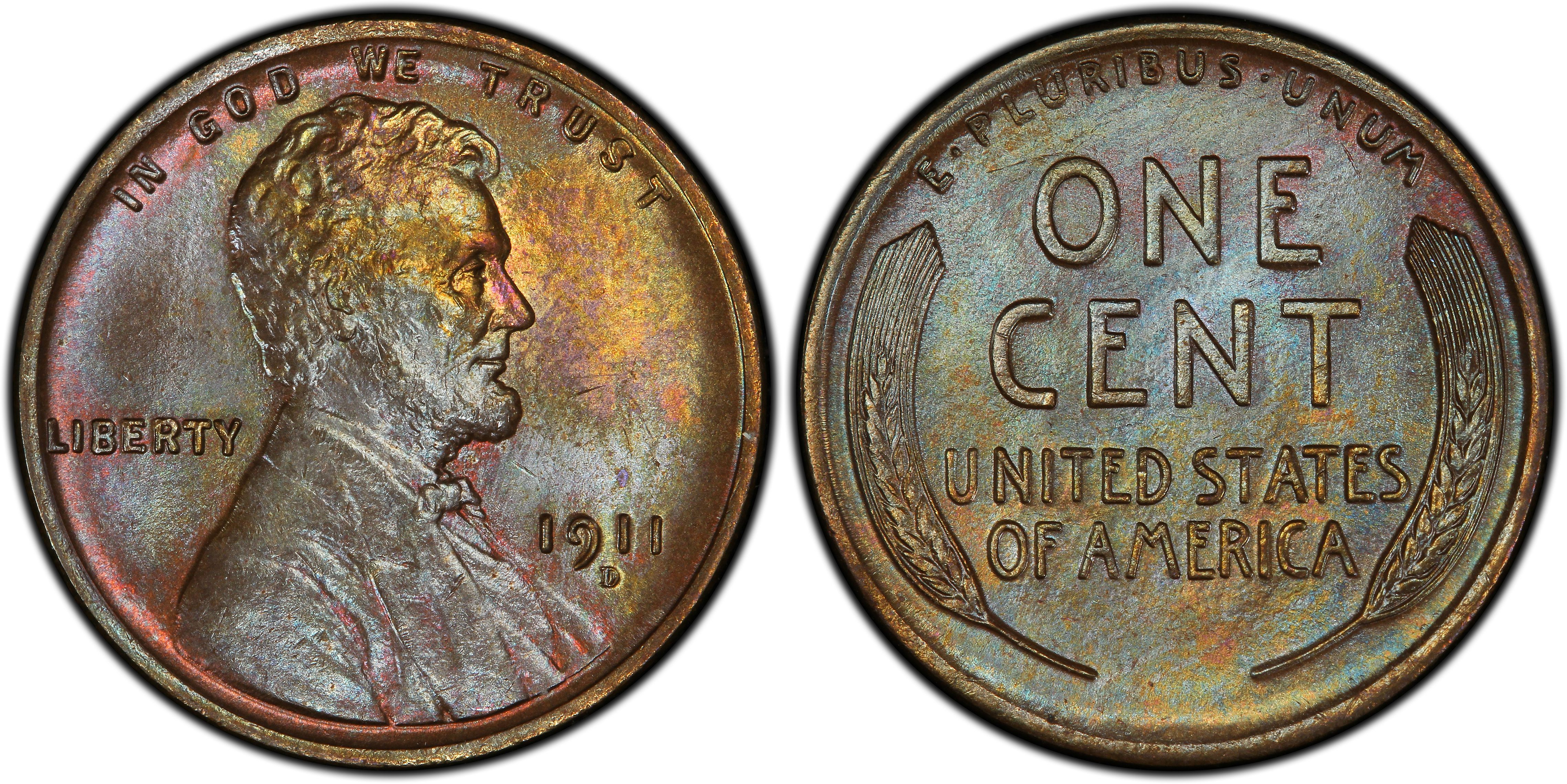
1911-D 1C, BN (Regular Strike)
Series: Lincoln Cents 1909-1958
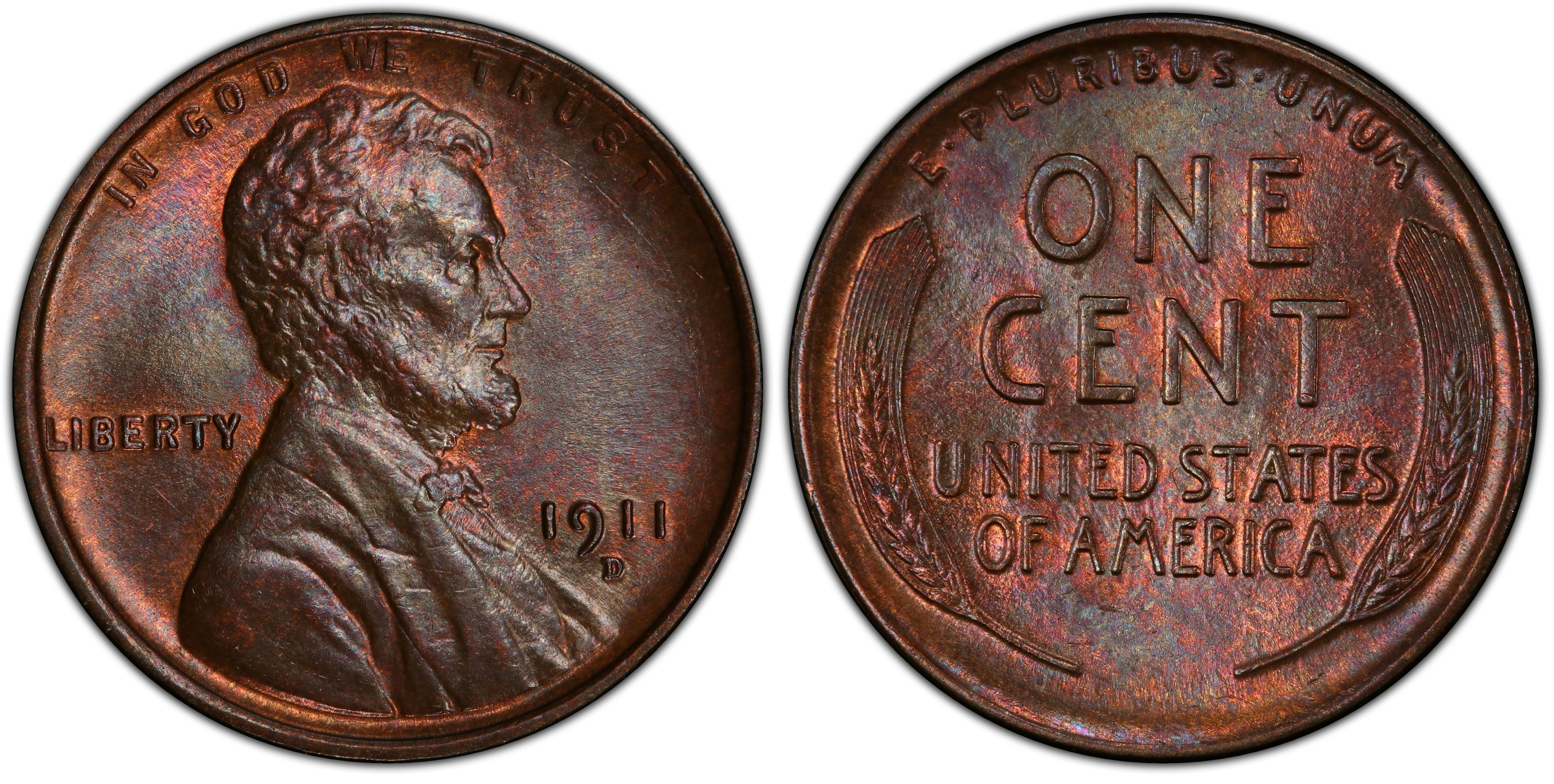
PCGS MS66BN
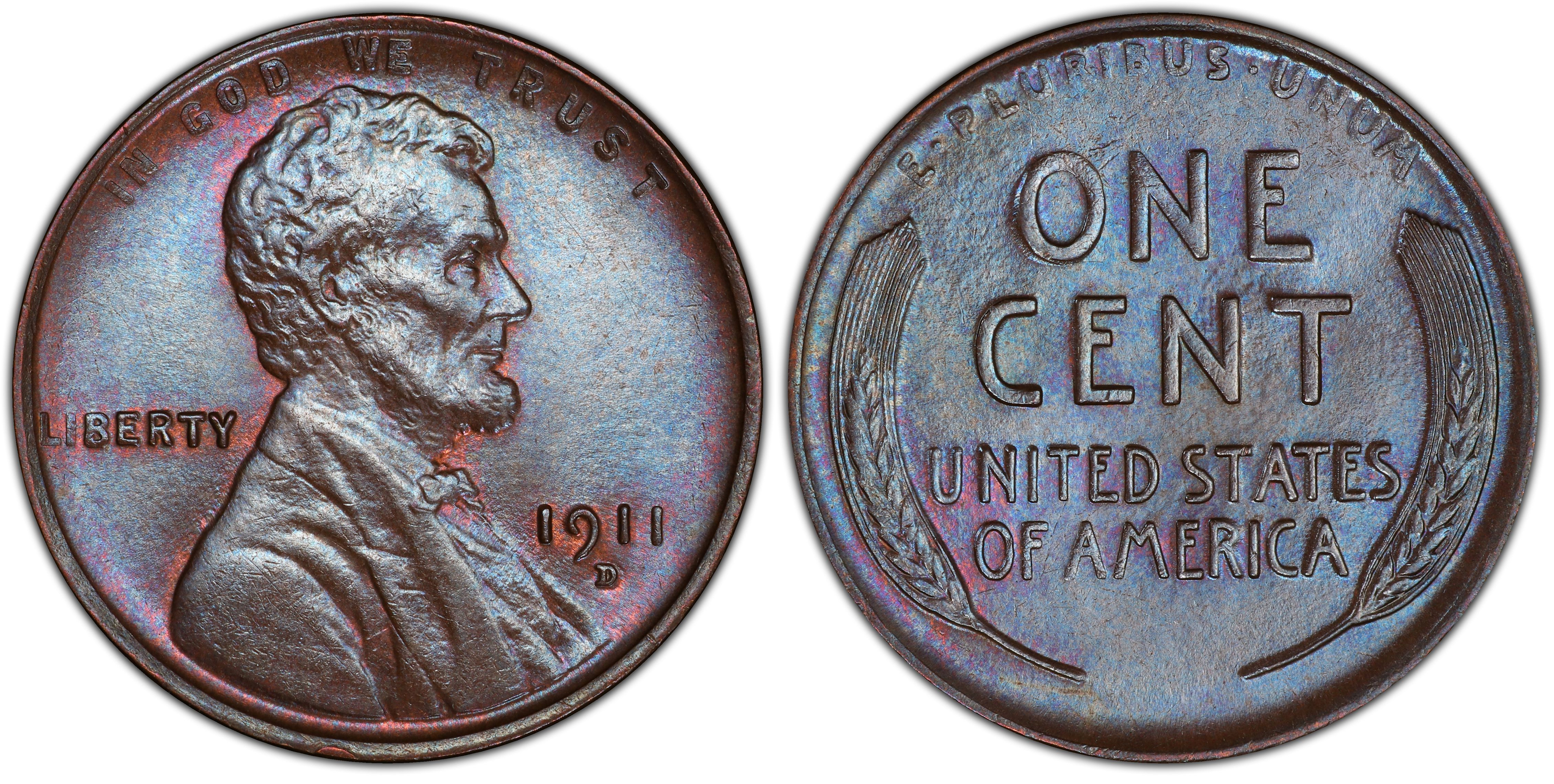
PCGS MS66BN
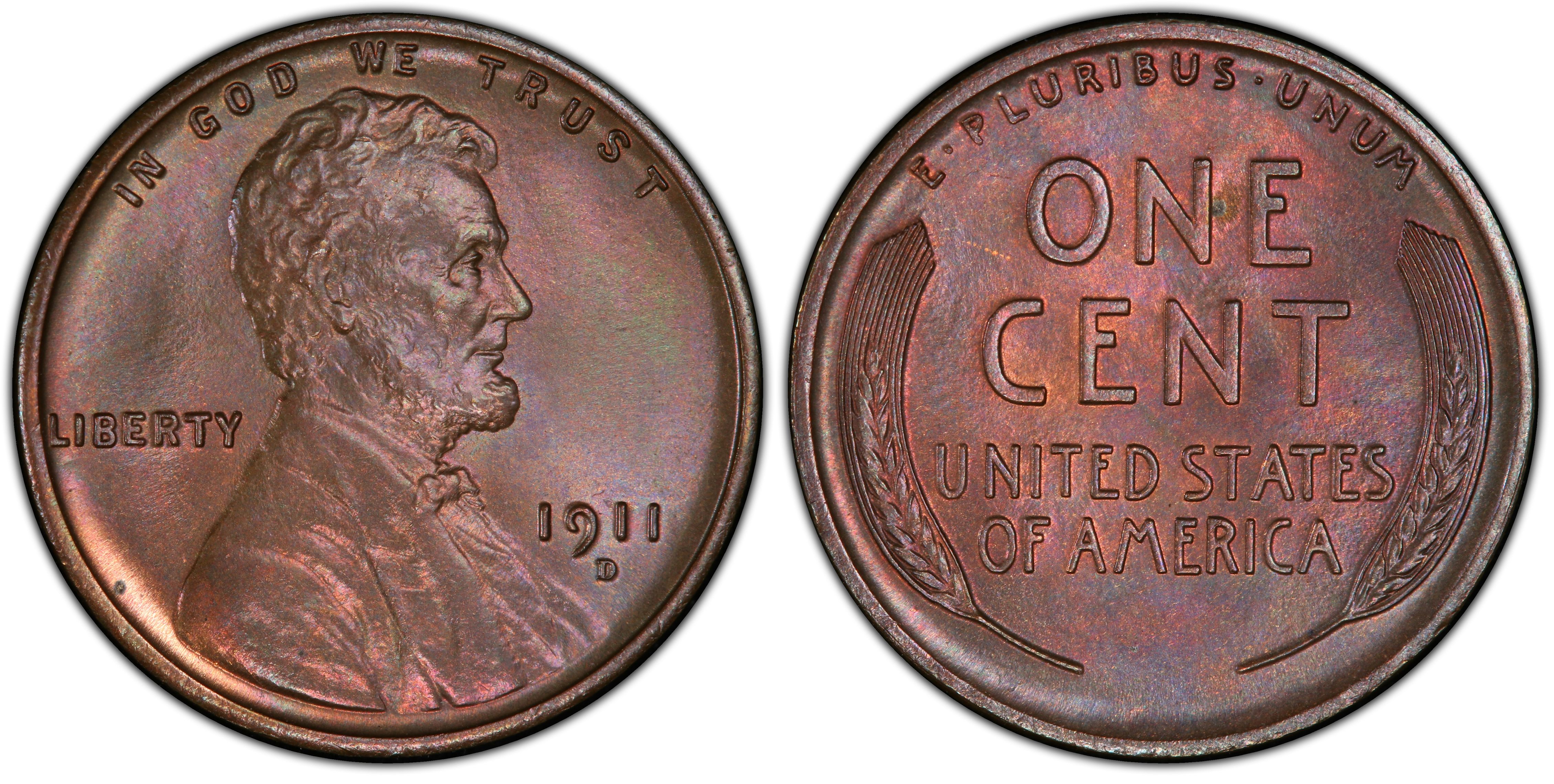
PCGS MS66BN
- PCGS #:
- 2444
- Designer:
- Victor David Brenner
- Edge:
- Plain
- Diameter:
- 19.00 millimeters
- Weight:
- 3.11 grams
- Mintage:
- 12,672,000
- Mint:
- Denver
- Metal:
- 95% Copper, 5% Tin and Zinc
- Auction Record:
- $1,438 • AU58 • 08-07-2010 • Bowers & Merena
Die Varieties
- 1911-D/D 1C RPM, FS-501, BN
- 1911-D/D 1C RPM FS-501, RB
- 1911-D/D 1C RPM FS-501, RD
- 1911-D/D 1C RPM FS-502, BN
- 1911-D/D 1C RPM FS-502, RB
- 1911-D/D 1C RPM FS-502, RD
- 1911-D/D 1C RPM, FS-503, BN
- 1911-D/D 1C RPM FS-503, RB
- 1911-D/D 1C RPM FS-503 (012.82), RD
- 1911-D/D 1C RPM FS-504, BN
- 1911-D/D 1C RPM, FS-504, RB
- 1911-D/D 1C RPM FS-504, RD
Rarity and Survival Estimates Learn More
| Survival Estimate | |
|---|---|
| All Grades | 1,200,000 |
| 60 or Better | 2,000 |
| 65 or Better | 500 |
| Numismatic Rarity | |
|---|---|
| All Grades | R-1.0 |
| 60 or Better | R-4.6 |
| 65 or Better | R-6.0 |
| Relative Rarity By Type All Specs in this Type | |
|---|---|
| All Grades | 26 / 143 TIE |
| 60 or Better | 36 / 143 TIE |
| 65 or Better | 36 / 143 |
| Relative Rarity By Series All Specs in this Series | |
|---|---|
| All Grades | 29 / 146 TIE |
| 60 or Better | 38 / 146 TIE |
| 65 or Better | 36 / 146 |
Condition Census What Is This?
|
#1 PCGS MS66BN
"Terry's Toners Collection of U.S. Coins," GreatCollections, February 15, 2026, Lot 1888746 - $2,020.50; "The Kirk Weaver Collection" (PCGS Set Registry). |
|
#1 PCGS MS66BN
GreatCollections, March 18, 2018, Lot 560422 - $900. |
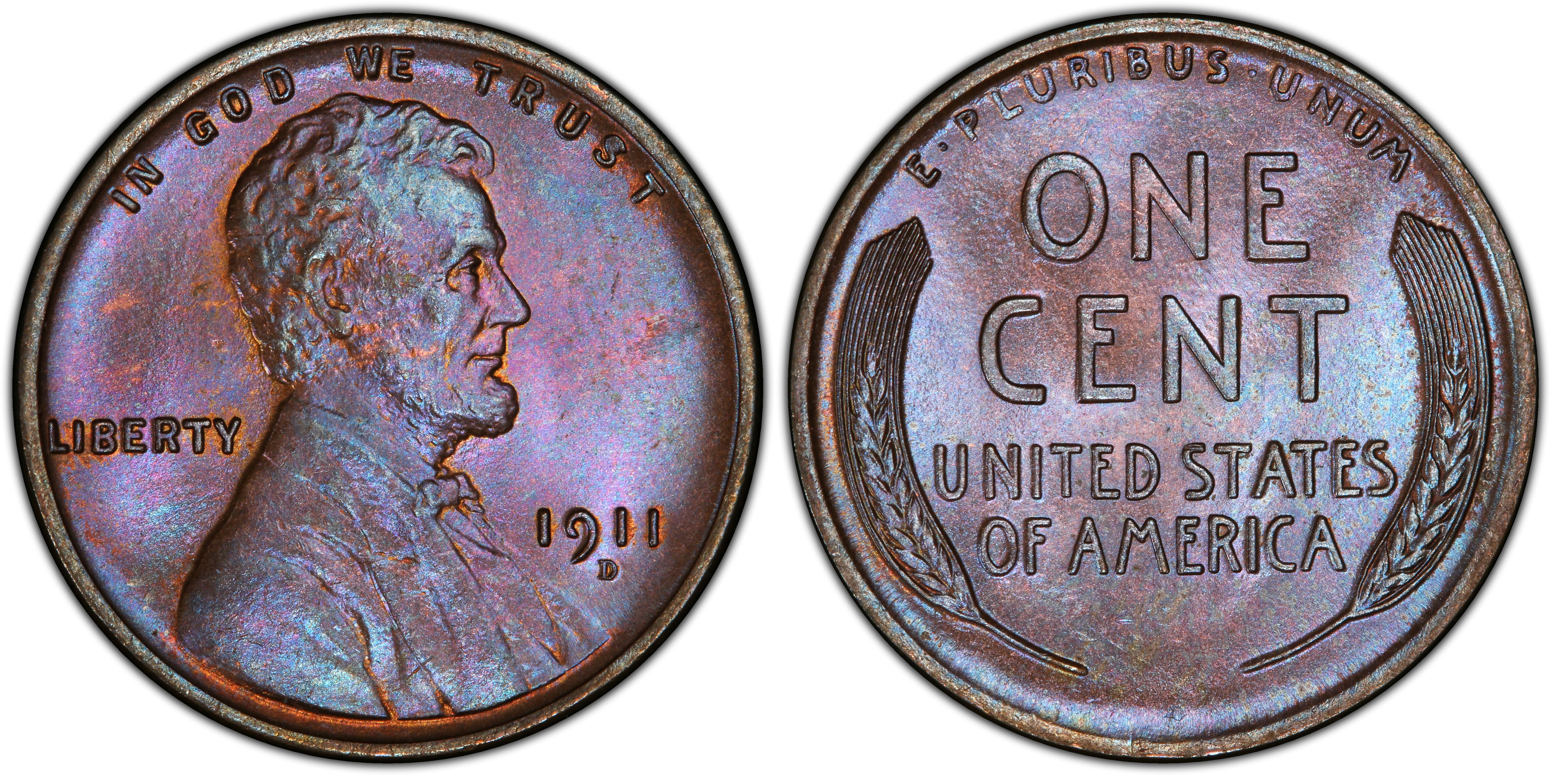 #1 PCGS MS66BN
"The Texas Collection" (PCGS Set Registry). |
|
#1 PCGS MS66BN
"The Arizona Lincolns Collection" (PCGS Set Registry). |
 #1 PCGS MS66BN
"The Lincolncentman Collection" (PCGS Set Registry). |
The 1911-D Lincoln Cent
The 1911-D Lincoln Cent (BN #2444) holds a special place in American numismatics as the first one-cent coin struck at the Denver Mint, kicking off a minor-coin production tradition in the Mile High City that continues to this day. Driven by strong demand in the Rocky Mountain West, Denver struck 12,672,000 pieces, with production beginning on May 20, 1911. While this mintage is nearly triple that of the elusive 1911-S (#2447), it remains a mere drop in the bucket compared to the Philadelphia Mint's massive output that year. Because the vast majority of 1911-D cents entered heavy circulation, most surviving examples are heavily worn and lost their finer design details long ago.
Denver's 1911 Coinage: A Broader View
To put the 1911-D Lincoln Cent into historical context, it helps to look at what else the Denver Mint was (and wasn't) striking that same year:
- Scarce Gold: Denver famously struck the scarce 1911-D Indian Head Quarter Eagle (#7943) and 1911-D Half Eagle (#8521), both of which are highly prized by collectors today.
- Common Gold: In contrast, the 1911-D Saint-Gaudens Double Eagle (#9158) was produced in large quantities and is widely considered a type coin.
- Silver Coinage: Dimes through Half Dollars were struck in moderate to high quantities.
- Nickels: No nickels were struck at the Denver Mint in 1911.
Collecting the 1911-D Lincoln Cent
Regardless of the coloration, the 1911-D Lincoln Cent is scarce in Gem or finer. Superb Gems are only known in Red and these are rare. Even the great Stewart Blay had to settle for a PCGS MS66+RD example, although mega collector Dell Loy Hansen was able to secure an example in PCGS MS67RD. Some Red examples exhibit light spotting, while some RB and BN examples exhibit some degree of blue and magenta toning.
Those looking for a certified "hole filler" type coin, should have no problem finding an attractive example in the PCGS AU50 or better range.
* * *
The 1911-D is an important semi-key date in the Lincoln cent series. Circulated examples are scarce. Mint state examples are very scarce and Full Red Gems are rare. This issue is extremely difficult to locate in grades above MS65RD. Many 1911-Ds are very poorly struck. Full Red examples usually have a deep red color.