1914-D 1C, RD (Regular Strike)
Series: Lincoln Cents 1909-1958

PCGS MS66+RD
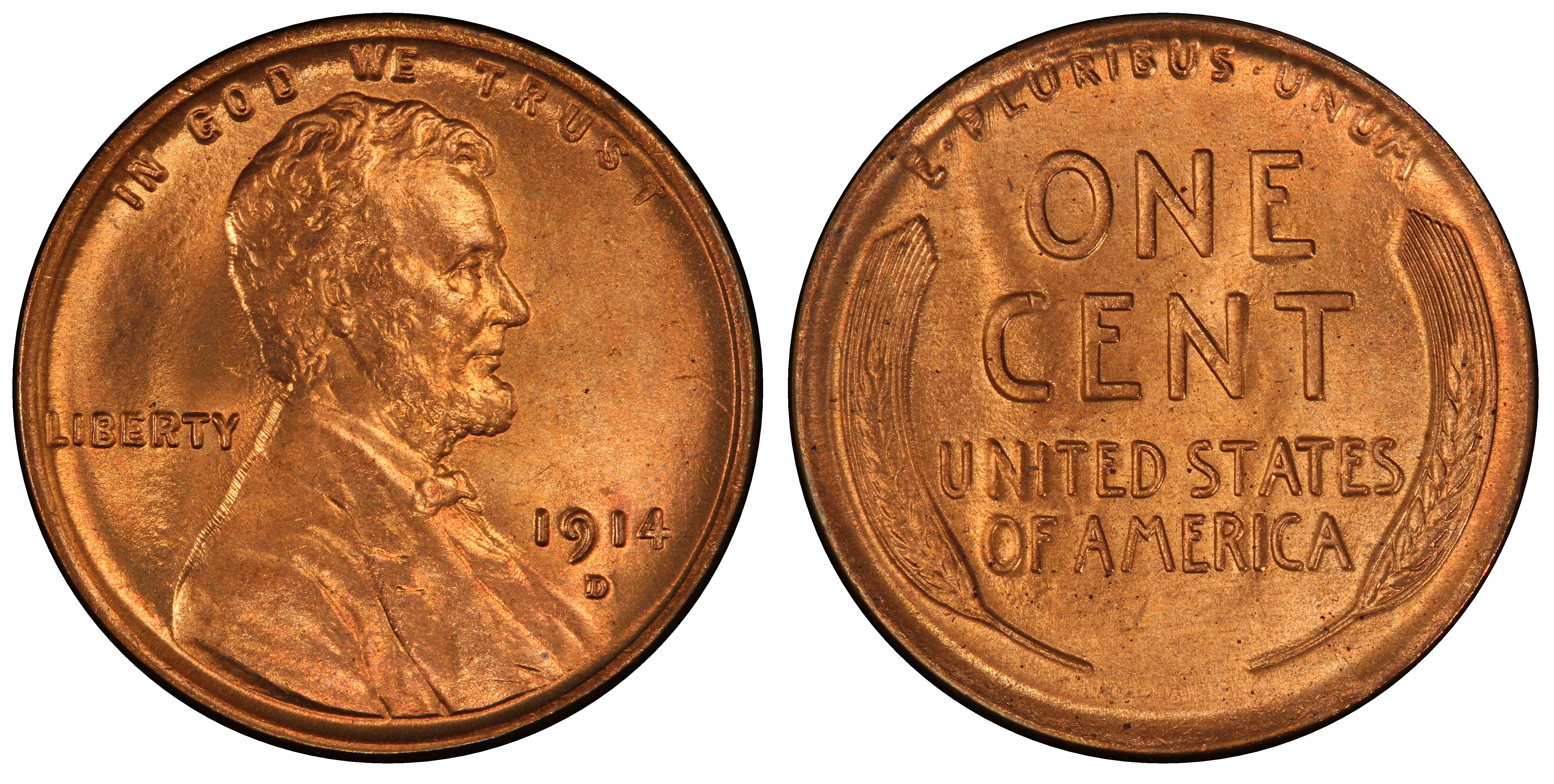
PCGS MS66+RD

PCGS MS66RD
- PCGS #:
- 2473
- Designer:
- Victor David Brenner
- Edge:
- Plain
- Diameter:
- 19.00 millimeters
- Weight:
- 3.11 grams
- Mintage:
- 1,193,000
- Mint:
- Denver
- Metal:
- 95% Copper, 5% Tin and Zinc
- Auction Record:
- $158,625 • MS66+RD • 05-17-2018 • Legend Rare Coin Auctions
Rarity and Survival Estimates Learn More
| Survival Estimate | |
|---|---|
| All Grades | 1,000 |
| 60 or Better | 1,000 |
| 65 or Better | 230 |
| Numismatic Rarity | |
|---|---|
| All Grades | R-5.0 |
| 60 or Better | R-5.0 |
| 65 or Better | R-6.7 |
| Relative Rarity By Type All Specs in this Type | |
|---|---|
| All Grades | 20 / 143 TIE |
| 60 or Better | 20 / 143 TIE |
| 65 or Better | 28 / 143 |
| Relative Rarity By Series All Specs in this Series | |
|---|---|
| All Grades | 20 / 146 TIE |
| 60 or Better | 20 / 146 TIE |
| 65 or Better | 28 / 146 |
Condition Census What Is This?
|
#1 PCGS MS66+RD
Heritage Auctions, January 14, 2026, Lot 3048 - $128,100. |
|
#1 PCGS MS66+RD
As NGC MS66RD #572492-003. Heritage Auctions, March 24, 2005, Lot 5163 - $32,200; As PCGS MS66+RD #85746350. Heritage Auctions, August 2, 2017, Lot 3896 - Passed; Legend Rare Coin Auctions, May 2018, Lot 353 - $158,625; Dell Loy Hansen; "The D.L. Hansen Lincoln Cent Classic Set (1909-1964)" (PCGS Set Registry). |
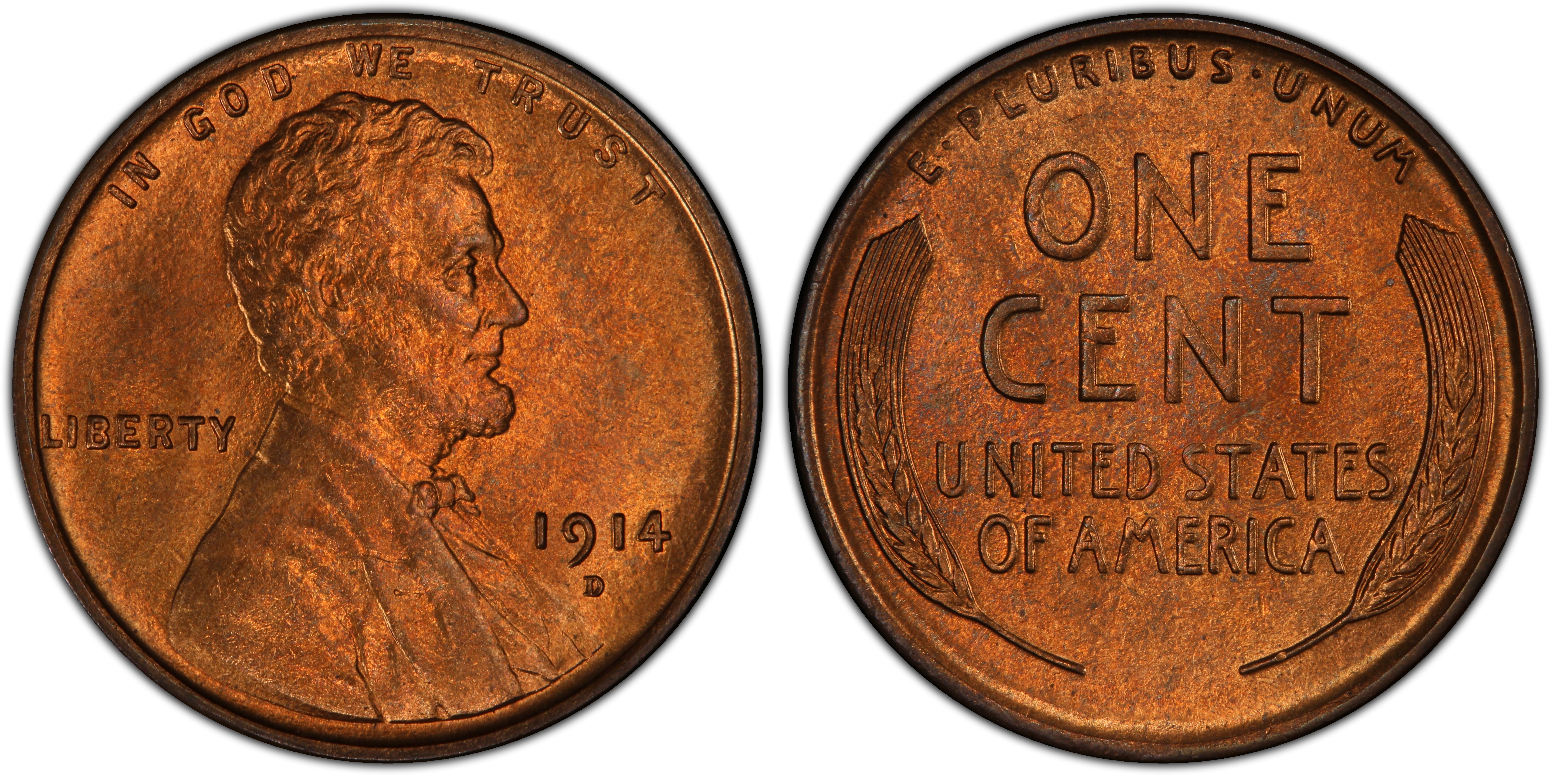 #3 PCGS MS66RD
GreatCollections, November 17, 2024, Lot 1575714 - $62,156.25. |
|
#3 PCGS MS66RD
“Stewart Blay’s Red Copper Collection of Lincoln Cents,” GreatCollections, January 15, 2023, Lot 1272824 – $109,687.50. Old Green Holder. |
 #3 PCGS MS66RD
|
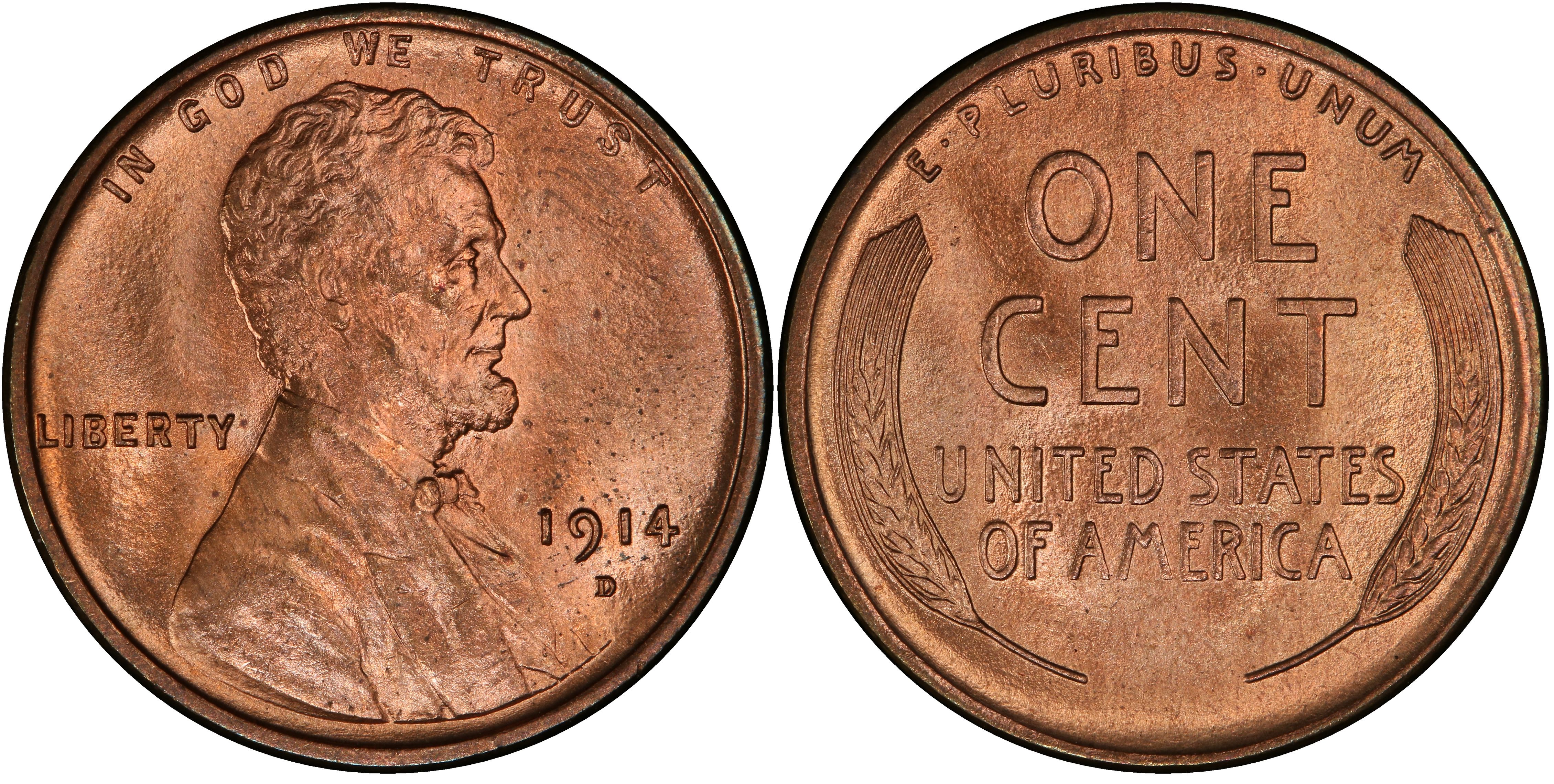 #3 PCGS MS66RD
Stack’s Bowers, March 19, 2020, Lot 3108 – $40,800. |
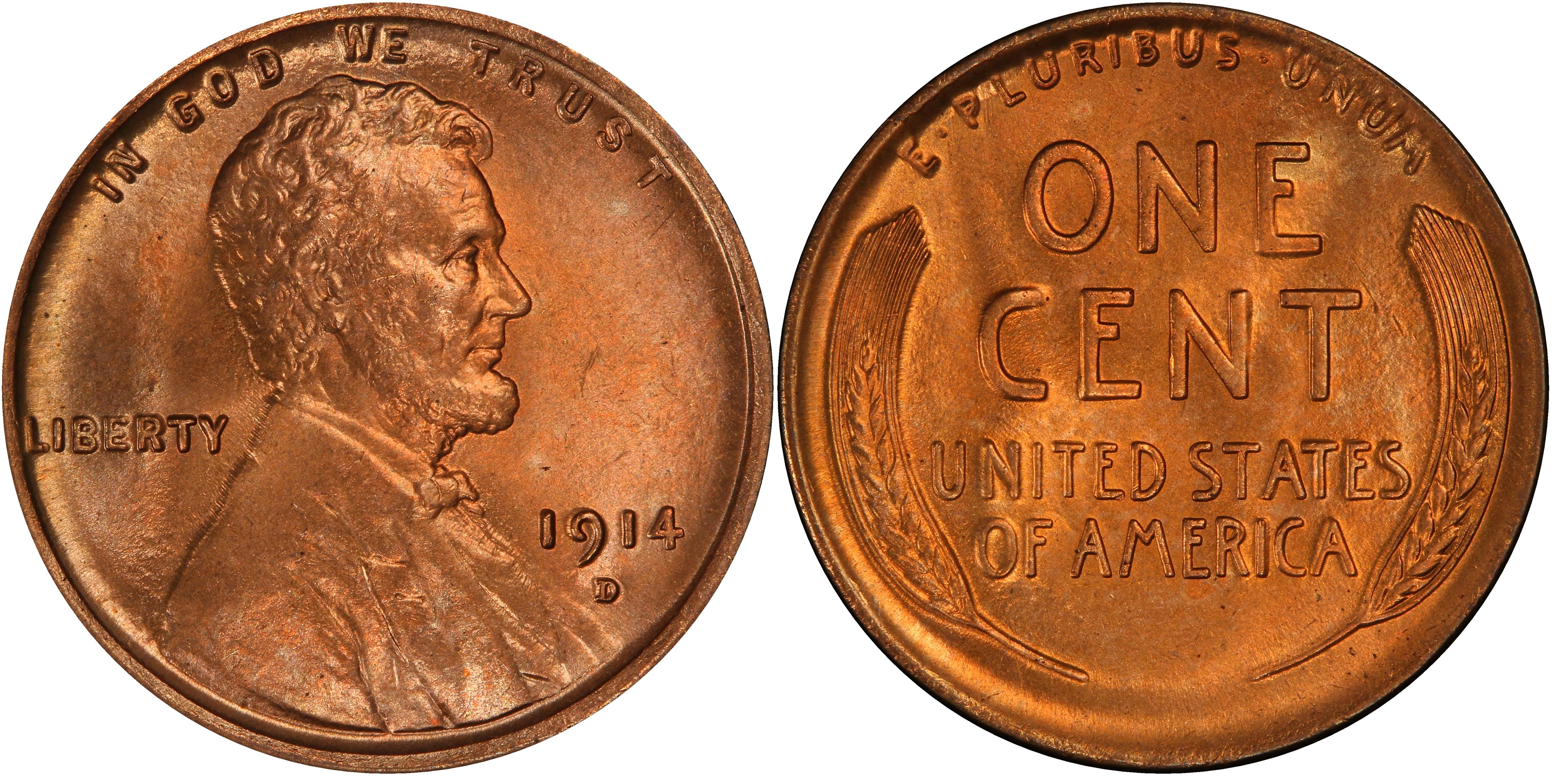 #3 PCGS MS66RD
Dell Loy Hansen. |
 #3 PCGS MS66RD
"The Sage Oak Collection" (PCGS Set Registry). |
 #3 PCGS MS66RD
|
 #3 PCGS MS66RD
|
1914-D Lincoln Cent: The Series Key
For those whose understanding of the Lincoln Cent was largely formed by R.S. Yeoman’s Guide Book of United States Coins, it might seem odd to designate the 1914-D Lincoln Cent (BN #2471) over the 1909-S V.D.B. (BN #2426) as the key to the circulating Lincoln Wheat Cent series. More than twice as many 1914-Ds were struck, the issue circulated without controversy, and in lower circulated grades, the 1914-D is certainly more affordable. However, experts strongly advise against purchasing a raw example, as this remains one of the most frequently counterfeited United States coins of the 20th century.
In Mint State—especially with the Red (RD) designation—there is simply no comparison between the two issues. While the 1909-S V.D.B. can be easily sourced in Mint State Red, the 1914-D cannot. In these grades, 1909-S V.D.B.s outnumber 1914-Ds by a factor of nearly 10 to 1. In fact, there are more PCGS MS66RD 1909-S V.D.B. cents than there are 1914-Ds in Red in all grades combined. At the PCGS MS66 or PCGS MS66+ RD level, the PCGS census for the 1914-D stands at just ten examples; conversely, PCGS counts more than 50 coins finer for the "key date" 1909-S V.D.B. Furthermore, carbon spotting is endemic to the 1914-D. Even the finest known specimens often suffer from this; connoisseur collectors recognize these spots not as a detraction, but as a characteristic quirk of the issue.
Interestingly, as scarce as the 1914-D is in Red, the supply could have been even tighter. Numismatist Walter Breen once noted that as late as 1943, a New England dealer reportedly held an inventory of 10 rolls of Mint State examples—even though the coin was already considered a major rarity. If Breen’s account is true (and his accounts are not always infallible), those rolls would account for potentially 500 Mint State coins. Even including the Brown (BN) and Red-Brown (RB) designations, the total PCGS Population Report for Mint State 1914-Ds is only slightly over 1,100 pieces.
Authenticity and Diagnostics
Due to its value, the 1914-D is a frequent target for counterfeiters and alteration. Genuine examples can be authenticated by four distinct mintmark positions and several key die diagnostics:
- Die Crack (Obverse): On one authentic die, a small crack extends from the rim at the right edge of the bust, traveling upward through the coat and terminating near the gap between the date and the mintmark.
- The "T" Mark: Another authentic die exhibits a small tool mark curving downward from the left serif of the T in LIBERTY.
- Hub Marks: All authentic 1914-D cents feature distinctive circular hub marks inside the upper loop of the 9 in the date.
* * *