1911 1C, RB (Proof)
Series: Lincoln Cents 1909-1958

PCGS PR67RB
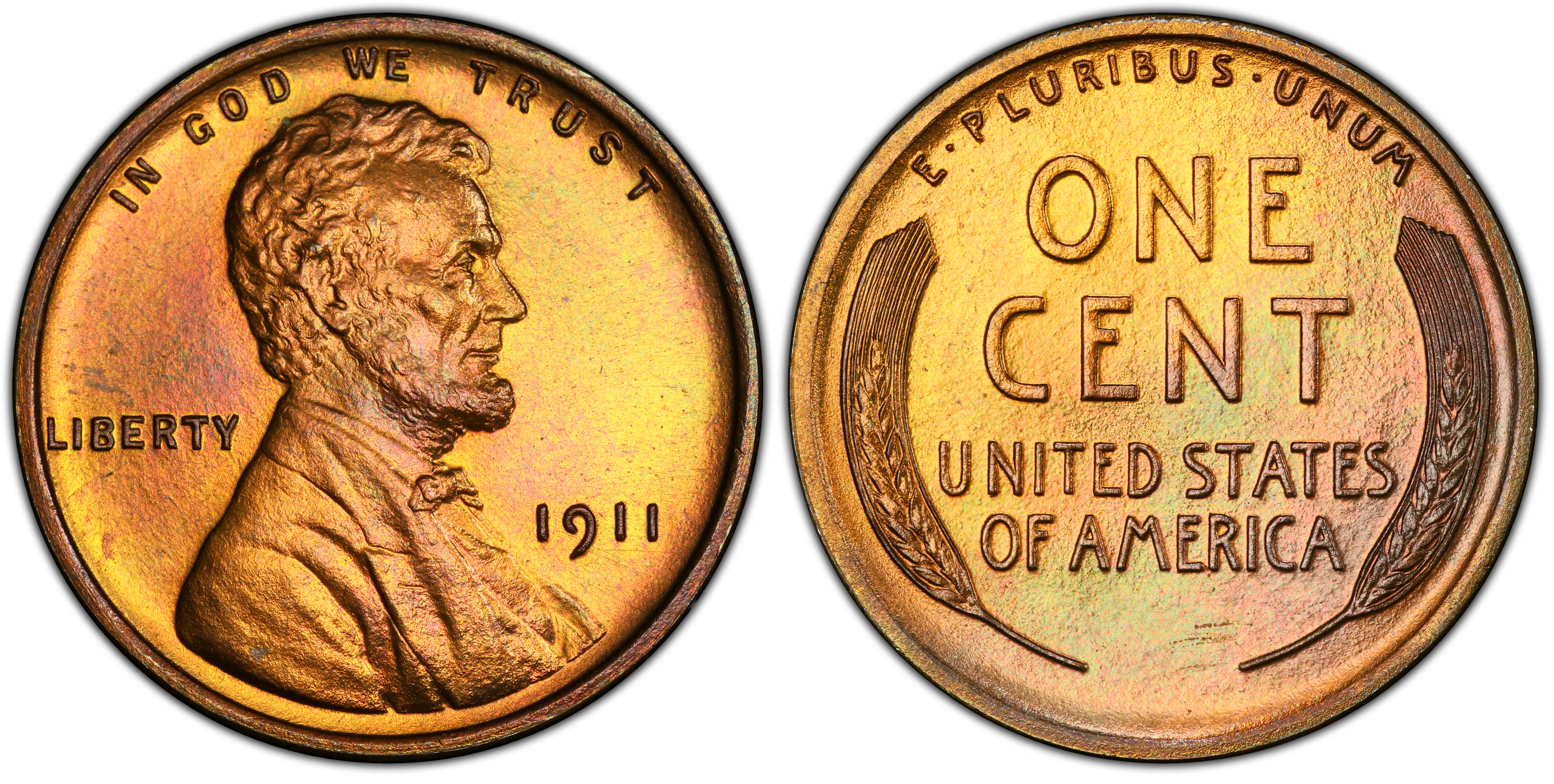
PCGS PR66+RB

PCGS PR66+RB
- PCGS #:
- 3310
- Designer:
- Victor David Brenner
- Edge:
- Plain
- Diameter:
- 19.00 millimeters
- Weight:
- 3.11 grams
- Mintage:
- 2,411
- Mint:
- Philadelphia
- Metal:
- 95% Copper, 5% Tin and Zinc
- Auction Record:
- $14,688 • PR66 • 08-05-2014 • Heritage Auctions
Rarity and Survival Estimates Learn More
| Survival Estimate | |
|---|---|
| All Grades | 400 |
| 60 or Better | 400 |
| 65 or Better | 150 |
| Numismatic Rarity | |
|---|---|
| All Grades | R-6.2 |
| 60 or Better | R-6.2 |
| 65 or Better | R-7.5 |
| Relative Rarity By Type All Specs in this Type | |
|---|---|
| All Grades | 5 / 19 TIE |
| 60 or Better | 5 / 19 TIE |
| 65 or Better | 6 / 19 TIE |
| Relative Rarity By Series All Specs in this Series | |
|---|---|
| All Grades | 5 / 19 TIE |
| 60 or Better | 5 / 19 TIE |
| 65 or Better | 6 / 19 TIE |
Condition Census What Is This?
|
#1 PCGS PR67RB
"The Russy Collection" (PCGS Set Registry). |
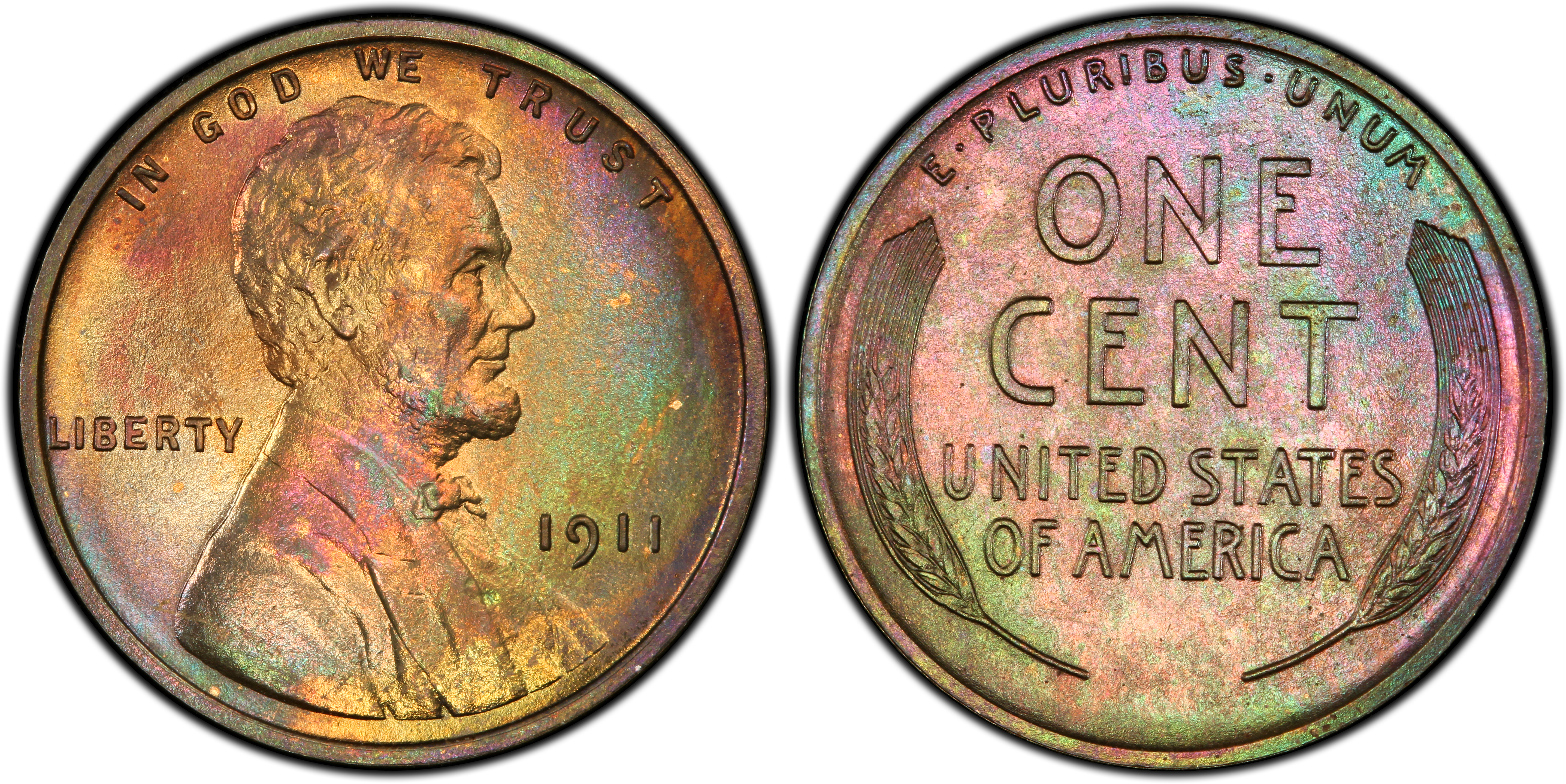 #2 PCGS PR66+RB
Legend Rare Coin Auctions, October 15, 2015, Lot 213 - $12,337.50; Legend Rare Coin Auctions, July 13, 2017, Lot 61 - $10,281.25; "The Angel's Assemblage Collection" (PCGS Set Registry). |
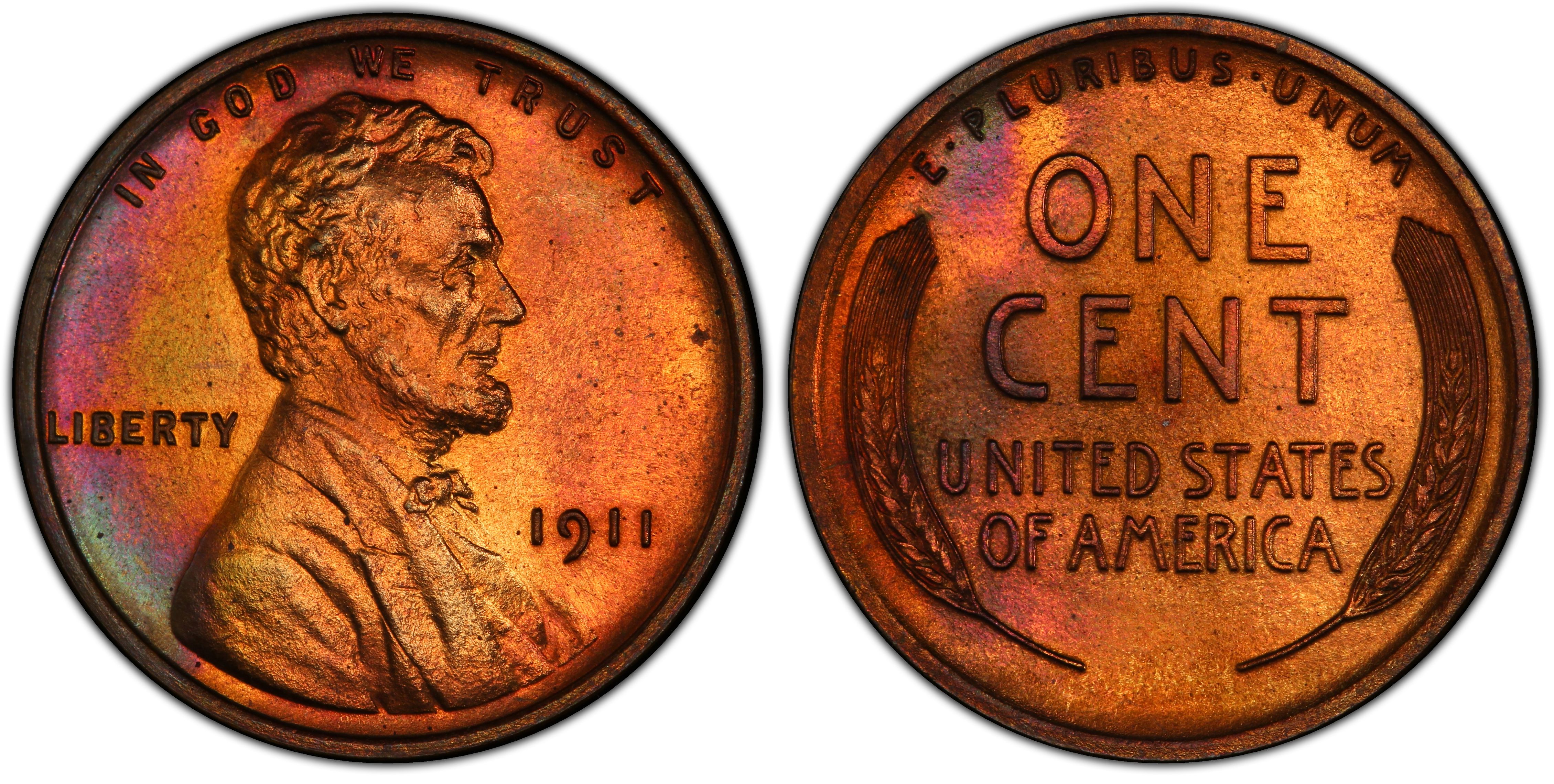 #2 PCGS PR66+RB
|
|
#2 PCGS PR66+RB
GreatCollections, September 15, 2024, Lot 1658173 - $7,593.75; "The chiro16 Collection" (PCGS Set Registry). |
|
#2 PCGS PR66+RB
|
The 1911 Lincoln Cent Matte Proof
Public interest in obtaining the new proof Lincoln Cents peaked in 1910; for the Matte Proof Lincoln Cents, this shift resulted in a year-over-year decline in demand of roughly 60%. While the Red Book reports a mintage figure of 1,725 pieces for 1911 (based on the United States Mint's own figures), the Mint’s official Medal and Proof Book records a total of 2,411 coins accepted. Perhaps the dispartiy relates to the total number of pieces distributed.
Based on these production numbers, PCGS has certified just under 25% of the total output. The vast majority of these surviving specimens fall into the Red and Brown (RB) classification, exhibiting at least some original mint red. It is important to note, however, that most RB and Brown (BN) examples display some degree of toning caused by chemicals in the sulfur-bearing tissue paper the Mint originally used to package them. While this toning is often quite attractive, the paper's long-term impact on the coins' overall condition was less positive—leaving the majority of surviving examples capped in the PCGS PR64 to PCGS PR65 range.
|
1911 Lincoln Cent Matte Proof Deliveries |
|||
| Date | Struck | Accepted | % Accepted |
| January 13 | 301 | 278 | 92.4% |
| February 2 | 300 | 273 | 91% |
| February 17 | 498 | 410 | 82.3% |
| April 24 | 299 | 270 | 90.3% |
| May 19 | 150 | 148 | 98.7% |
| July 31 | 301 | 291 | 96.7% |
| October 14 | 300 | 286 | 95.3% |
| October 31 | ? | 180 | ? |
| November 6 | ? | 89 | ? |
| December 19 | 200 | 186 | 93% |
| Total | (2,349) | 2,411 | ±91.2% |
Collecting the 1911 Lincoln Cent Matte Proof
Given its typical quality and scarcity, the 1911 Matte Proof Lincoln Cent (BN #3309) ranks fifth out of nine in collecting difficulty across all grades, and fifth in PCGS PR66RD. Collectors committed to building a top-tier set in the PCGS Set Registry will find that the 1911 issue is not as difficult to source as the elusive 1909 V.D.B. (BN #3300), the conditionally rare 1912 (BN #3312), or the tough 1915 (BN #3321) and 1916 (BN #3324) issues.
Examples usually exhibit sharp details, while the coin's squared rims and smooth edges serve as easy diagnostics to differentiate the proof from business strikes. Another simple diagnostic pickup point is a thin fin of extra metal protruding from the vertex of the Y in LIBERTY. Additionally, all proof Lincoln Cents struck between 1910 and 1914 share a thin, diagonal die scratch at the bottom of the M in UNUM - a diagnostic that originates directly from the master die.
* * *