1913 1C, RD (Proof)
Series: Lincoln Cents 1909-1958

PCGS PR67+RD
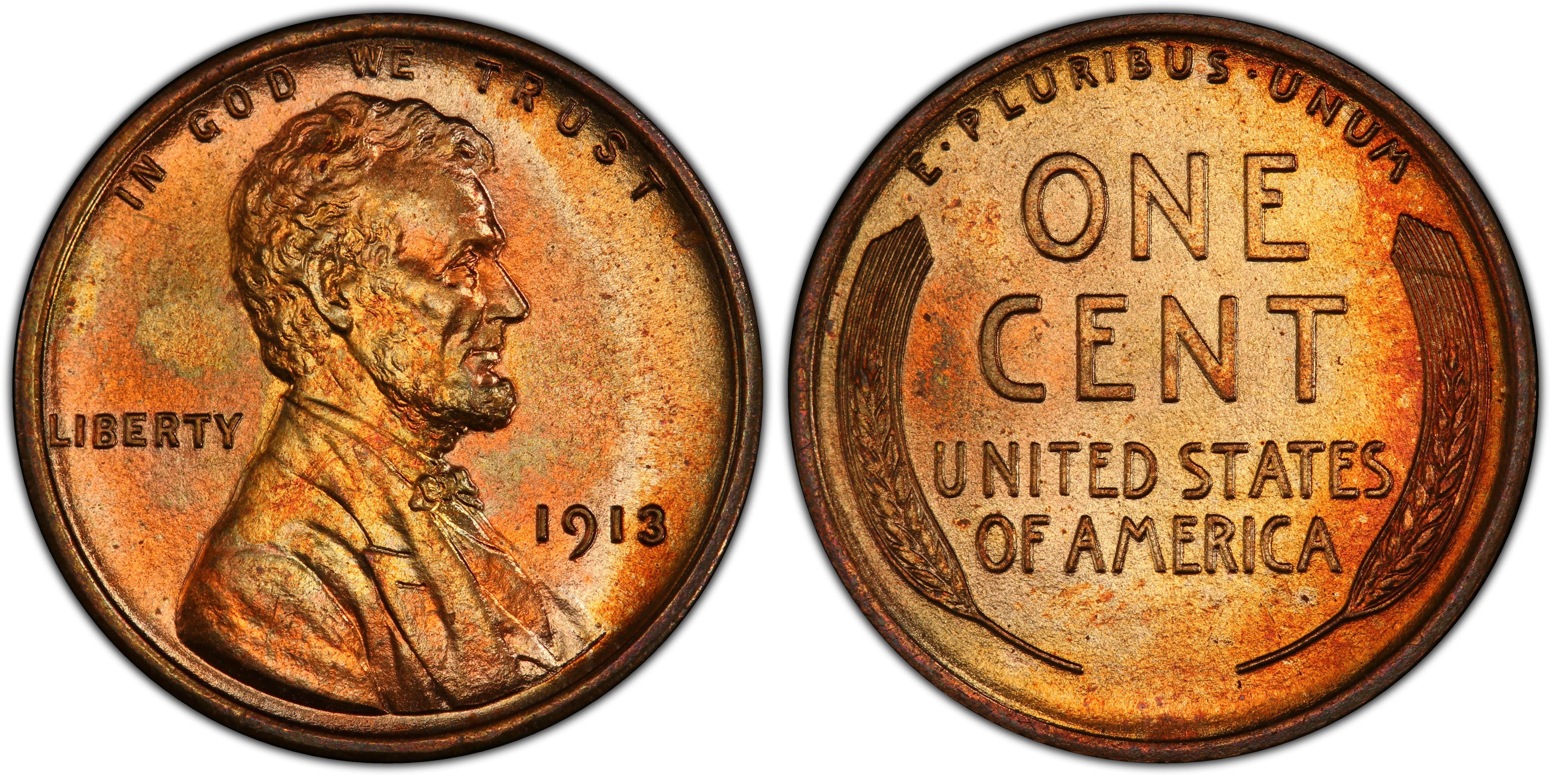
PCGS PR67+RD

PCGS PR67RD
- PCGS #:
- 3317
- Designer:
- Victor David Brenner
- Edge:
- Plain
- Diameter:
- 19.00 millimeters
- Weight:
- 3.11 grams
- Mintage:
- 2,983
- Mint:
- Philadelphia
- Metal:
- 95% Copper, 5% Tin and Zinc
- Auction Record:
- $32,200 • PR67 • 03-01-2009 • Bowers & Merena
Rarity and Survival Estimates Learn More
| Survival Estimate | |
|---|---|
| All Grades | 250 |
| 60 or Better | 250 |
| 65 or Better | 120 |
| Numismatic Rarity | |
|---|---|
| All Grades | R-6.6 |
| 60 or Better | R-6.6 |
| 65 or Better | R-7.8 |
| Relative Rarity By Type All Specs in this Type | |
|---|---|
| All Grades | 7 / 26 TIE |
| 60 or Better | 7 / 26 TIE |
| 65 or Better | 7 / 26 TIE |
| Relative Rarity By Series All Specs in this Series | |
|---|---|
| All Grades | 7 / 26 TIE |
| 60 or Better | 7 / 26 TIE |
| 65 or Better | 7 / 26 TIE |
Condition Census What Is This?
|
#1 PCGS PR67+RD
As PCGS PR67+RD #09925148. "Stewart Blay's Red Copper Collection of Lincoln Cents," GreatCollections, August 28, 2022, Lot 1204598 - $84,543.75; "The Lincoln Collection of Lincoln Cents," GreatCollections, March 23, 2025, Lot 1745227 - $51,750. As PCGS PR67+RD #56207018. "The Jeremy Bolt - Hurricane Milton Collection"; Heritage Auctions, August 2026, Lot TBD - View. |
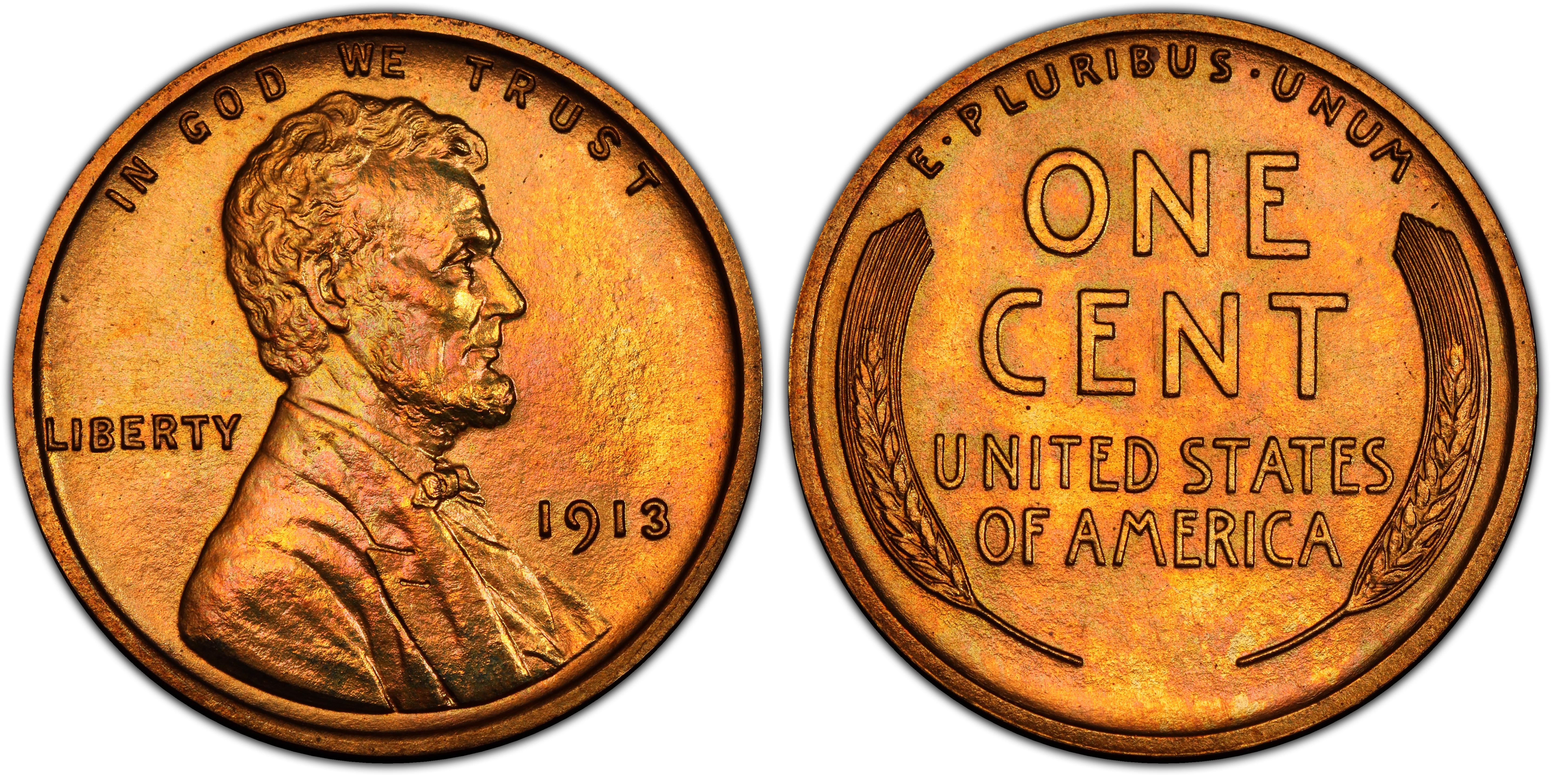 #2 PCGS PR67RD
"The Bender Family Collection, Part II," Heritage Auctions, January 15, 2023, Lot 3337 - $19,200; "The Brenner's Masterpieces Collection" (PCGS Set Registry). |
| #2 PCGS PR67RD |
 #2 PCGS PR67RD
Heritage Auctions, September 17, 2015, Lot 3738 - $15,275; Heritage Auctions, April 28, 2016, Lot 4545 - $11,162.50; Stack's Bowers, August 11, 2016, Lot 3034 - Passed; Heritage Auctions, February 16, 2017, Lot 3642 - Passed; “The Angel’s Assemblage Collection" (PCGS Set Registry). |
 #2 PCGS PR67RD
"The Wright Collection," Heritage Autions, August 2016, Lot 3973 - $12,925. At the time of this sale, the Wright Collection was the #3 Finest All-Time PCGS Set Registry Set of Matte Proof Lincolns. |
 #2 PCGS PR67RD
|
| #2 PCGS PR67RD |
The 1913 Lincoln Cent Matte Proof
As is the case with most Lincoln Cent Matte Proofs, the United States Mint has presented multiple positions on the issue's total mintage. The Mint's internal record-keeping was inconsistent, leading to a variety of reported figures. For years, PCGS published the mintage as 2,848, relying on the figure in Walter Breen's Encyclopedia of United States and Colonial Proof Coins. I have adopted a slightly higher figure, drawing from a more comprehensive account of accepted coins found in one of two Medal and Proof books maintained by the Mint's Medal Department.
|
1913 Lincoln Cent Matte Proof Deliveries (Book 1) |
|||
| Date | Struck | Accepted | % Accepted |
| January 14 | 300 | 260 | 86.7% |
| January 23 | 400 | 375 | 93.8% |
| March 5 | x | 500 | ? |
| March 20 | y | 300 | ? |
| April 30 | 250 | 220 | 88% |
| May 26 | 351 | 250 | 71.2% |
| October 18 | 150 | 110 | 73.3% |
| November 18 | 300 | 285 | 95% |
| November 25 | 250 | 233 | 93.2% |
| December 10 | 250 | 200 | 80% |
| December 24 | 300 | 250 | 83.3% |
| Total | 2,551 + x + y | 2,983 | |
Even here, some vagueness persists, as the March 5 and March 20 entries include nickels as well. However, assuming the "number accepted" column is accurate, the correct mintage for the 1913 Lincoln Cent Matte Proof (BN #3315) is 2,983.
|
1913 Lincoln Cent Matte Proof Deliveries (Book 2) |
|||
| Date | Struck | Accepted | % Accepted |
| January 16 | 300 | 260 | 86.7% |
| March 5 | 500 | z | ? |
| March 20 | 603 | 300 | 49.8% |
| May 1 | 250 | 220 | 88% |
| May 26 | 351 | 250 | 71.2% |
| October 13 | 150 | 110 | 73.3% |
| November 19 | 300 | 285 | 95% |
| November 25 | 250 | 233 | 93.2% |
| December 12 | 250 | 200 | 80% |
| December 24 | 300 | 250 | 86.3% |
| Total | 3,254 | 2,108 + z | |
Die Diagnostics
Two die pairs have been identified for the 1913 Lincoln Cent Matte Proof. The first obverse shows a hooked shape die scratch scratch left of the I in IN.
The reverse die is the same one used to strike all Lincoln Cent Matte Proofs since 1910; the 1914 issue marked the final deployment of this die. A scratch at the bottom of the M in UNUM can be seen on all 1910–1914 Proofs.
Collecting the 1914 Lincoln Cent Matte Proof
With the exception of the 1909 without V.D.B. Matte Proof (BN #3303), the 1913 Lincoln Cent Matte Proof is the most common of the Lincoln Matte Proofs in original Red. Examples are available in some quantity in grades from PCGS PR65RD to PCGS PR67RD. Examples are also plentiful in Red and Brown and Brown color designations. Both categories are known for specimens that exhibit a wide range of toning, from aubergine and ice blue to vibrant magenta and peacock patination. Red examples run the gamut as well: some display a honey or cognac hue, while others retain much—though usually not all—of the coin's original, fiery luster.
* * *