1936 1C Brilliant, BN (Proof)
Series: Lincoln Cents 1909-1958

PCGS PR65BN
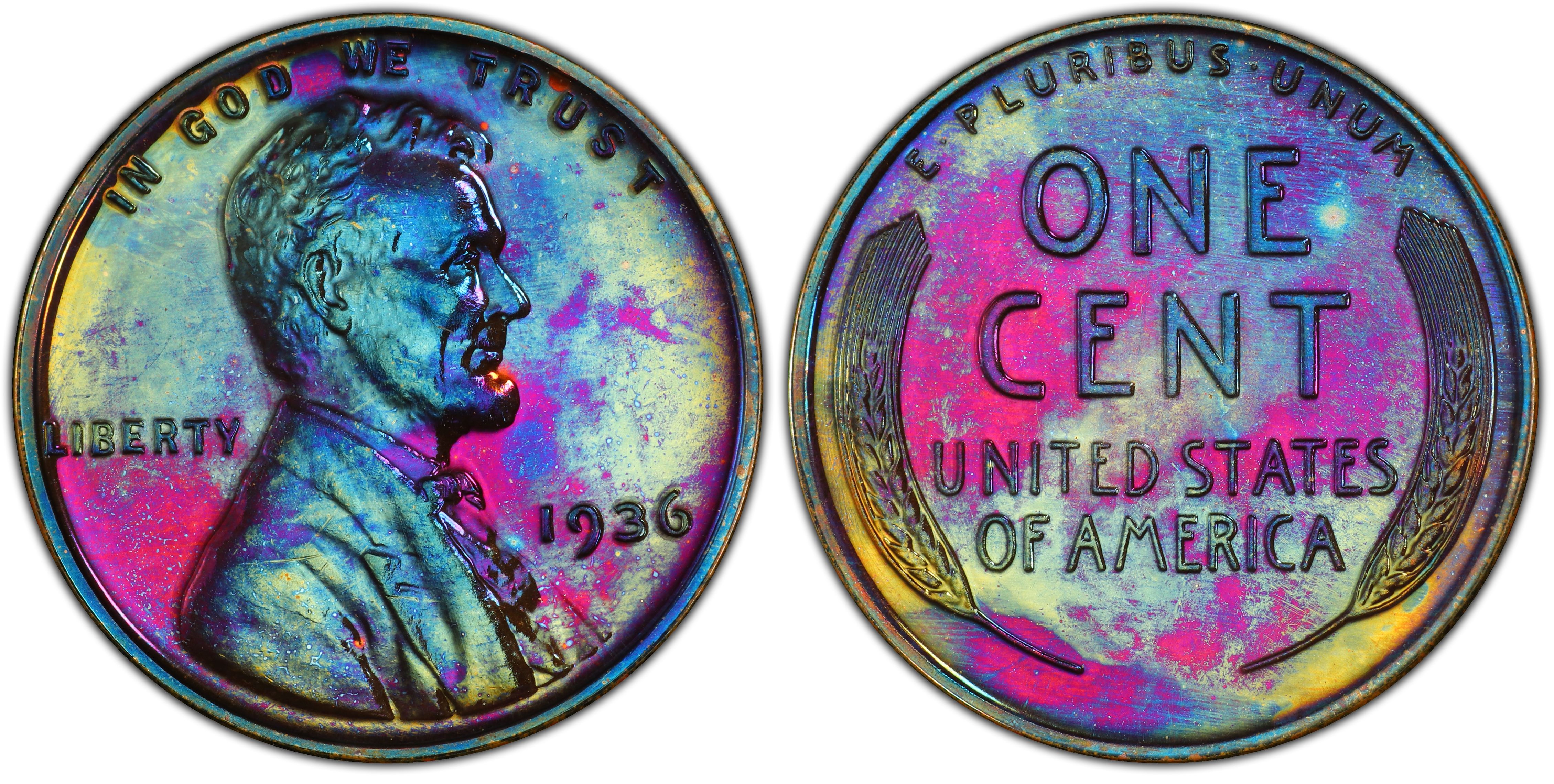
PCGS PR65BN

PCGS PR64BN
- PCGS #:
- 3333
- Designer:
- Victor David Brenner
- Edge:
- Plain
- Diameter:
- 19.00 millimeters
- Weight:
- 3.11 grams
- Mintage:
- 5,569
- Mint:
- Philadelphia
- Metal:
- 95% Copper, 5% Tin and Zinc
- Auction Record:
- $2,070 • PR65 • 05-01-2009 • Heritage Auctions
Major Varieties
Go To Grade
Current Auctions - PCGS Graded
Current Auctions - NGC Graded
For Sale Now at Collectors Corner - PCGS Graded
For Sale Now at Collectors Corner - NGC Graded
Rarity and Survival Estimates Learn More
| Survival Estimate | |
|---|---|
| All Grades | 300 |
| 60 or Better | 300 |
| 65 or Better | 50 |
| Numismatic Rarity | |
|---|---|
| All Grades | R-6.4 |
| 60 or Better | R-6.4 |
| 65 or Better | R-8.5 |
| Relative Rarity By Type All Specs in this Type | |
|---|---|
| All Grades | 6 / 18 |
| 60 or Better | 6 / 18 |
| 65 or Better | 2 / 18 TIE |
| Relative Rarity By Series All Specs in this Series | |
|---|---|
| All Grades | 6 / 18 |
| 60 or Better | 6 / 18 |
| 65 or Better | 2 / 18 TIE |
Condition Census What Is This?
| #1 PR65BN estimated grade |
| #2 PR64BN PCGS grade |
| #2 PR64BN estimated grade |
| #4 PR63BN PCGS grade |
| #4 PR63BN PCGS grade |
| #4 PR63BN estimated grade |
| #7 PR62BN estimated grade |
| #7 PR62BN estimated grade |
| #7 PR62BN estimated grade |
| #10 PR61BN PCGS grade |
Jaime Hernandez:
In 1936 the U.S. Mint struck two different versions of Proof Cents. It struck a Satin Proof and it also struck the Brilliant Proof. The Brilliant Proof appears to be more common that the Satin Finish but both finishes are scarce. The Brilliant Proofs have a mirror proof like finish and are considered scarce in PR66 condition and higher. In PR67 they are very scarce with less than a handful of examples known to exist in this condition and none being finer.