1795 1C Jefferson Head S-80, Plain Edge, BN (Regular Strike)
Series: Liberty Cap Cents 1793-1796
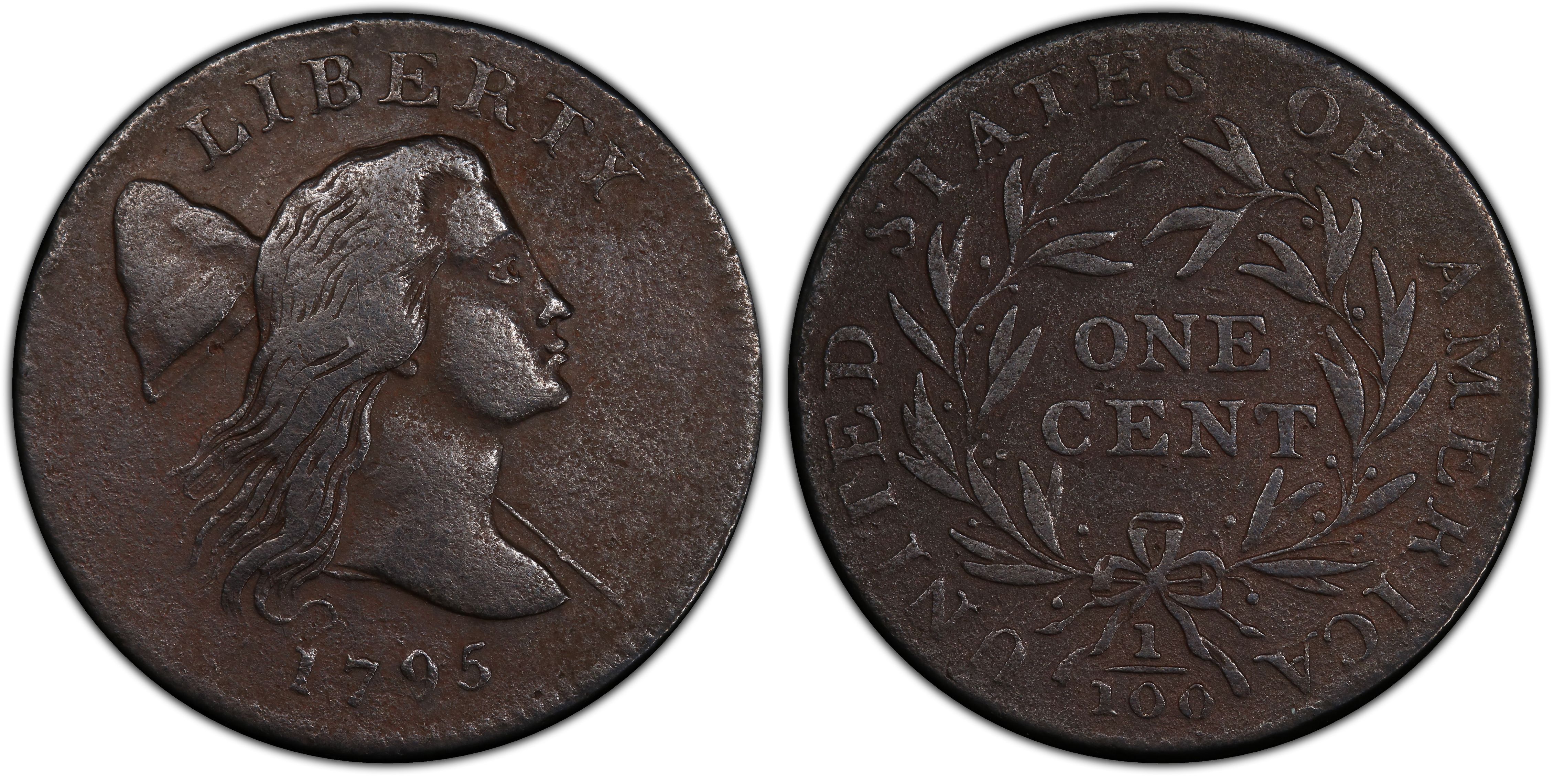
PCGS VF20BN

PCGS VF20BN
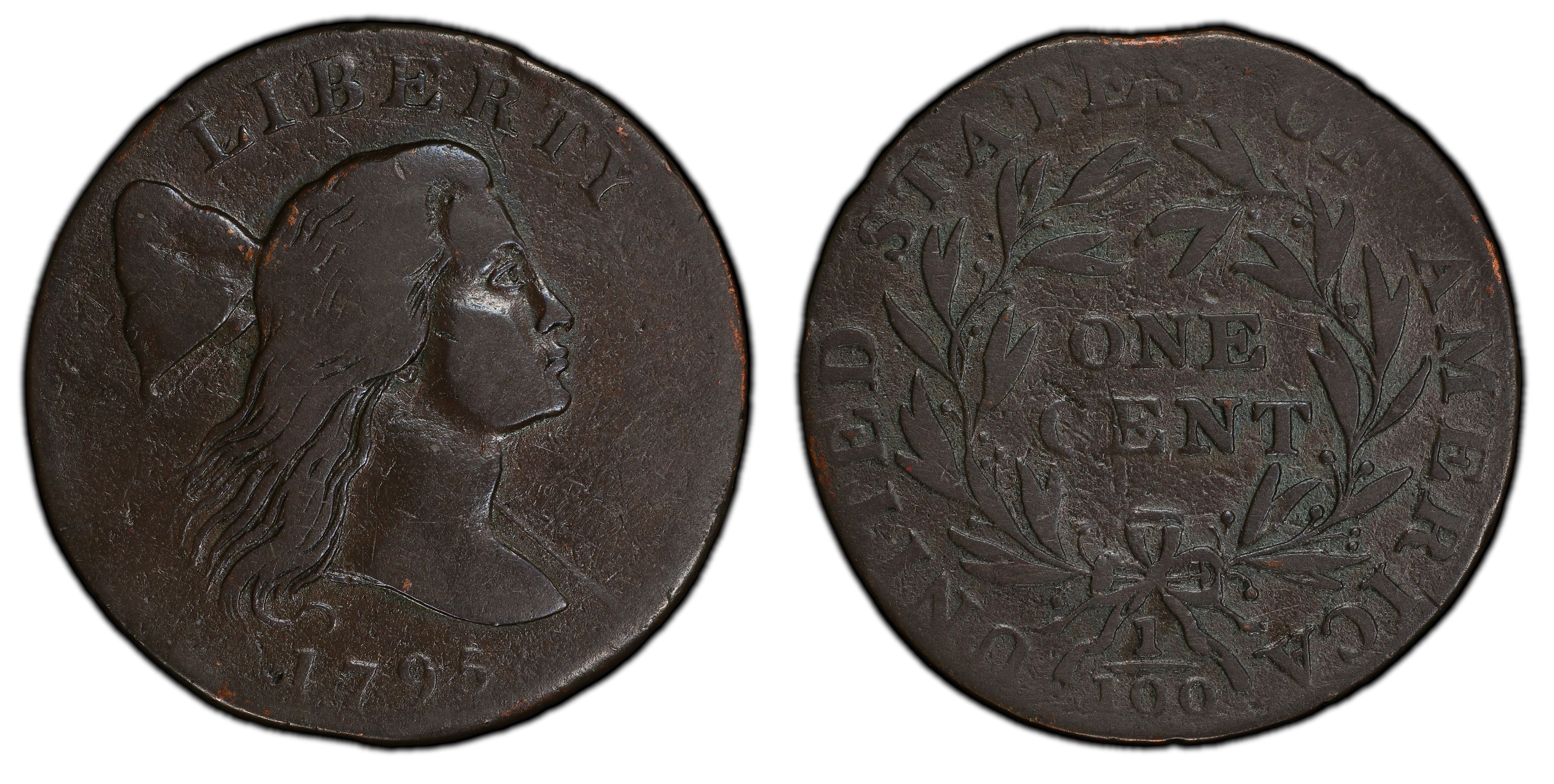
PCGS F15BN
- PCGS #:
- 35741
- Designer:
- Attributed to John Harper
- Edge:
- Plain
- Diameter:
- 28.00 millimeters
- Weight:
- 10.89 grams
- Mintage:
- N/A
- Mint:
- Philadelphia
- Metal:
- Copper
- Auction Record:
- $264,000 • XF40BN • 01-14-2019 • Heritage Auctions
Die Varieties
- 1795 1C Jefferson Head S-80, Plain Edge, BN
Condition Census What Is This?
|
#1 XF45 details, burnished
Purchased in 1868 for $1.50 by Ebenezzer Locke Mason, Jr. - J. Colvin Randall Collection - Mason & Co. 10/1869:287, $141 - John W. Haseltine Collection - Mason & Co. 11/1869:538, $145 - C. Colvin Randall Collection - William Fewsmith Collection - Mason & Co. 6/1870:56, not sold - Alfred S. Robinson Collection - Mason and Co. - J. Coolidge Hills Collection - Lyman H. Low 12/1923:348, $39 - Charles E. Clapp, Sr. Collection - George H. Clapp Collection - American Numismatic Society (accession #1946.143.227) |
|
#2 VF20 PCGS grade
|
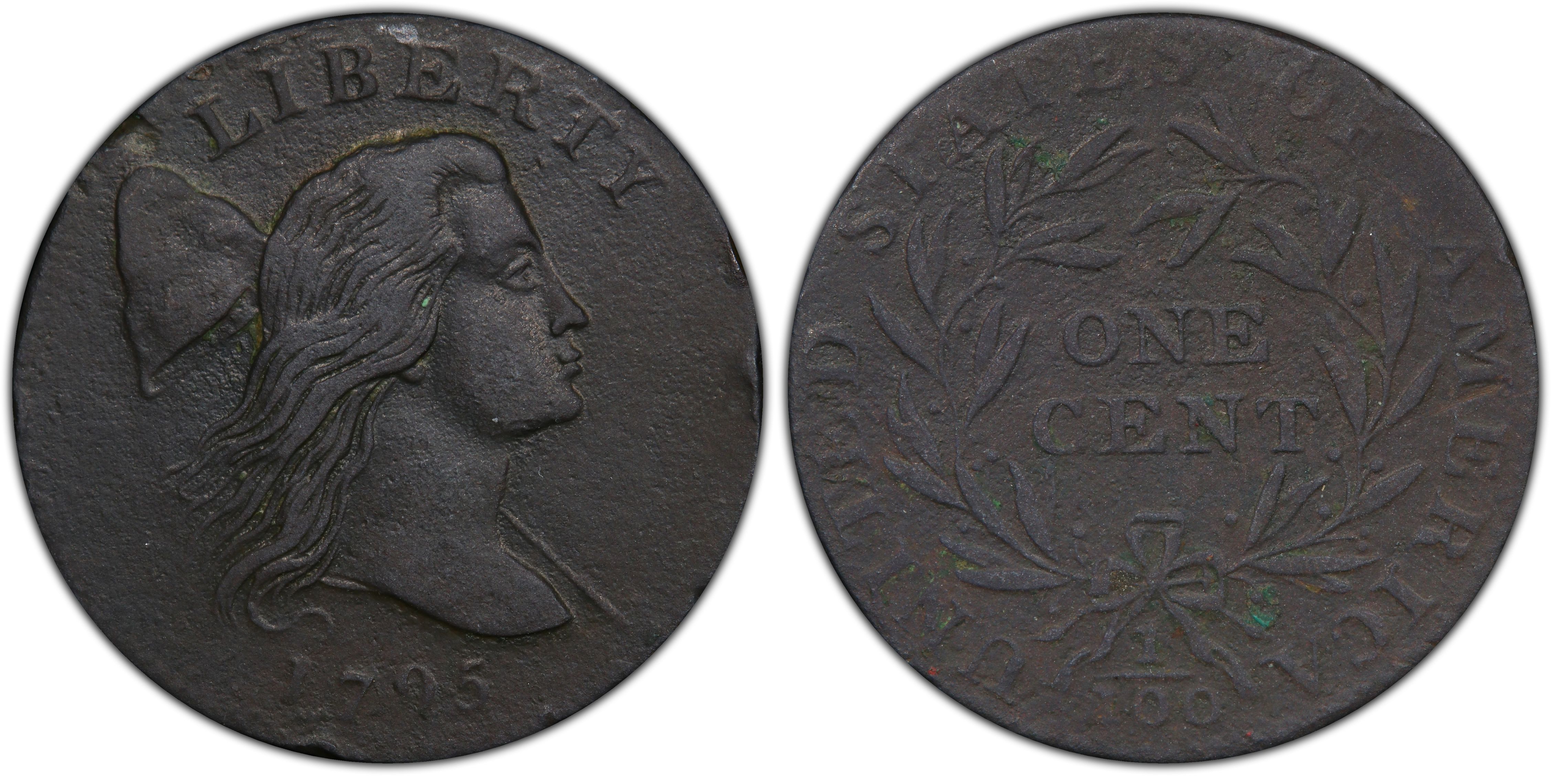 #2 VF20 PCGS grade
Stack’s/Bowers 8/2012:11187, $86,250 - Heritage 1/2013:5523, $111,625 - Heritage 8/2014:5525, $105,750 |
The 1795 Jefferson Head Cent, Plain Edge
While collected alongside regular issues, the Jefferson Head Cents (Plain Edge #1386; Lettered Edge #1389) were struck outside the United States Mint as part of a private effort to demonstrate that an independent contractor could strike copper coinage cheaper than the government.
Research by Walter Breen and other scholars traced their origin to John Harper, a Philadelphia saw-maker and machinist. Harper’s shop, located at North 6th and Cherry Streets — believed to be the site where the first 1792 Half Dismes (#11020) were struck — was just a block away from the newly built federal Mint on 7th Street. On January 23, 1795, Harper visited the Mint to suggest technical improvements to their coining machinery, but his ideas were shrugged off.
Determined to prove the efficacy of his methods, Harper built a coin press, cutting machine, and dies at his own expense. Ten months later, on November 4, 1795, he reached out to newly appointed Mint Director Elias Boudinot with a formal proposal to take over copper coin production, writing:
"I propose to engage with you… To receive sheet copper of the right size and coin the same into cents complete for circulation at the rate of eighty dollars per ton and to return the same in Cents and shruf deducting twenty-five pounds in each ton for waste. I will also forge and harden all the dies, beds, and punches for the same."
Harper intended to mimic the design of the official 1795 Liberty Cap Cents, but his skill was as a machinist, not a die-cutter. His attempts at replicating the artwork, while admirable, fell noticeably off the mark. The differences did not escape the notice of later collectors, who dubbed the coins "Jefferson Heads" because the crude profile bore a vague resemblance to Thomas Jefferson.
On February 3, 1796, Director Boudinot filed a report to the House of Representatives detailing Harper’s private cent coinage. A Congressional committee subsequently visited Harper’s shop to inspect his press, and some members of the delegation may have taken sample cents as souvenirs. Boudinot took Harper’s dies back to the Mint and offered him a job as assistant coiner, which Harper declined.
Though struck outside official channels, collectors prize the Jefferson Heads and traditionally include them among regular-issue cents. Three die combinations are recognized: Sheldon NC-1 (#35744), Sheldon NC-4 (#35747), and Sheldon-80 (#35741). All three share the exact same obverse die. Sheldon NC-1 features a distinct reverse and is known with two different edge devices, while NC-4 and Sheldon-80 share a second reverse die.
Of these, only Sheldon-80 is plentiful enough to be considered collectible. Because Harper used cast planchets that were often poorly annealed, surviving examples are almost always worn and frequently plagued by corrosion, planchet voids, or stress cracks. The finest overall example is an estimated VF35 in the permanent collection of the American Numismatic Society, while the finest collectible specimen in private hands is a single PCGS VF30.
The Jefferson Head was already recognized as an unusual scarcity by the 1860s. In June 1864, Edward Cogan offered an example in a catalog section titled "Fabrications," calling it a "1795 Cent, Jefferson Head" and selling it for 25 cents. That October, W. Elliot Woodward cataloged another specimen as Lot 617, describing it as a "1795 Sometimes called the Jefferson Head, in rather poor condition but an extremely rare type." New York coin dealer William Strobridge purchased it for $1.00.
* * *