1867 2C Doubled Die Obverse, BN (Regular Strike)
Series: Shield Two Cents 1864-1872
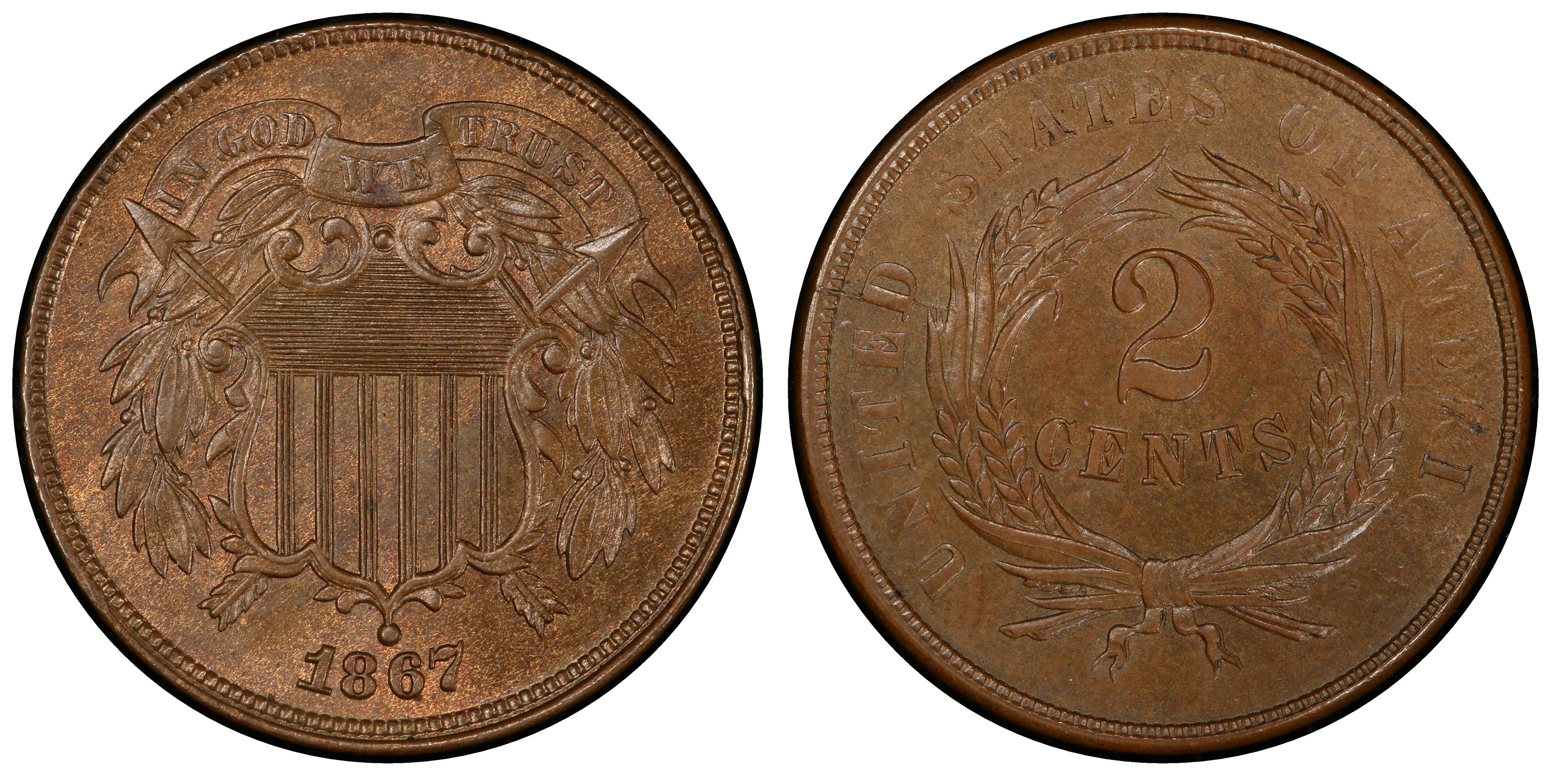
PCGS MS65BN
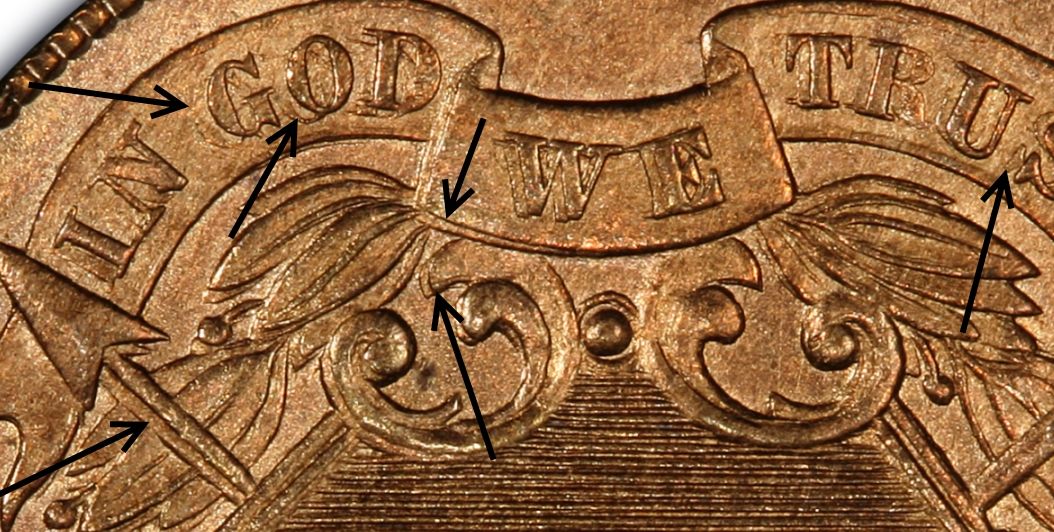
DOUBLED DIE DETAILS

PCGS MS65BN
- PCGS #:
- 3594
- Designer:
- James Barton Longacre
- Edge:
- Plain
- Diameter:
- 23.00 millimeters
- Weight:
- 6.22 grams
- Mintage:
- 2,938,750
- Mint:
- Philadelphia
- Metal:
- Bronze
- Auction Record:
- $4,250 • MS63BN • 12-19-2018 • eBay
Major Varieties
- 1867 2C, BN
- 1867 2C, RB
- 1867 2C, RD
- 1867 2C Doubled Die Obverse, BN
- 1867 2C Doubled Die Obverse, RB
- 1867 2C Doubled Die Obverse, RD
Rarity and Survival Estimates Learn More
| Survival Estimate | |
|---|---|
| All Grades | 1,500 |
| 60 or Better | 30 |
| 65 or Better | 10 |
| Numismatic Rarity | |
|---|---|
| All Grades | R-4.8 |
| 60 or Better | R-8.9 |
| 65 or Better | R-9.5 |
| Relative Rarity By Type All Specs in this Type | |
|---|---|
| All Grades | 1 / 11 |
| 60 or Better | 1 / 11 |
| 65 or Better | 1 / 11 |
| Relative Rarity By Series All Specs in this Series | |
|---|---|
| All Grades | 1 / 11 |
| 60 or Better | 1 / 11 |
| 65 or Better | 1 / 11 |
Condition Census What Is This?
| #1 MS64BN PCGS grade |
| #1 MS64BN PCGS grade |
| #1 MS64BN PCGS grade |
| #1 MS64BN estimated grade |
| #5 MS63BN PCGS grade |
| #5 MS63BN PCGS grade |
| #5 MS63BN PCGS grade |
| #5 MS63BN PCGS grade |
| #5 MS63BN PCGS grade |
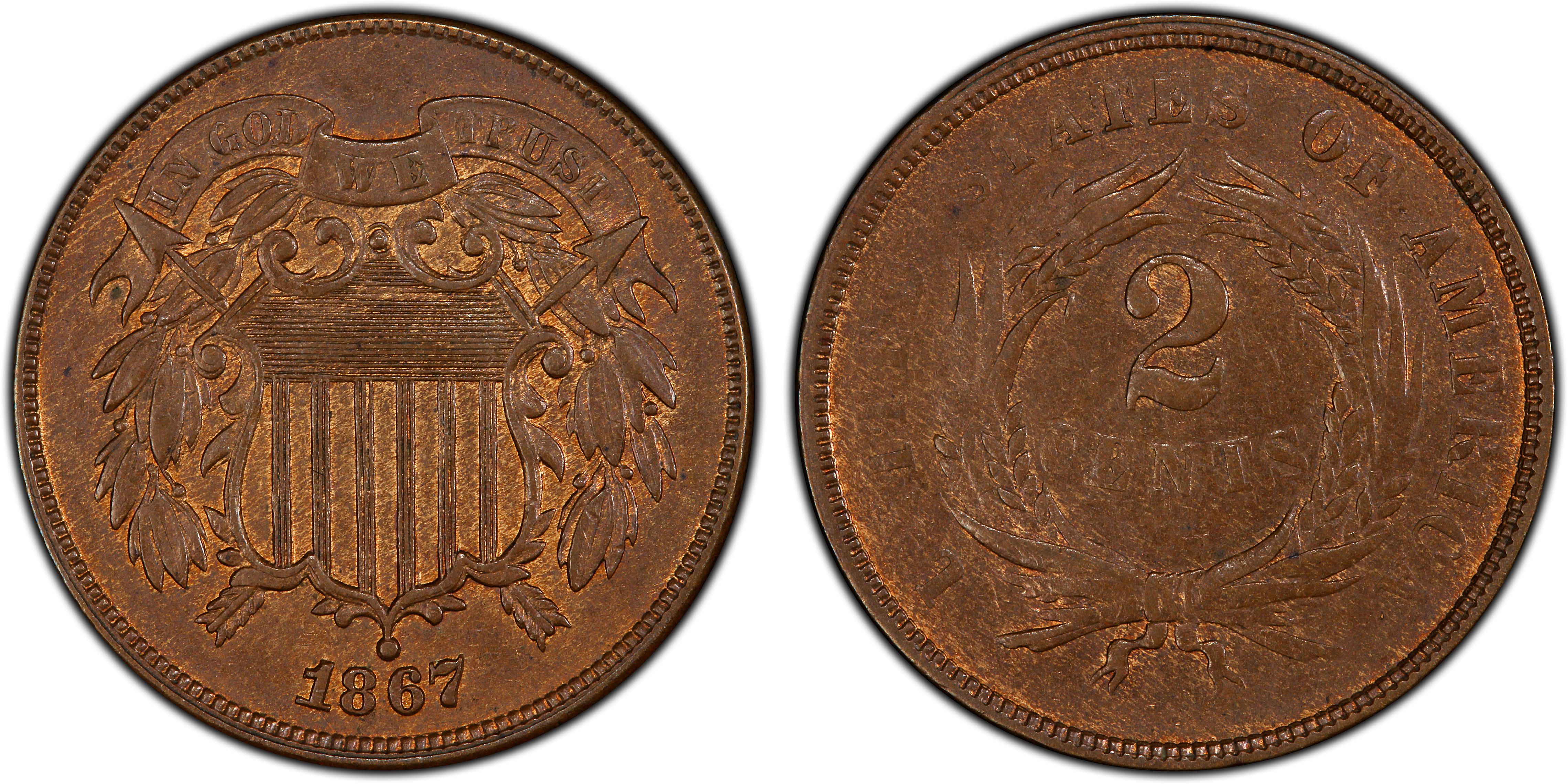 #10 MS62BN PCGS grade
|
The 1867 Doubled Die Obverse is the only major doubled die in the Two Cent series. The doubling is very strong in the motto, In God We Trust. The second doubling is shifted towards the South West.
There are probably no more than a few hundred examples that survive in all grades combined. Most examples that do survive are in circulated grades. In Uncirculated grades they are very scarce with most examples being in MS63 -MS64 range. In MS65 they are really scarce with possibly less than 15 examples in this condition with none being finer. This is unquestionably a very neat and underrated variety for the short lived Two Cent series.
The 1867 Doubled Die Obverse Two Cent Piece is a dramatic and fairly obvious error. The most obvious doubling can be seen on the motto, where most of the letters (especially those in GOD) are widely doubled, with the first impression too far to the left. The arrows and the leaves on the left side of the wreath show clear doubling. Unfortunately, the date is not affected.
This is a very desirable variety, but it is relatively easy to find in circulated grades and can still be cherrypicked on occasion. In Mint State, the population is low, especially with full Red color. As of September 2011, PCGS reported 26 Mint State examples out of a total population of 94 pieces. Of the Mint State examples, 10 were Brown, 14 were Red-Brown, and only 2 were Red. The finest examples certified by PCGS were 3 MS64 BNs, 3 MS65RBs, and 1 MS65RD.