1866 3CN DDO FS-101 (Regular Strike)
Series: Liberty Head Three Cent Nickels 1865-1889
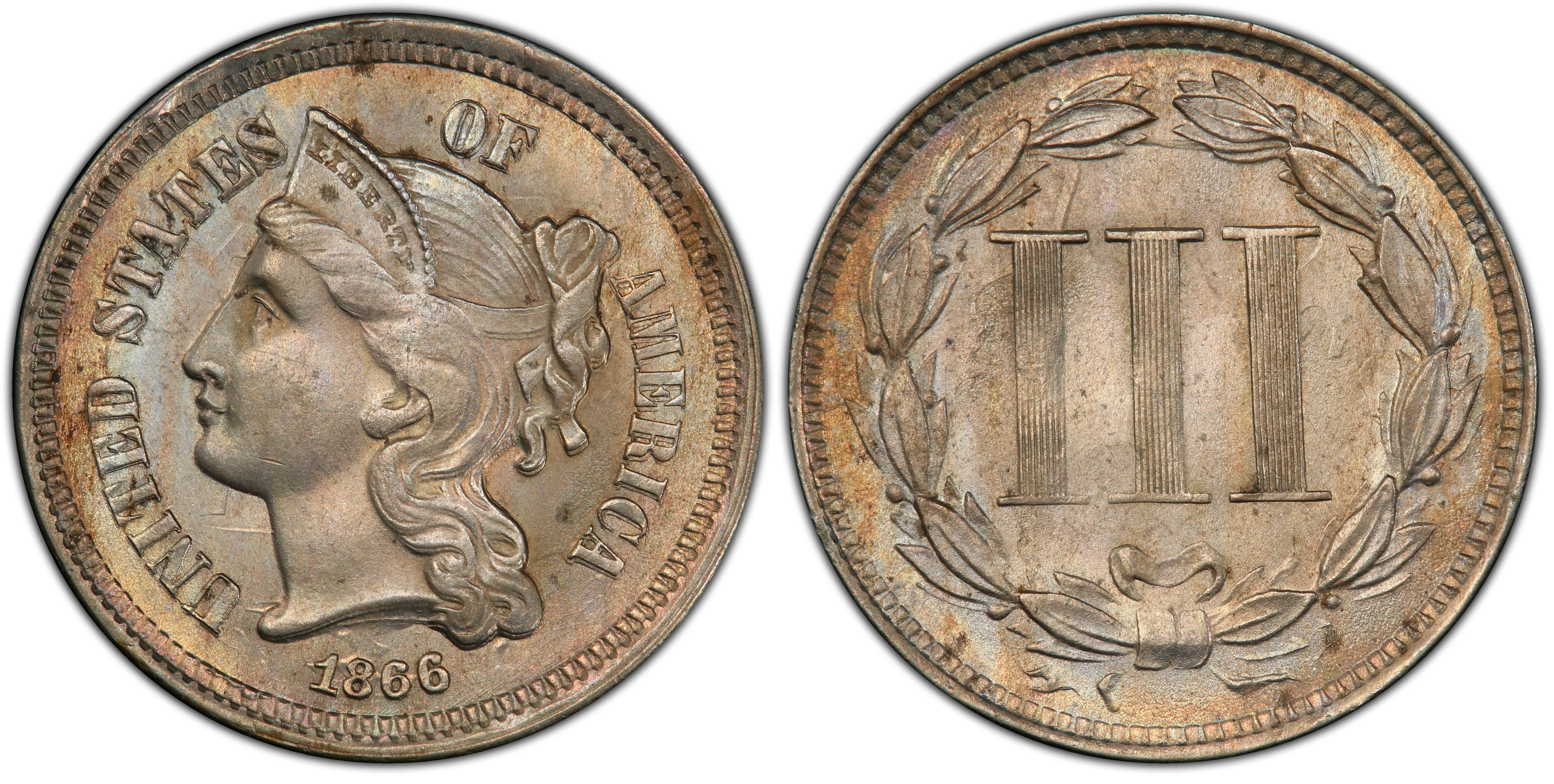
PCGS MS63
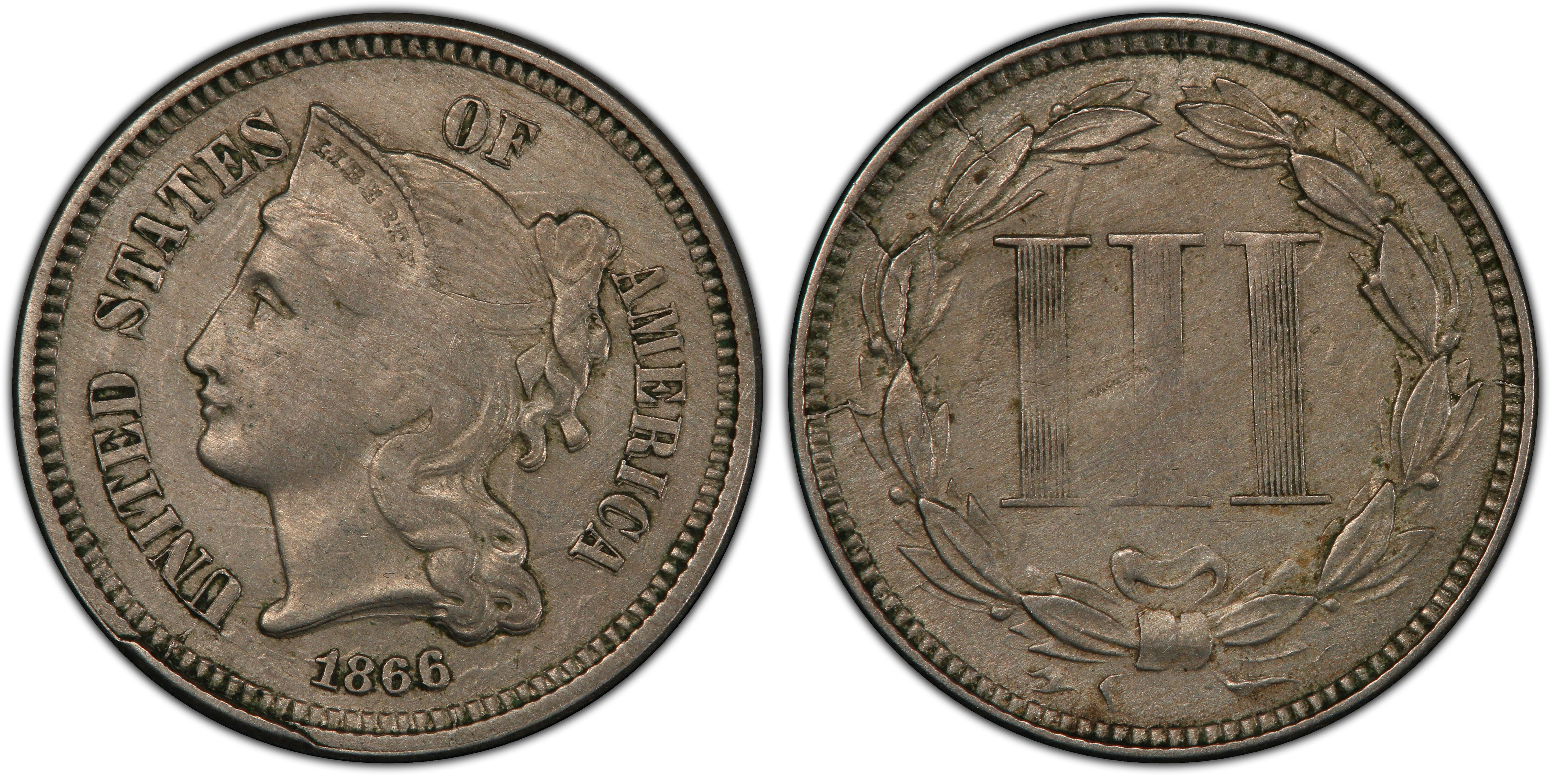
PCGS AU55
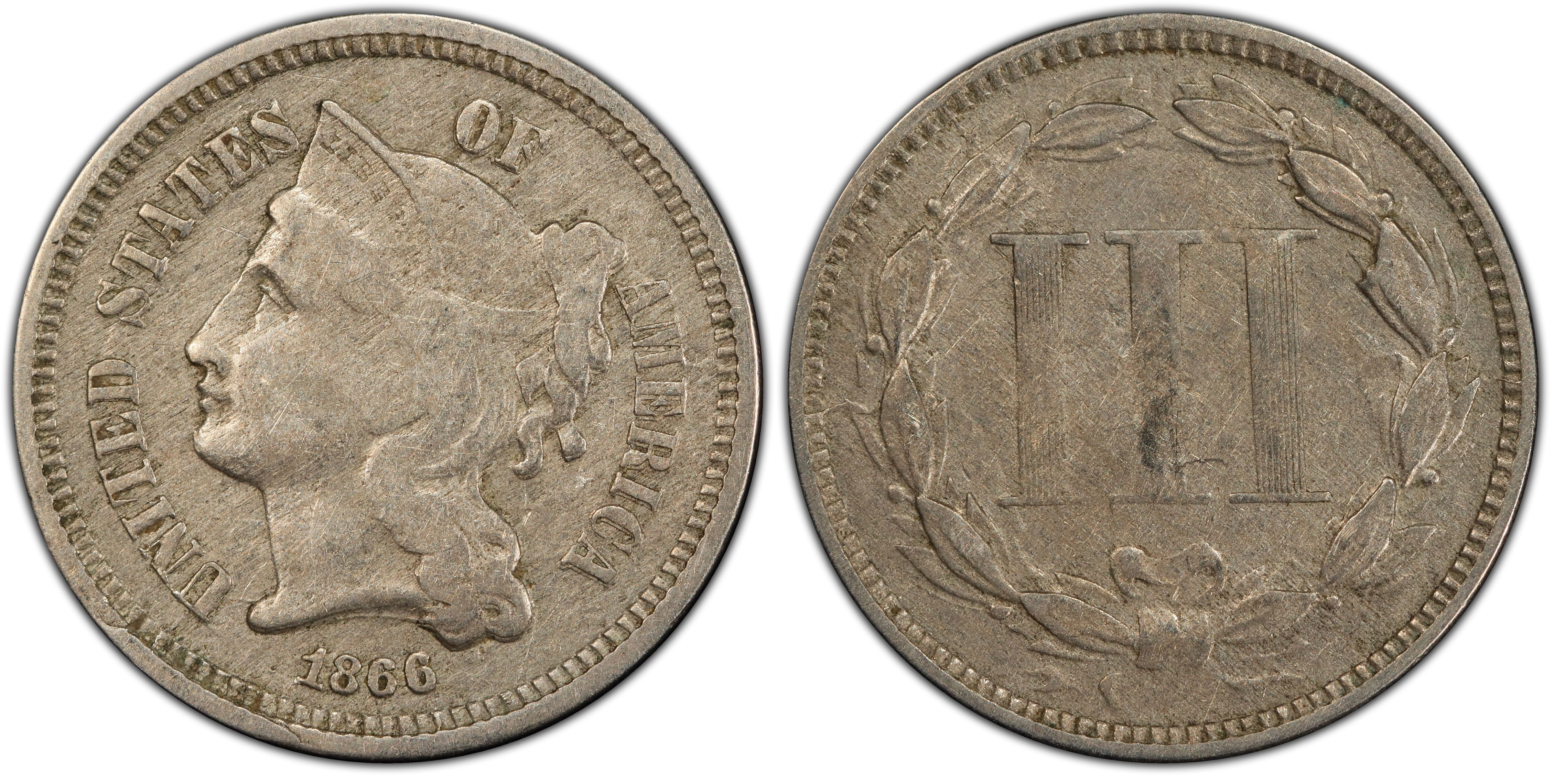
PCGS VF20
- PCGS #:
- 38301
- Designer:
- James Barton Longacre
- Edge:
- Plain
- Diameter:
- 17.90 millimeters
- Weight:
- 1.94 grams
- Mintage:
- 4,801,000
- Mint:
- Philadelphia
- Metal:
- 75% Copper, 25% Nickel
- Auction Record:
- $357 • MS63 • 02-17-2020 • eBay
Condition Census What Is This?
|
#1 PCGS MS63
Steel blue and gold toning. Scattered toning spots on the obverse and reverse. Thin diagonal mark on cheek. Struck with clashed dies. |
| #2 PCGS MS62 |
| #3 PCGS AU58 |
|
#4 PCGS AU55
"The Twos and Threes Collection" (PCGS Set Registry). |
| #4 PCGS AU55 |
1866 Three-Cent Nickel: Production and Varieties
In 1866, the Philadelphia Mint produced 4,801,000 business-strike Three-Cent Nickels (PCGS #3732) alongside an estimated 725 Proofs. While this represented a steep decline in production compared to the previous year, both the 1865 and 1866 issues remain the primary "type coins" for the series.
In The Ultimate Guide to U.S. Three Cent Nickels: 1865 to 1889 (2003), Allan Gifford estimated that 96 obverse and reverse dies were deployed throughout the year. From these, he enumerated 19 attributable varieties. The Cherrypickers' Guide lists two of the more dramatic varieties:
- FS-101 (#38301): A Doubled Die Obverse (DDO) with clear doubling visible at the truncation of the bust and on the word AMERICA.
- FS-301 (#515649): Repunched Date (RPD): This variety exhibits prominent repunching, specifically on the final 6, which shows a wide spread between the two impressions.
Collecting the 1866 Three-Cent Nickel
With nearly 1,500 examples certified by PCGS, collectors should not find it difficult to acquire an 1866 Three-Cent Nickel, even in Mint State. The true challenge lies in finding a premium-quality example in an early die state, free of clash marks or die cracks. Even on condition census examples, coins are frequently seen struck from heavily clashed or shattered dies. Collectors can often find:
- Multiple Clash Marks: Often visible on both sides of the coin.
- Die Cuds: Some specimens exhibit a significant cud above the first Roman numeral (III).
- Design Distortion: On many coins, the design elements appear distorted or "mushy" due to the excessive wear on the dies.
The 1866 issue becomes conditionally rare in grades above PCGS MS66+ (a grade at which the coin currently seems somewhat undervalued). The finest known example, a PCGS MS67+, possesses pristine surfaces but still exhibits the characteristic "whimsy" and technical flaws of a mid-19th-century Philadelphia Mint minor coin.
* * *