1885 $1 J-1749, CAM (Proof)
Series: Patterns - PR
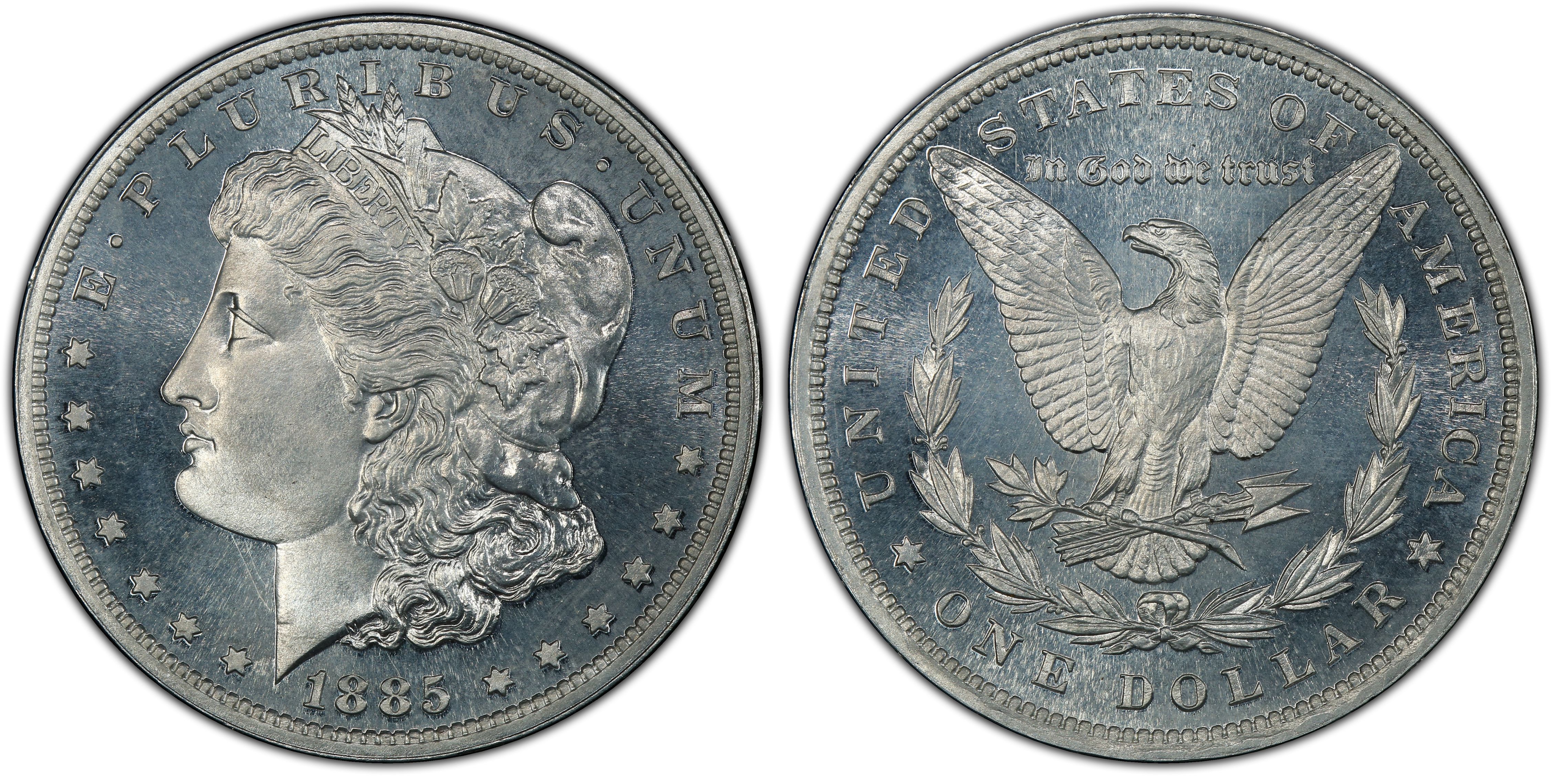
PCGS PR68CAM
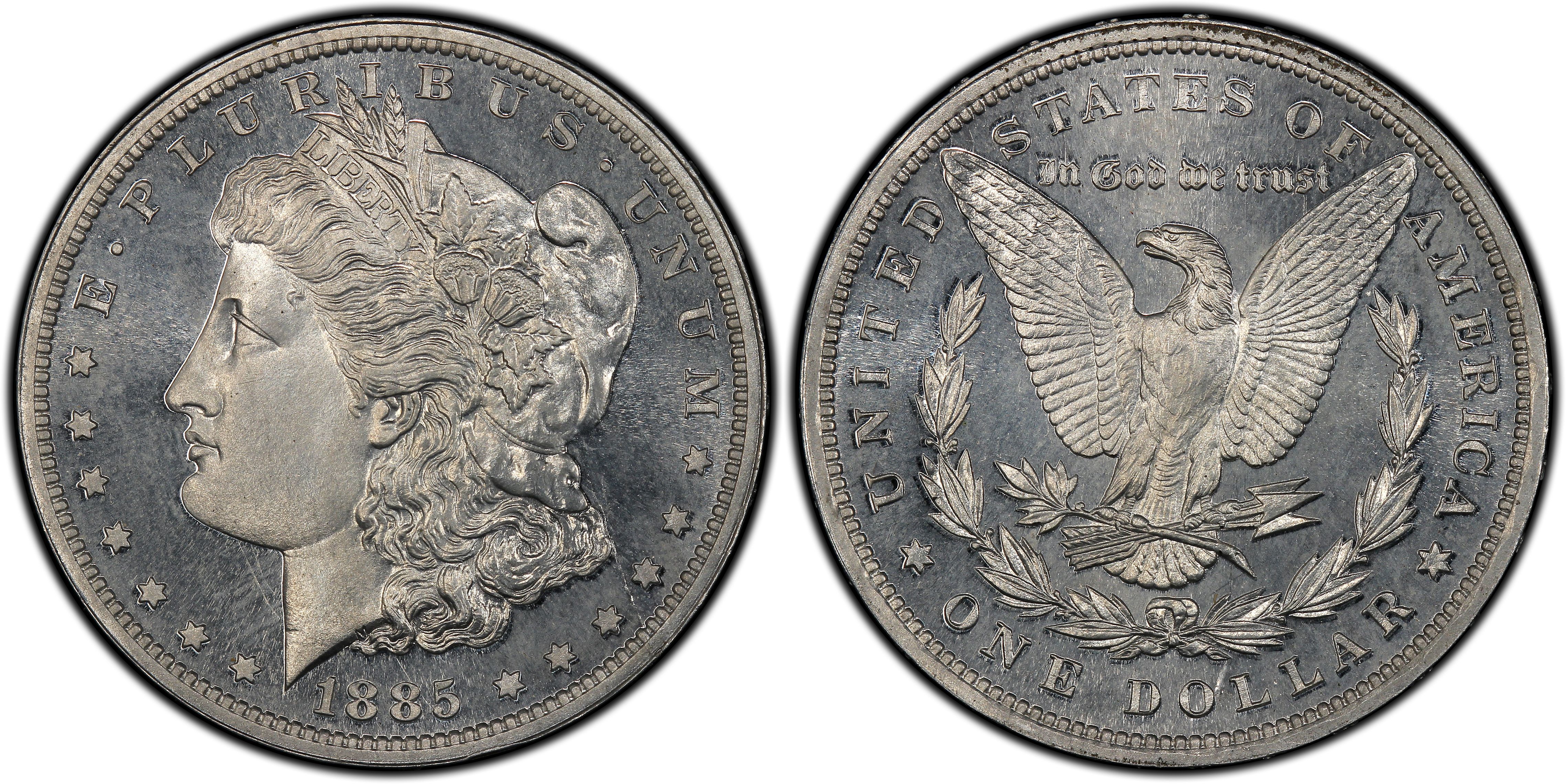
PCGS PR66CAM
- PCGS #:
- 389302
- Designer:
- N/A
- Edge:
- N/A
- Diameter:
- N/A
- Weight:
- N/A
- Mintage:
- N/A
- Mint:
- Philadelphia
- Metal:
- Other
- Auction Record:
- $84,000 • PR67+CAM • 01-16-2022 • Heritage Auctions
Condition Census What Is This?
|
#1 PR68CAM PCGS grade
"Colonel" E.H.R. Green Collection - Partnership of Eric P. Newman & Burdette G. Johnson (St. Louis Stamp & Coin Co.) - Eric P. Newman, who paid $75 - Eric P. Newman Numismatic Education Society - Heritage 4/2013:4046, $52,875 |
 #2 PR67+CAM PCGS grade
Bob R. Simpson Collection |
|
#3 PCGS PR66CAM
Goldbergs 9/2003:1035, $13,225 - David Cassel Collection - Heritage 8/2015:4575, $16,450 |
Judd 1749 is a very interesting and important U.S. pattern. At first it appears to be an aluminum version of the regular 1885 Silver Dollar dies. However, it is the edge that makes it stand out. An innovative, three-part collar was used to impress raised lettering and stars into the edge: ******E*|PLURIBUS*|UNUM*****. This would have been impossible to do with the traditional, one-piece collar because the lettering would have been sheared off the edge as the coin was pushed through the collar. As a result, counterfeiting a coin with raised edge lettering would have been nearly impossible to duplicate. As successful as this experiment was, the three-piece egde collar was not used until Saint Gauden made his $20 gold pieces in 1907. Today, it is a commonplace technique used throughout the world.
It's hard to guess how many Judd 1749's were made, but we know that about a dozen or so exist today. Saul Teichman (at www.uspatterns.com) puts the estimate at 8-10 pieces. We have images of six demonstrably different examples, the finest of which is the PCGS PR68CAM from the Eric Newman Collection (crossed from NGC PR68CAM)