1868-S H10C (Regular Strike)
Series: Liberty Seated Half Dimes 1837-1873
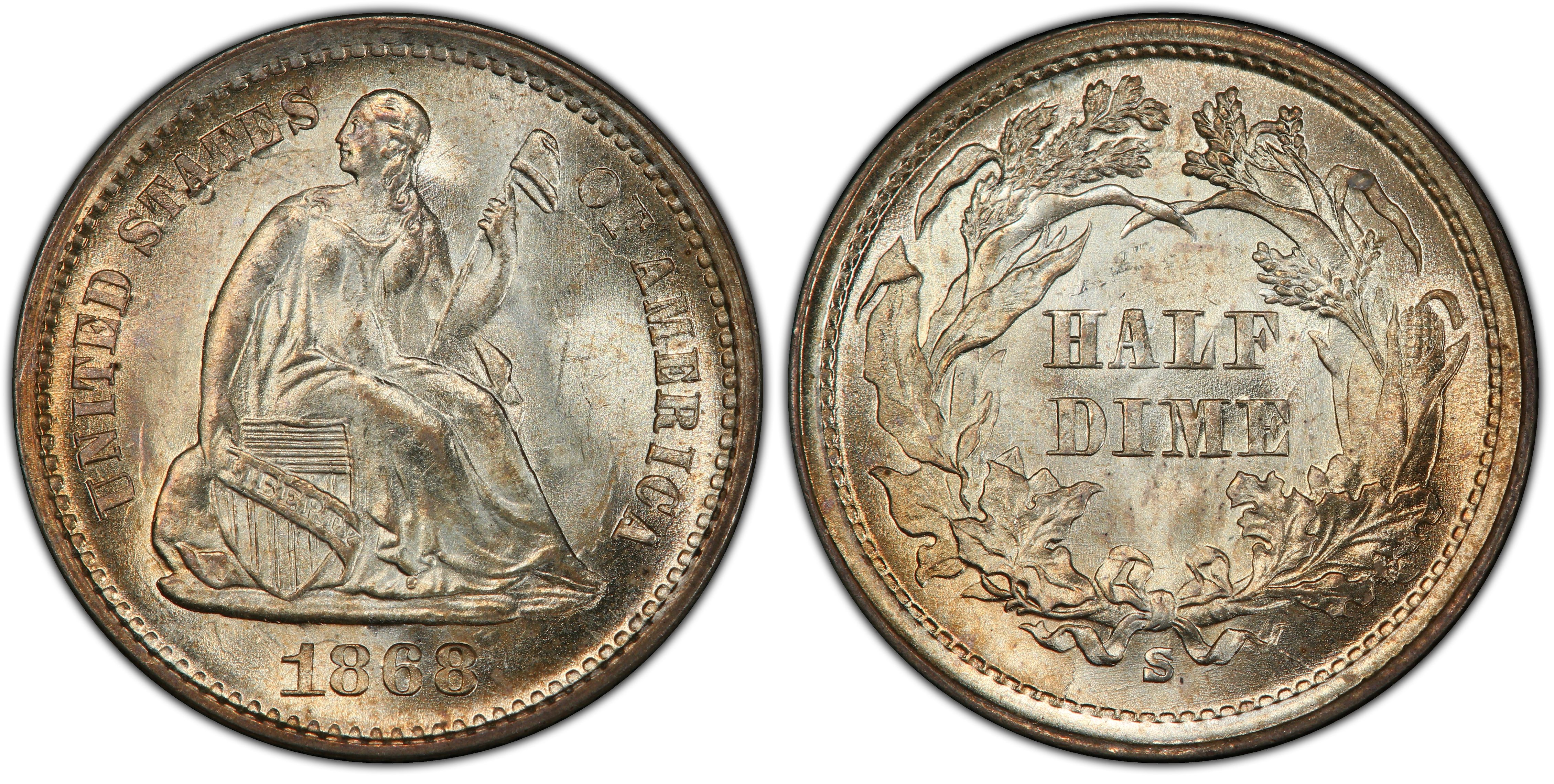
PCGS MS66+

PCGS MS66

PCGS MS66
- PCGS #:
- 4393
- Designer:
- James Barton Longacre
- Edge:
- Reeded
- Diameter:
- 15.90 millimeters
- Weight:
- 1.24 grams
- Mintage:
- 280,000
- Mint:
- San Francisco
- Metal:
- 90% Silver, 10% Copper
- Auction Record:
- $9,200 • MS66 • 07-27-2005 • Heritage Auctions
Major Varieties
- 1868-S H10C
Go To Grade
Current Auctions - PCGS Graded
Current Auctions - NGC Graded
For Sale Now at Collectors Corner - PCGS Graded
For Sale Now at Collectors Corner - NGC Graded
Rarity and Survival Estimates Learn More
| Survival Estimate | |
|---|---|
| All Grades | 400 |
| 60 or Better | 120 |
| 65 or Better | 13 |
| Numismatic Rarity | |
|---|---|
| All Grades | R-6.2 |
| 60 or Better | R-7.8 |
| 65 or Better | R-9.4 |
| Relative Rarity By Type All Specs in this Type | |
|---|---|
| All Grades | 12 / 28 TIE |
| 60 or Better | 13 / 28 |
| 65 or Better | 9 / 28 |
| Relative Rarity By Series All Specs in this Series | |
|---|---|
| All Grades | 36 / 79 TIE |
| 60 or Better | 40 / 79 |
| 65 or Better | 27 / 79 |
Condition Census What Is This?
| #1 MS66+ PCGS grade |
| #2 MS66 PCGS grade |
| #2 MS66 PCGS grade |
| #2 MS66 PCGS grade |
| #2 MS66 PCGS grade |
| #6 MS65+ PCGS grade |
 #7 MS65 PCGS grade
|
 #7 MS65 PCGS grade
|
| #7 MS65 PCGS grade |
| #7 MS65 PCGS grade |
Ron Guth:
Of the S-Mint Half Dimes of the 1860's, the 1868-S is the most readily available. The scarcest dates (1864-S and 1869-S) are twice as rare as the 1868-S and the dates closest to the 1868-S (1863-S and 1866-S) both have substantially lower pops. Numerous Mint State 1868-S Half Dimes exist, ranging in grade from MS60 to MS66; the finest example is a single PCGS MS66+. Many 1868-S Half Dimes have spidery die cracks at the base of the reverse.