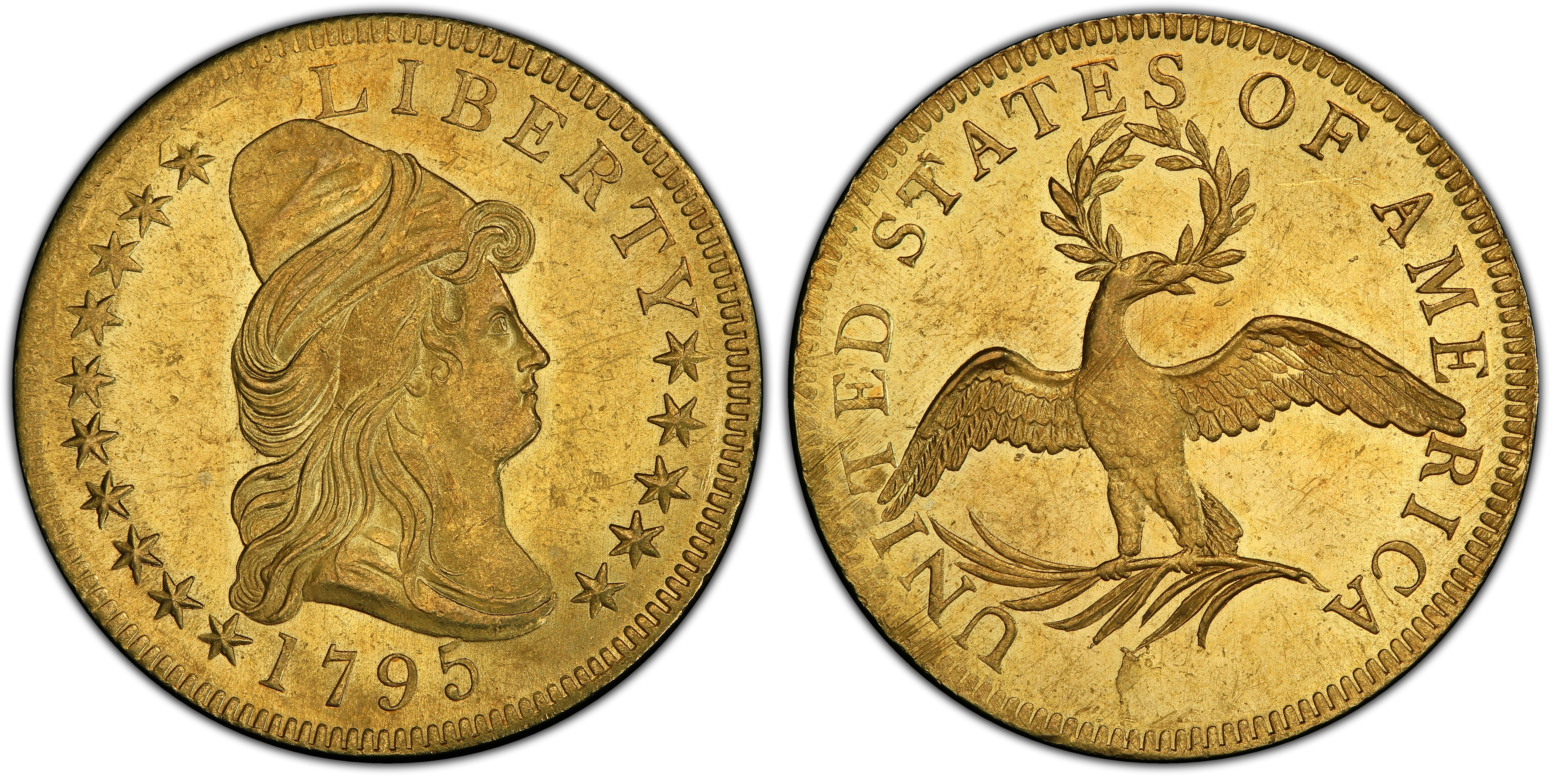
1795 $10 BD-3, 9 Leaves (Regular Strike)
Series: Draped Bust $10 1795-1804

PCGS MS64
PCGS MS63
- PCGS #:
- 45714
- Designer:
- Robert Scot
- Edge:
- Reeded
- Diameter:
- 33.00 millimeters
- Weight:
- 17.50 grams
- Mintage:
- N/A
- Mint:
- Philadelphia
- Metal:
- 91.7% Gold, 8.3% Copper
- Auction Record:
- N/A
Die Varieties
- 1795 $10 BD-3, 9 Leaves
Condition Census What Is This?
 #1 MS63+ PCGS grade
Superior “Auction '89” 8/1989:908 - RARCOA (as agent?) - D. Brent Pogue Collection, Part II - Stack's/Bowers & Sotheby's 9/2015:2091, $1,057,500 |
|
#2 MS63 PCGS grade
|
|
#2 MS63 PCGS grade
“...from the Estate of an old Philadelphia family” (per the following) - Christie's 9/1990:435, $115,500 - Superior 3/2001:853, not sold |
 #3 MS61 PCGS grade
Magnolia Collection - Spink/Smythe 5/2011:1, $379,500 |
The 1795 BD-3 $10 gold piece is a wonderful rarity among early U.S. gold coins. The BD-3 variety represents the entire mintage of the 1795 9 Leaves $10 gold piece, itself one of the most important major varieties. Previous estimates of the surviving population of this variety were as low as nine pieces. Dannreuther suggested that as many as 15-20 pieces were known, and the latest research shows that perhaps as many as two dozen exist. Surprisingly, there may be as many as eight examples that grade MS60 or better, which is an astounding percentage of the known population. Among these, the finest is a PCGS MS63+ example which is a full point-and-a-half better than the next best.
The strike on this variety is often soft in the centers, where the high points oppose each other. Adjustment marks are sometimes seen, but they are never excessive. At least two examples show depressions or voids in the finished coins, presumably the result of improper preparation of the planchets.