1928-S 25C, FH (Regular Strike)
Series: (None)

PCGS MS67+FH
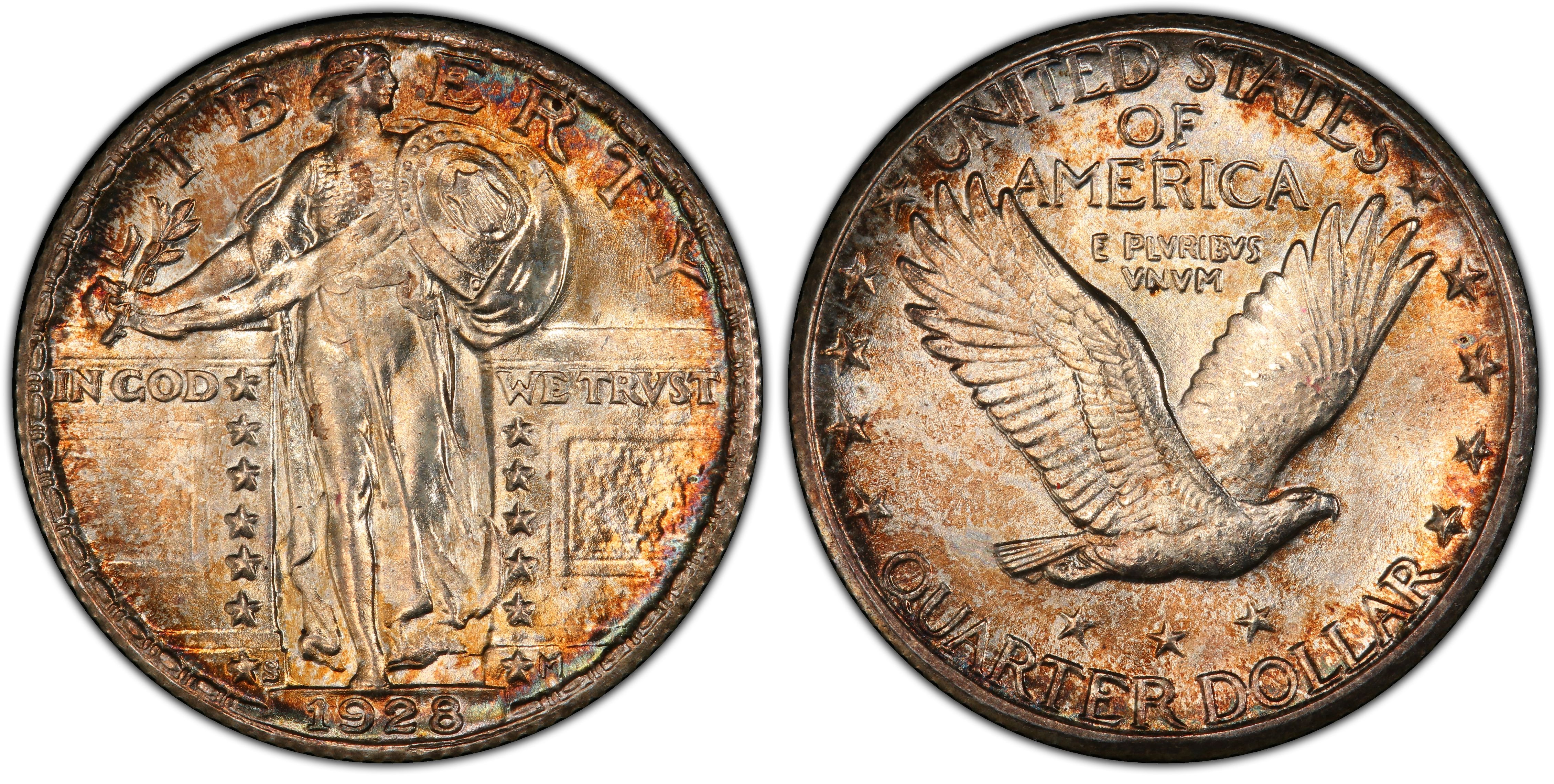
PCGS MS67+FH
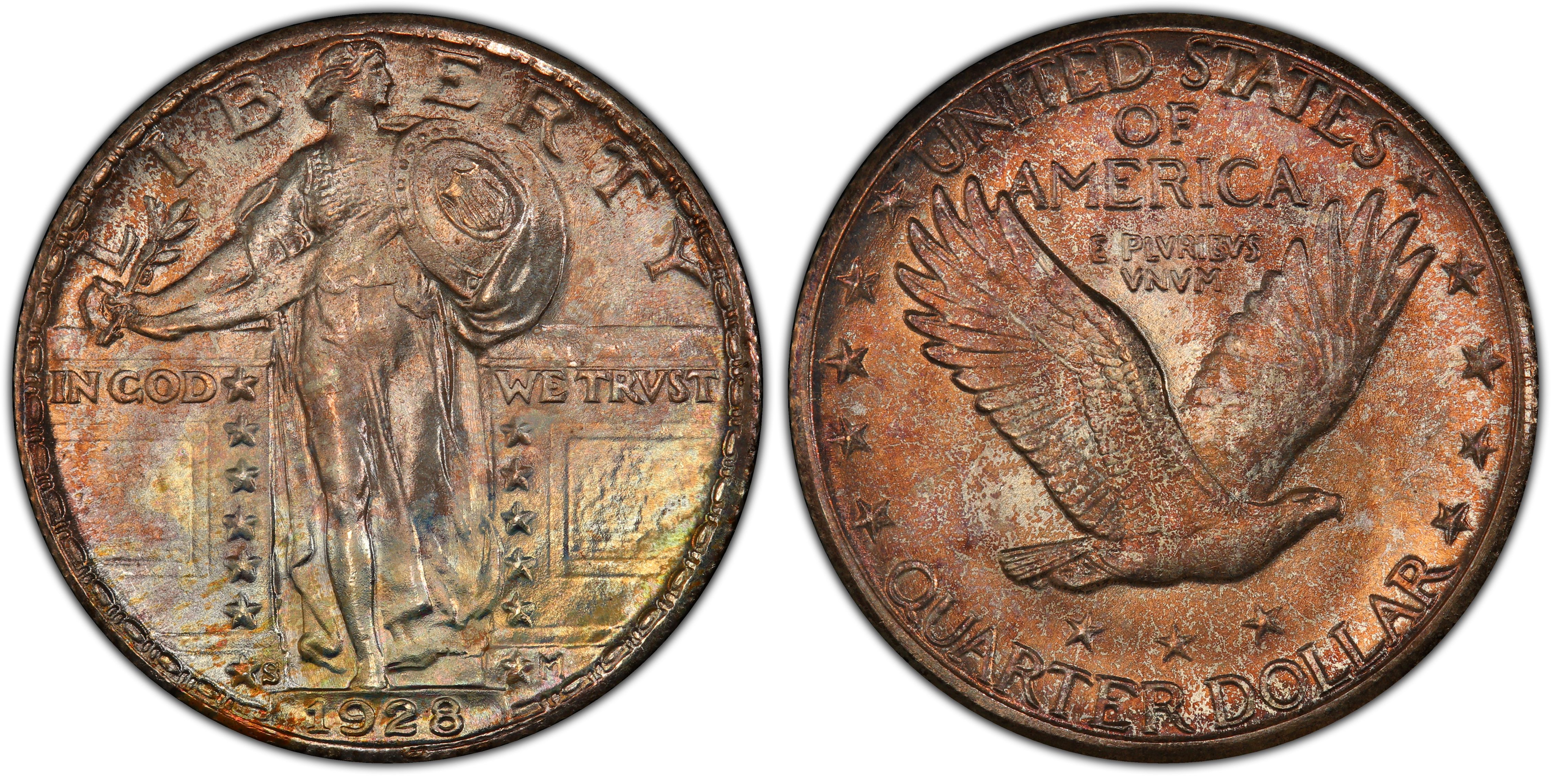
PCGS MS67+FH
- PCGS #:
- 5771
- Designer:
- Hermon A. Mac Neil
- Edge:
- Reeded
- Diameter:
- 24.30 millimeters
- Weight:
- 6.30 grams
- Mintage:
- 2,644,000
- Mint:
- San Francisco
- Metal:
- 90% Silver, 10% Copper
- Auction Record:
- $29,900 • MS68 • 09-01-2008 • Bowers & Merena
Rarity and Survival Estimates Learn More
| Survival Estimate | |
|---|---|
| All Grades | 850 |
| 60 or Better | 750 |
| 65 or Better | 300 |
| Numismatic Rarity | |
|---|---|
| All Grades | R-5.3 |
| 60 or Better | R-5.5 |
| 65 or Better | R-6.4 |
| Relative Rarity By Type All Specs in this Type | |
|---|---|
| All Grades | 9 / 15 |
| 60 or Better | 9 / 15 |
| 65 or Better | 10 / 15 TIE |
| Relative Rarity By Series All Specs in this Series | |
|---|---|
| All Grades | N/A |
| 60 or Better | N/A |
| 65 or Better | N/A |
Condition Census What Is This?
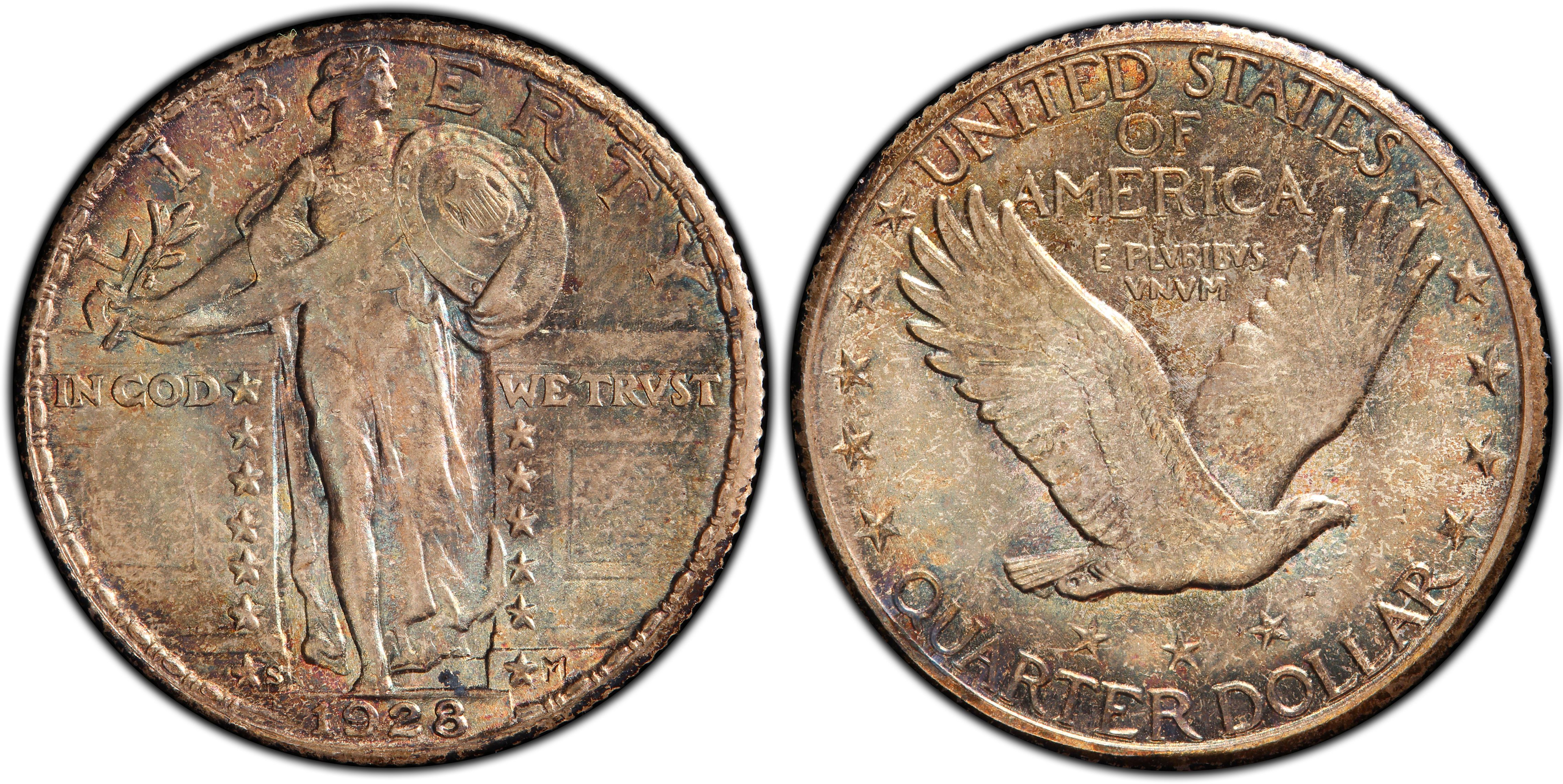 #1 PCGS MS67+FH
Dan Rosenthal; "The Just Having Fun Collection (Rosenthal)," Stack’s Bowers, August 7, 2012, Lot 11399 - $20,125; "The Big Sky Collection of Standing Liberty Quarters, Part II," Heritage Auctions, April 29, 2026, Lot 3091 - $21,960. Creamy luster imbued with crimson-rose and teal toning throughout. Dark toning spot above the 8. |
 #1 PCGS MS67+FH
Tony Littlejohn; "The Semper Fi Collection of Standing Liberty Quarters," GreatCollections, July 24, 2022, Lot 116867 - $20,250; GreatCollections, January 29, 2023, Lot 1275881 - $21,375. Iridescent gold, peacock green, and russet toning. Pin-sized toning spot below B in LIBERTY. Small diagonal olive toning spot above S in TRUST. |
|
#1 PCGS MS67+FH
GreatCollections, August 23, 2020, Lot 754887 - $18,618.75; GreatCollections, February 20, 2022, Lot 1086008 - $11,311.88; "The LULU AND MAYA Collection" (PCGS Set Registry). Russet and gold toning throughout with a thin band of teal toning along the periphery. Olive-gold toning patch on Liberty's right thigh. Almost imperceptible diagonal mark from the top of the E in AMERICA to the bottom of the F in OF. |
|
#1 PCGS MS67+FH
Stack's Bowers, August 20, 2019, Lot 5200 - $26,400. Neon-gold washes across the lower center and right of the obverse. The remaining surfaces are covered in pink-bronze patination. This bronze color is even more intense on the reverse. |
|
#1 PCGS MS67+FH
"An Ohio Collection" (PCGS Set Registry). |
|
#1 PCGS MS67+FH
The obverse boasts vivid pointillistic turquoise-green, blue, aubergine, and gold toning throughout. The reverse features steel-green toning in the upper right, with patches of russet and olive across the remaining surface area. |
The 1928-S Standing Liberty Quarter
Despite its undeniable beauty, Hermon Atkins MacNeil’s Standing Liberty Quarter posed significant challenges for the United States Mint, leading to two major design overhauls. The first occurred in 1917, precipitated by "unauthorized" alterations to MacNeil’s original work. After MacNeil successfully lobbied Treasury Secretary William G. McAdoo, he was permitted to make extensive revisions that went well beyond his initial complaints. Gone was the partially disrobed figure of Liberty; in its place stood a completely redesigned figure protected by a coat of chain mail. The second major change followed in 1925, when the Mint recessed the date pedestal to ensure the date remained legible even after years of heavy circulation.
Production throughout the series’ three distinct periods was generally robust, excluding the rare 1916 issue (base #5704), with the notable exceptions of the 1927 branch mint releases. The 1927-D (base #5762), with a mintage of 976,000, is marginally lower than other years but not scarce enough to command a massive premium. The 1927-S (#5764), however, saw a production of only 396,000 pieces. It remains scarce-to-rare in Mint State, overshadowed only by the 1916 and the 1918/7-S overdate (base #5726).
Branch mint production recovered in 1928, even as the Philadelphia Mint saw a decline of nearly 47%. While some specialists suggest that only 5% of 1928-S Standing Liberty Quarters would qualify for Full Head (FH) status, PCGS population data indicates the survival rate is closer to 20%. Regardless of the head detail, the rivets on the shield and the feathers on the eagle are typically weak for this date.
1928-S Standling Liberty Quarter Cherrypickers' Guide Varieties
The Cherrypickers' Guide enumerates two collectible varieties for the 1928-S: the FS-501 Inverted Mintmark (base #395951) and the FS-502 Repunched Mintmark (base #395955). PCGS no longer recognizes the FS-501 due to a change in consensus regarding the status of the the "inverted S"; however, we continue to verify the FS-502 both through our Variety Attribution Program.
* * *