1861 G$1 (Proof)
Series: Liberty Gold Dollars 1849-1889
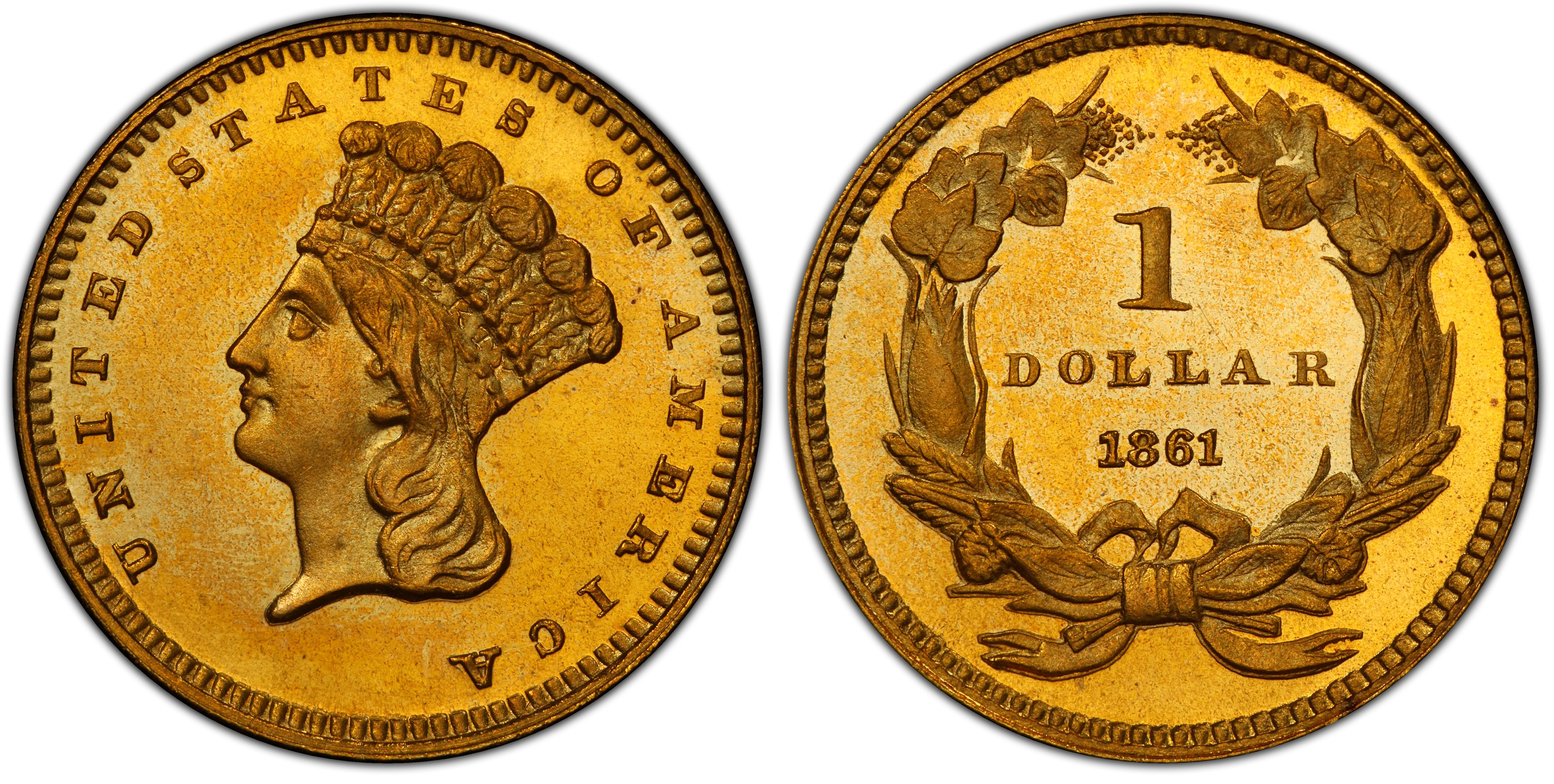
PCGS PR66

ex Trompeter collection

PCGS PR65
- PCGS #:
- 7611
- Designer:
- James Barton Longacre
- Edge:
- Reeded
- Diameter:
- 14.30 millimeters
- Weight:
- 1.70 grams
- Mintage:
- 349
- Mint:
- Philadelphia
- Metal:
- 90% Gold, 10% Copper
- Auction Record:
- $32,400 • PR66 • 08-25-2021 • Stack's Bowers
Go To Grade
Current Auctions - PCGS Graded
Current Auctions - NGC Graded
For Sale Now at Collectors Corner - PCGS Graded
For Sale Now at Collectors Corner - NGC Graded
Rarity and Survival Estimates Learn More
| Survival Estimate | |
|---|---|
| All Grades | 35 |
| 60 or Better | 35 |
| 65 or Better | 11 |
| Numismatic Rarity | |
|---|---|
| All Grades | R-8.8 |
| 60 or Better | R-8.8 |
| 65 or Better | R-9.5 |
| Relative Rarity By Type All Specs in this Type | |
|---|---|
| All Grades | 24 / 34 |
| 60 or Better | 24 / 34 |
| 65 or Better | 24 / 34 TIE |
| Relative Rarity By Series All Specs in this Series | |
|---|---|
| All Grades | 28 / 38 |
| 60 or Better | 28 / 38 |
| 65 or Better | 26 / 38 TIE |
Condition Census What Is This?
| #1 PR66 PCGS grade |
| #2 PR65 PCGS grade |
| #2 PR65 PCGS grade |
| #2 PR65 PCGS grade |
| #2 PR65 PCGS grade |
| #2 PR65 PCGS grade |
| #2 PR65 PCGS grade |
| #2 PR65 PCGS grade |
| #2 PR65 PCGS grade |
| #2 PR65 PCGS grade |
David Akers (1975/88):
Although the proof mintage is more than double that of the 1860, the proofs of this year are more scarce than those of 1860 because the majority of them were melted in 1862. As a matter of fact, 1861 proof gold dollars are only slightly less rare than those of 1862, a year in which only 35 proofs were struck.