1785 VT 1/2P Vermonts, RR-2, BN (Regular Strike)
Series: U.S. Colonial Issues
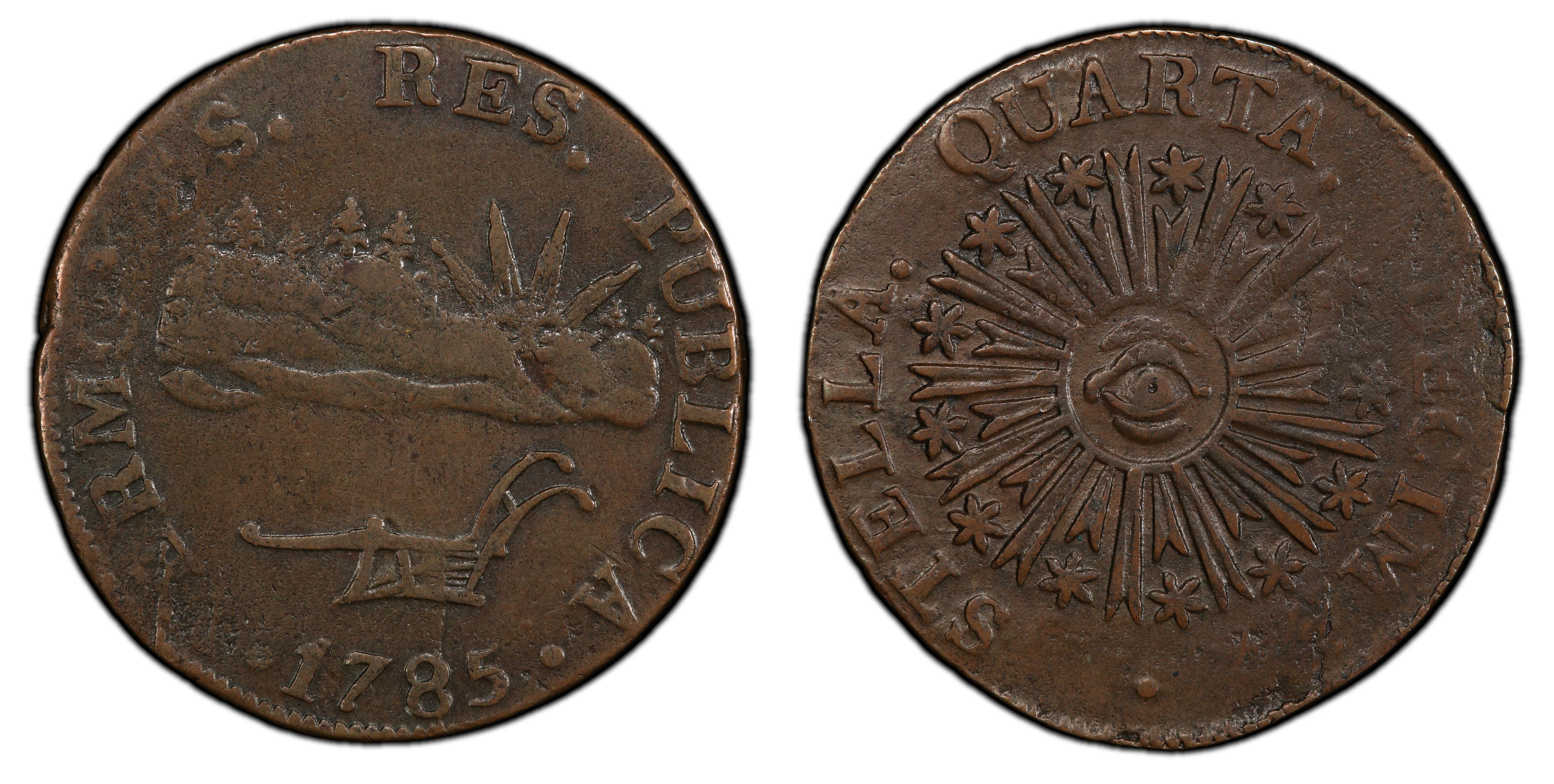
PCGS AU55BN
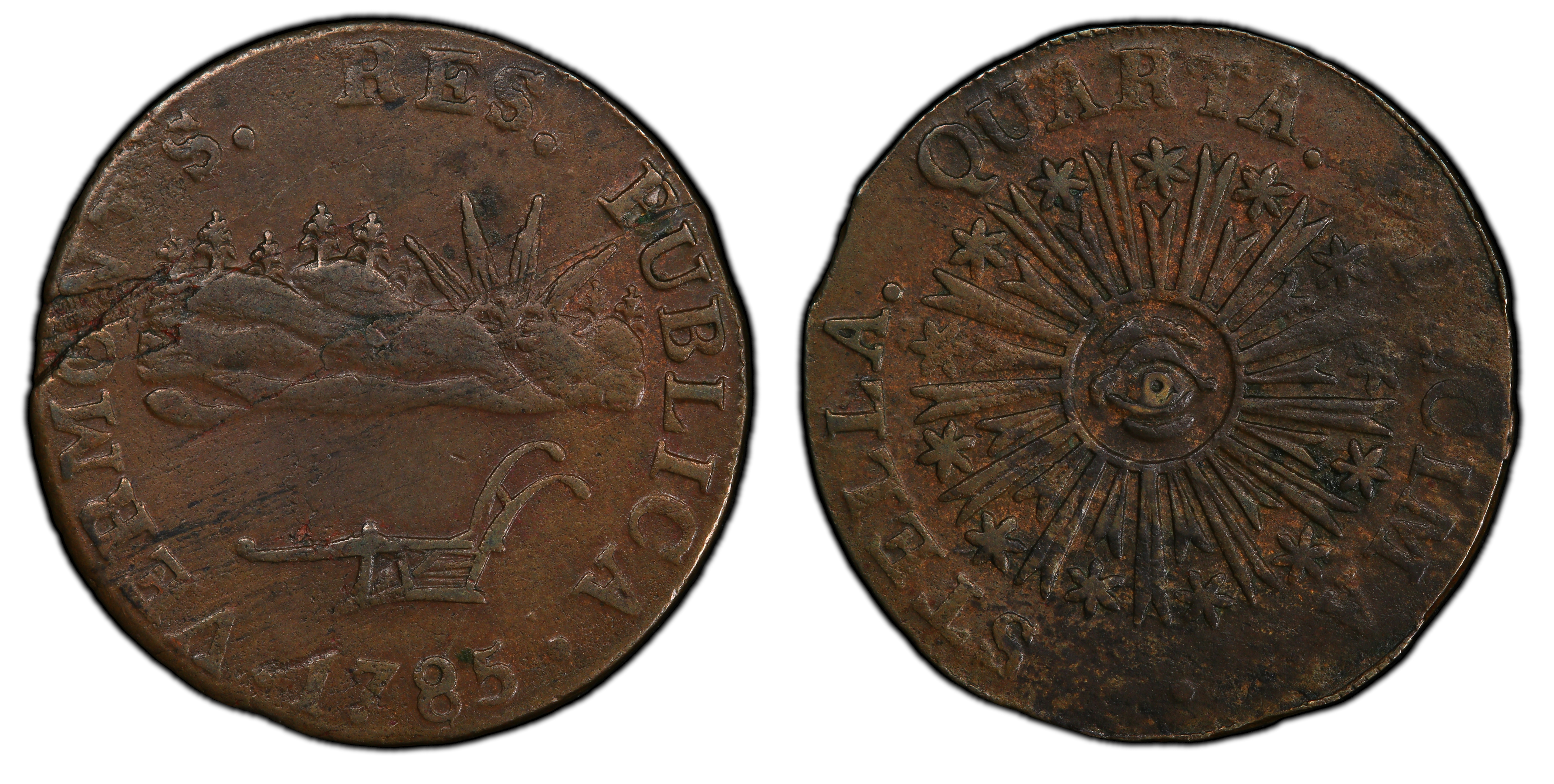
PCGS AU53BN

PCGS XF45BN
- PCGS #:
- 800844
- Designer:
- N/A
- Edge:
- N/A
- Diameter:
- N/A
- Weight:
- N/A
- Mintage:
- N/A
- Mint:
- N/A
- Metal:
- Other
- Auction Record:
- $33,600 • XF45BN • 01-16-2022 • Heritage Auctions
Condition Census What Is This?
|
#1 PCGS AU55
"The RUATWINCOIN Collection" (PCGS Set Registry). RR-2. |
|
#2 PCGS AU53
William Anton, August 1967. As "EF40." "The Dr. Robert I. Hinkley Collection," Bowers and Merena, November 29, 2001, Lot 2288. Q. David Bowers, acquired from Anthony Terranova, via trade with Steve Hayden, 2007. As PCGS AU53 #37300254. "The Q. David Bowers Collection," Stack's Bowers, June 23, 2020, Lot 199 - $7,200. RR-2. 92.9 grains. Plated in Bowers's 2018 reference on Vermont coppers. |
 #3 PCGS AU50
RR-2. |
|
#4 PCGS XF45
"The Richard August Collection," Stack's Bowers, November 18, 2025, Lot 1391 - $4,800. RR-2. 117.6 grains. |
 #4 PCGS XF45
"The E Pluribus Unum Collection, Part 2," Stack's Bowers, November 18, 2020, Lot 4190 - $2,400. RR-2. 127.8 grains. |
 #6 PCGS XF40
"The Richard August Collection," Stack's Bowers, November 18, 2025, Lot 1392 - $14,400. RR-2. 140 grains. |
 #6 PCGS XF40
Harlan J. Berk, March 2012. As PCGS XF40 "46767156. "The Sydney F. Martin Collection," Stack's Bowers, August 24, 2023, Lot 8376 - $4,080. RR-2. 109.4 grains. |
 #6 PCGS XF40
RR-2. |
 #6 PCGS XF40
RR-2. |
The 1785 Vermonts Copper, RR-2
The Vermont Landscape varieties comprise RR-2 through RR-8 and represent some of the most visually engaging designs in the series.
The RR-2 (#800844) is easily identified by the inscription VERMONTS. RES. PUBLICA, a legend it shares only with RR-3 (#800845). To differentiate the two, examine the alignment of the top right sun ray: on RR-2, this ray points directly toward the period after RES, whereas on RR-3, it points just to the right of the punctuation mark. Furthermore, the bottom right base of the plow on RR-2 terminates directly above the flag of the 5 in the date, while on RR-3, it terminates slightly to the right. Finally, a prominent die defect above the interpunct to the right of the date serves as a definitive identifier for RR-3. Planchet quality can be an issue for this variety, though examples survive across a wide range of conditions, die states, and weights. While the legally prescribed weight was initially 160 grains before later being reduced to 111 grains, PCGS-certified examples of this issue range from 92.9 to 127.8 grains. As the dies aged, a series of die cracks typically developed at the 6 o’clock obverse border, progressing inward.
- Obverse: (Obverse 1) A crudely drawn mountain range is surmounted by eight trees — six to the left of the anthropomorphized sun and two to the right — with a plow positioned below. Wrapping around the edge is the inscription *VERMONTS. RES. PUBLICA * 1785 *. The date is located at the bottom, just to the right of center.
- Reverse: (Reverse A) An Eye of Providence is positioned at the center of a glory of rays and 13 stars, surrounded by the inscription STELLA. QUARTA. DECIMA (Latin for “The Fourteenth Star”). This motif is an imitation of the design introduced two years earlier on the Nova Constellatio coppers — a familiar emblem that Vermonters would have readily recognized in circulation. Sun rays point directly below the letters Q and C.
* * *