1910 $10 (Regular Strike)
Series: Indian Head $10 1907-1933

PCGS MS67+
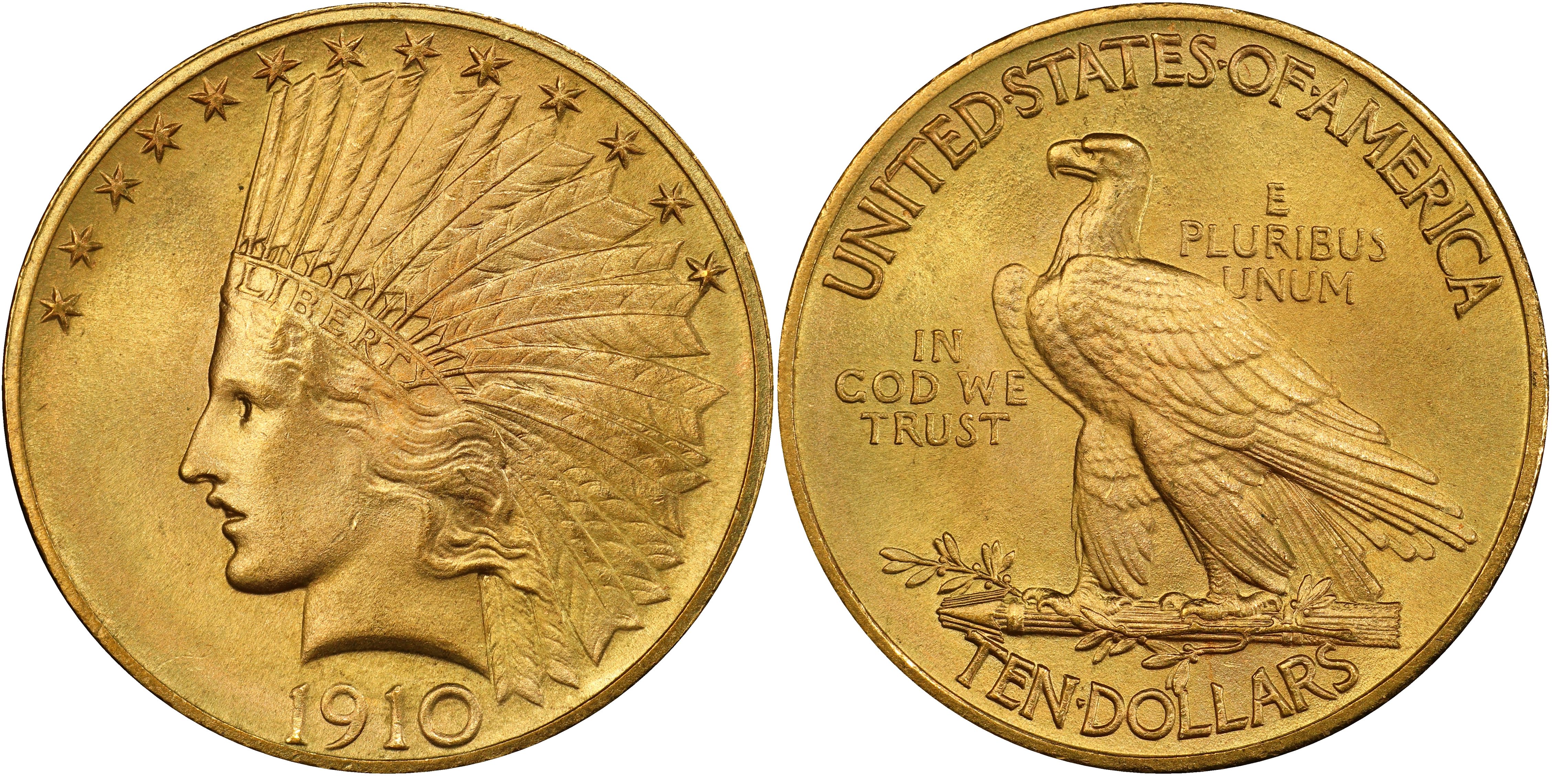
PCGS MS67+
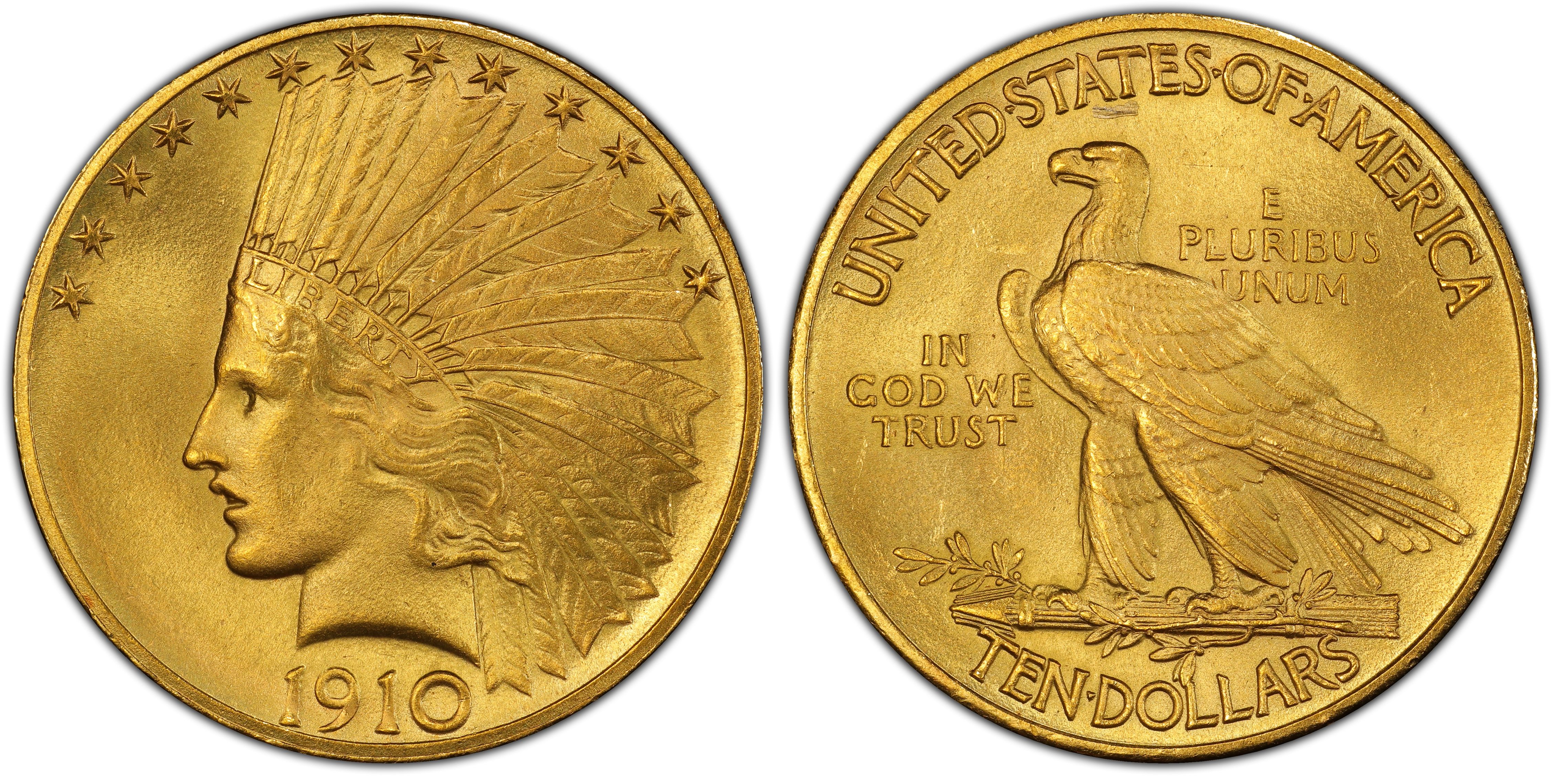
PCGS MS67+
- PCGS #:
- 8865
- Designer:
- Augustus Saint Gaudens
- Edge:
- Raised Stars
- Diameter:
- 26.80 millimeters
- Weight:
- 16.70 grams
- Mintage:
- 318,500
- Mint:
- Philadelphia
- Metal:
- 90% Gold, 10% Copper
- Auction Record:
- $81,000 • MS67 • 01-12-2020 • Heritage Auctions
Major Varieties
- 1910 $10
Go To Grade
Current Auctions - PCGS Graded
Current Auctions - NGC Graded
For Sale Now at Collectors Corner - PCGS Graded
For Sale Now at Collectors Corner - NGC Graded
Rarity and Survival Estimates Learn More
| Survival Estimate | |
|---|---|
| All Grades | 16,750 |
| 60 or Better | 10,750 |
| 65 or Better | 400 |
| Numismatic Rarity | |
|---|---|
| All Grades | R-2.8 |
| 60 or Better | R-2.9 |
| 65 or Better | R-6.2 |
| Relative Rarity By Type All Specs in this Type | |
|---|---|
| All Grades | 21 / 27 TIE |
| 60 or Better | 21 / 27 TIE |
| 65 or Better | 23 / 27 |
| Relative Rarity By Series All Specs in this Series | |
|---|---|
| All Grades | 25 / 32 TIE |
| 60 or Better | 25 / 32 TIE |
| 65 or Better | 27 / 32 |
Condition Census What Is This?
|
#1 MS67+ PCGS grade
Heritage 4/2006:4116, $63,250 - G&J Lott Collection (PCGS Set Registry) |
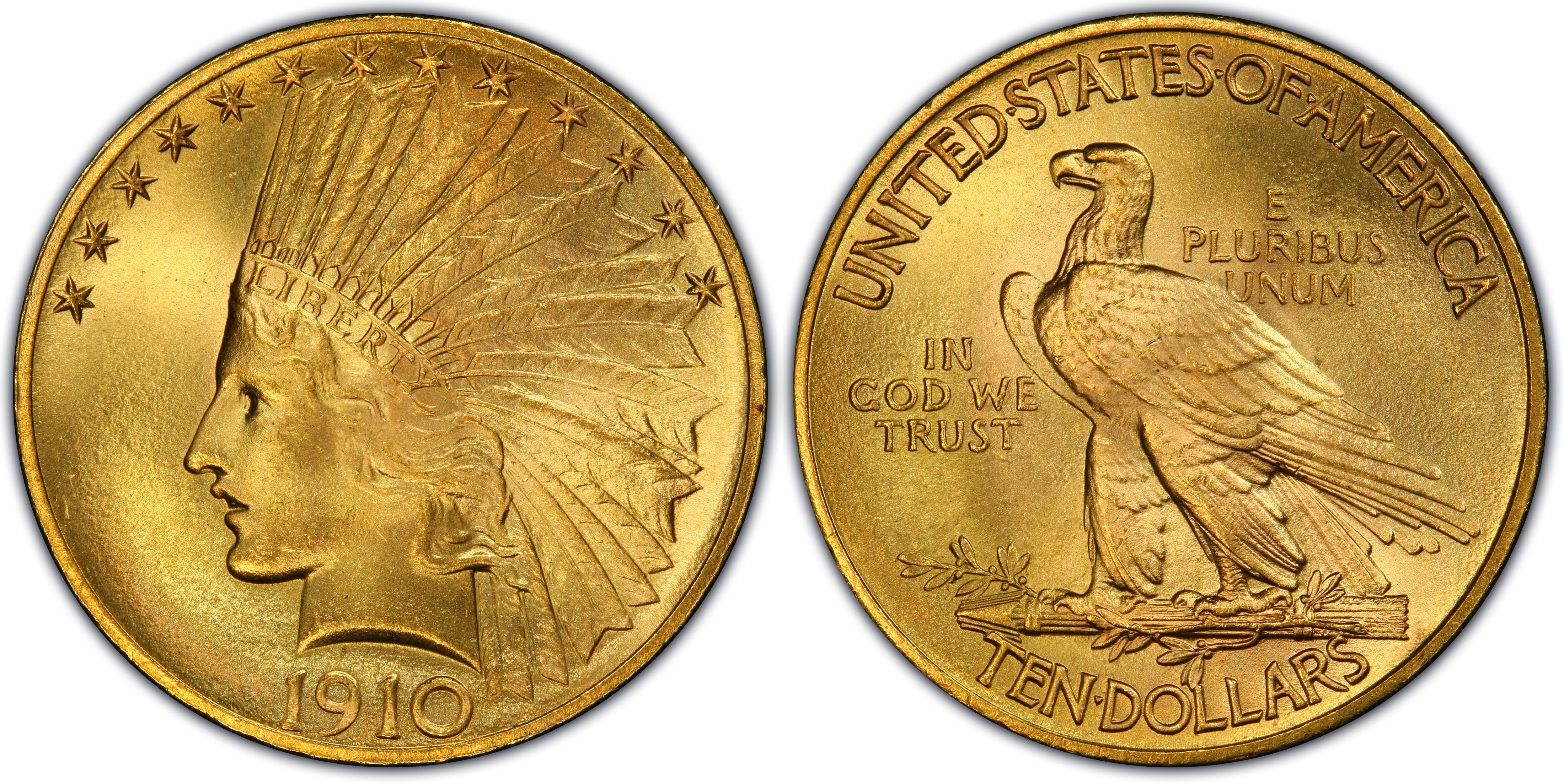 #2 MS67 PCGS grade
|
|
#2 MS67 PCGS grade
|
|
#2 MS67 PCGS grade
Heritage 5/2009:1785, $48,875 |
| #2 MS67 PCGS grade |
| #2 MS67 estimated grade |
| #2 MS67 estimated grade |
 #8 MS66+ PCGS grade
Simpson Collection |
| #8 MS66+ PCGS grade |
| #8 MS66+ PCGS grade |
David Akers (1975/88):
The 1910 is one of the more common issues of the series. Locating an example in MS-63 condition or less will present no difficulty at all. In MS-64 and even MS-65, there are enough examples in existence that one can be found with just a little effort. Some extraordinary MS-65+ to MS-67 or better examples are also known of this issue, perhaps as many as eight to 10 in all, making the 1910 one of the few Indian Head eagles of which it is possible to find a really superb quality example.
Most 1910 eagles are very sharply struck, as sharp as any other issues in the series. The vast majority of specimens are fully frosty with a very fine graularity to the surface; a smaller number are satiny. Lustre varies from slightly above average for the frosty specimens to excellent for the satiny ones. Most of the frosty examples are orange and greenish gold in color, while the satiny ones are typically light to medium yellow gold.
Most 1910 eagles are very sharply struck, as sharp as any other issues in the series. The vast majority of specimens are fully frosty with a very fine graularity to the surface; a smaller number are satiny. Lustre varies from slightly above average for the frosty specimens to excellent for the satiny ones. Most of the frosty examples are orange and greenish gold in color, while the satiny ones are typically light to medium yellow gold.