1912-S $10 (Regular Strike)
Series: Indian Head $10 1907-1933
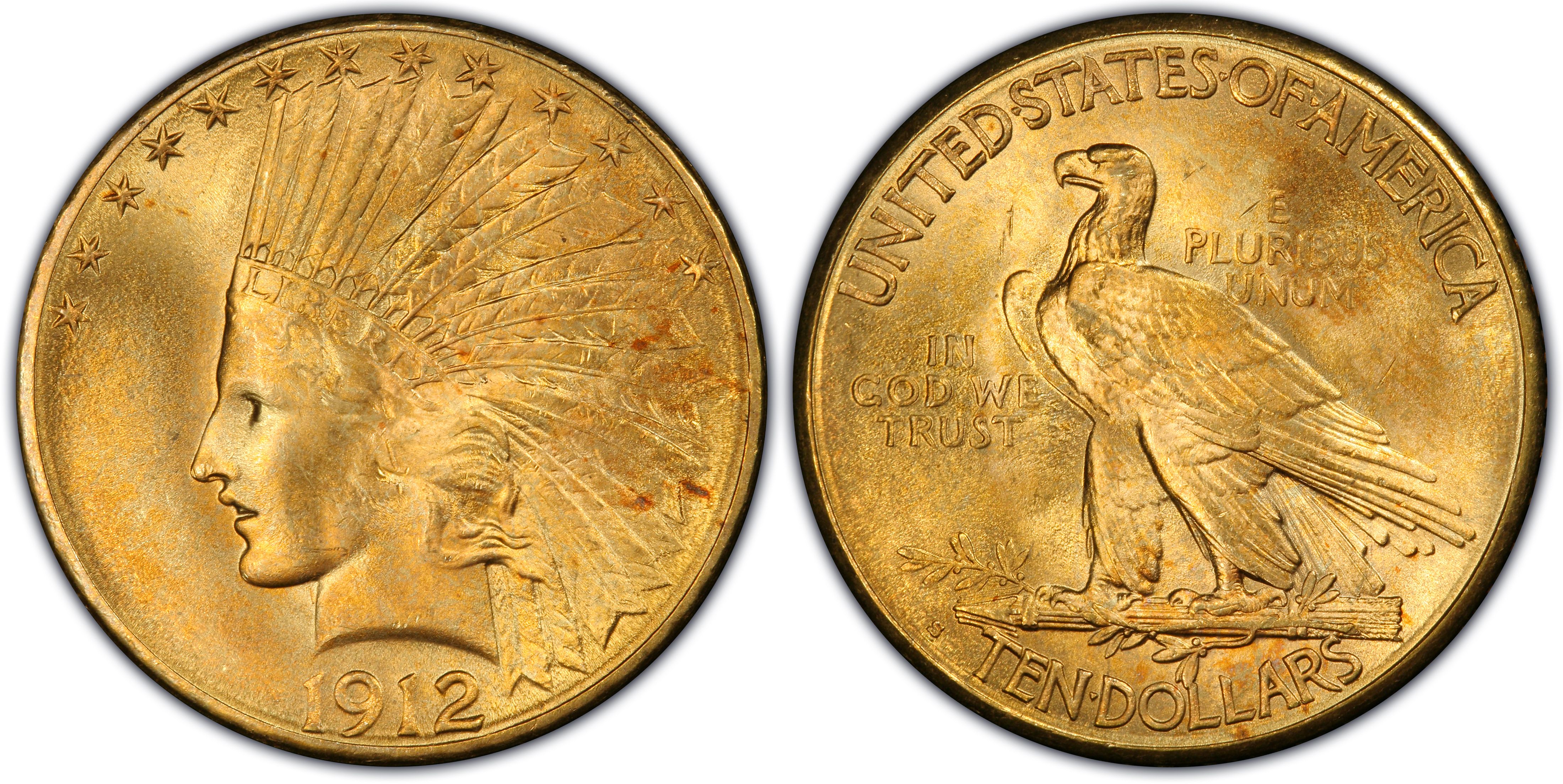
PCGS MS66
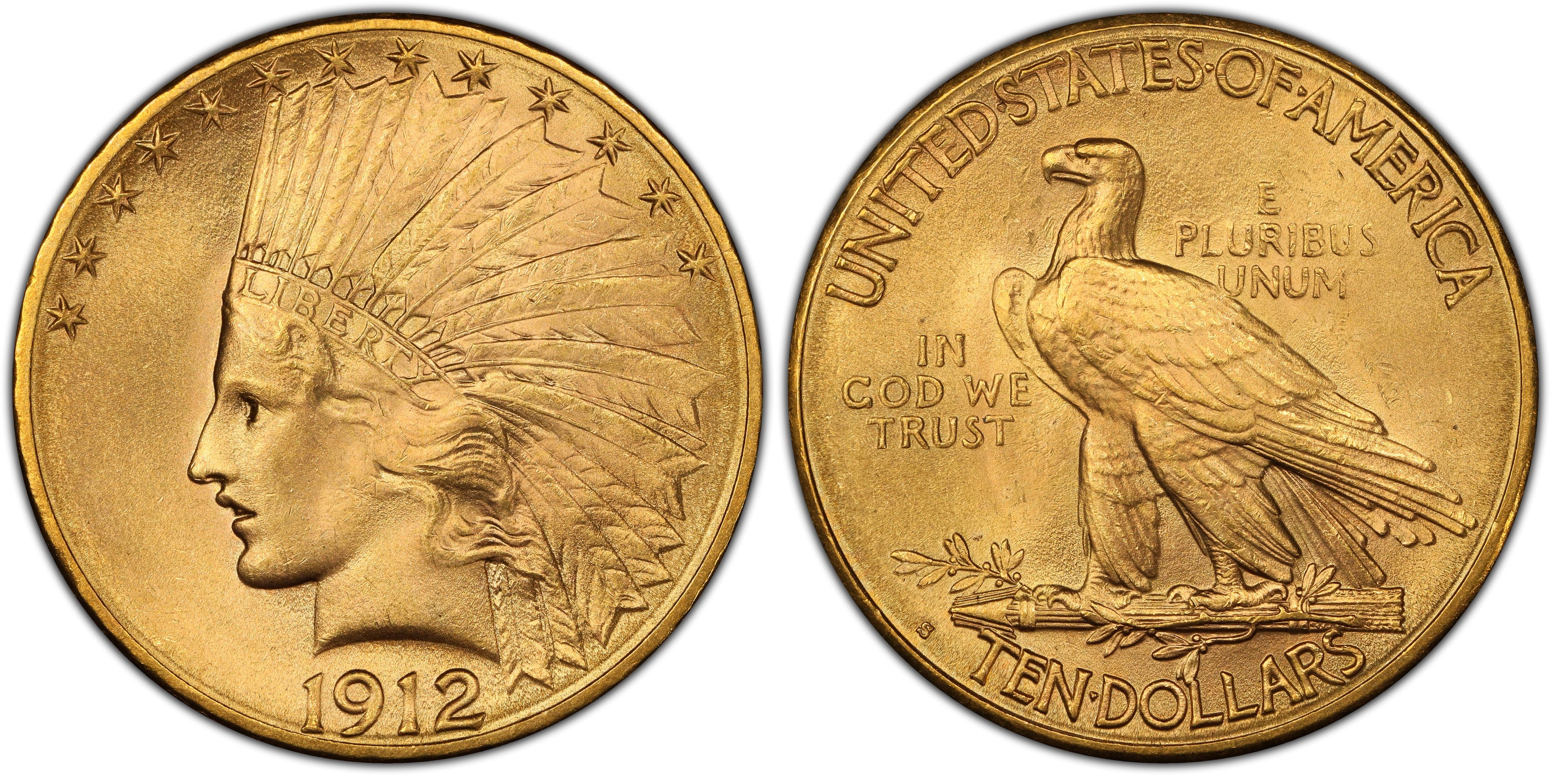
PCGS MS65+
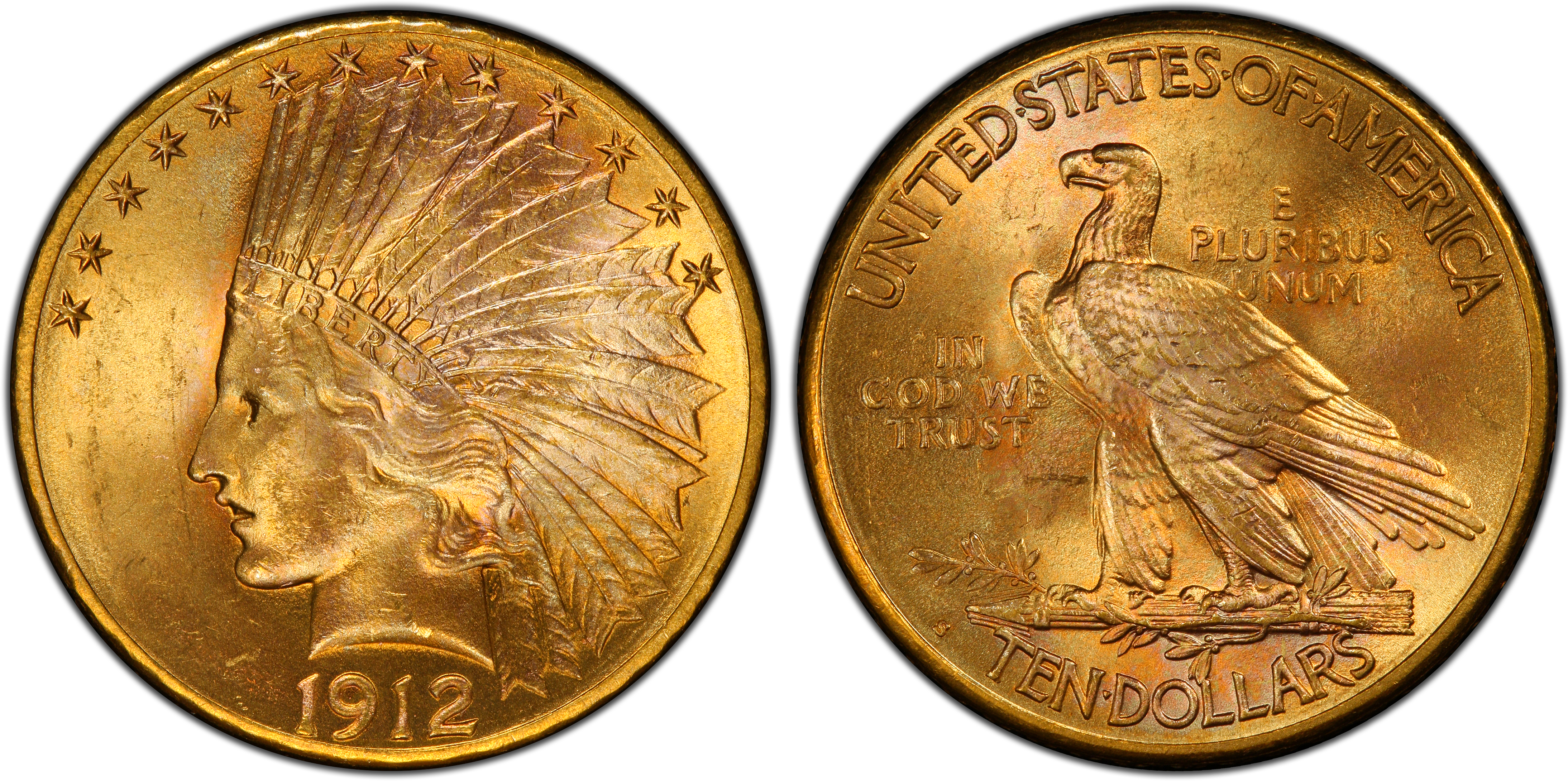
PCGS MS65+
- PCGS #:
- 8872
- Designer:
- Augustus Saint Gaudens
- Edge:
- Raised Stars
- Diameter:
- 26.80 millimeters
- Weight:
- 16.70 grams
- Mintage:
- 300,000
- Mint:
- San Francisco
- Metal:
- 90% Gold, 10% Copper
- Auction Record:
- $115,000 • MS66 • 11-03-2005 • Heritage Auctions
Major Varieties
- 1912-S $10
Go To Grade
Current Auctions - PCGS Graded
Current Auctions - NGC Graded
For Sale Now at Collectors Corner - PCGS Graded
For Sale Now at Collectors Corner - NGC Graded
Rarity and Survival Estimates Learn More
| Survival Estimate | |
|---|---|
| All Grades | 2,100 |
| 60 or Better | 700 |
| 65 or Better | 17 |
| Numismatic Rarity | |
|---|---|
| All Grades | R-4.5 |
| 60 or Better | R-5.6 |
| 65 or Better | R-9.2 |
| Relative Rarity By Type All Specs in this Type | |
|---|---|
| All Grades | 9 / 27 TIE |
| 60 or Better | 10 / 27 |
| 65 or Better | 7 / 27 |
| Relative Rarity By Series All Specs in this Series | |
|---|---|
| All Grades | 11 / 32 TIE |
| 60 or Better | 12 / 32 |
| 65 or Better | 7 / 32 |
Condition Census What Is This?
|
#1 MS66 PCGS grade
|
|
#2 MS65+ PCGS grade
|
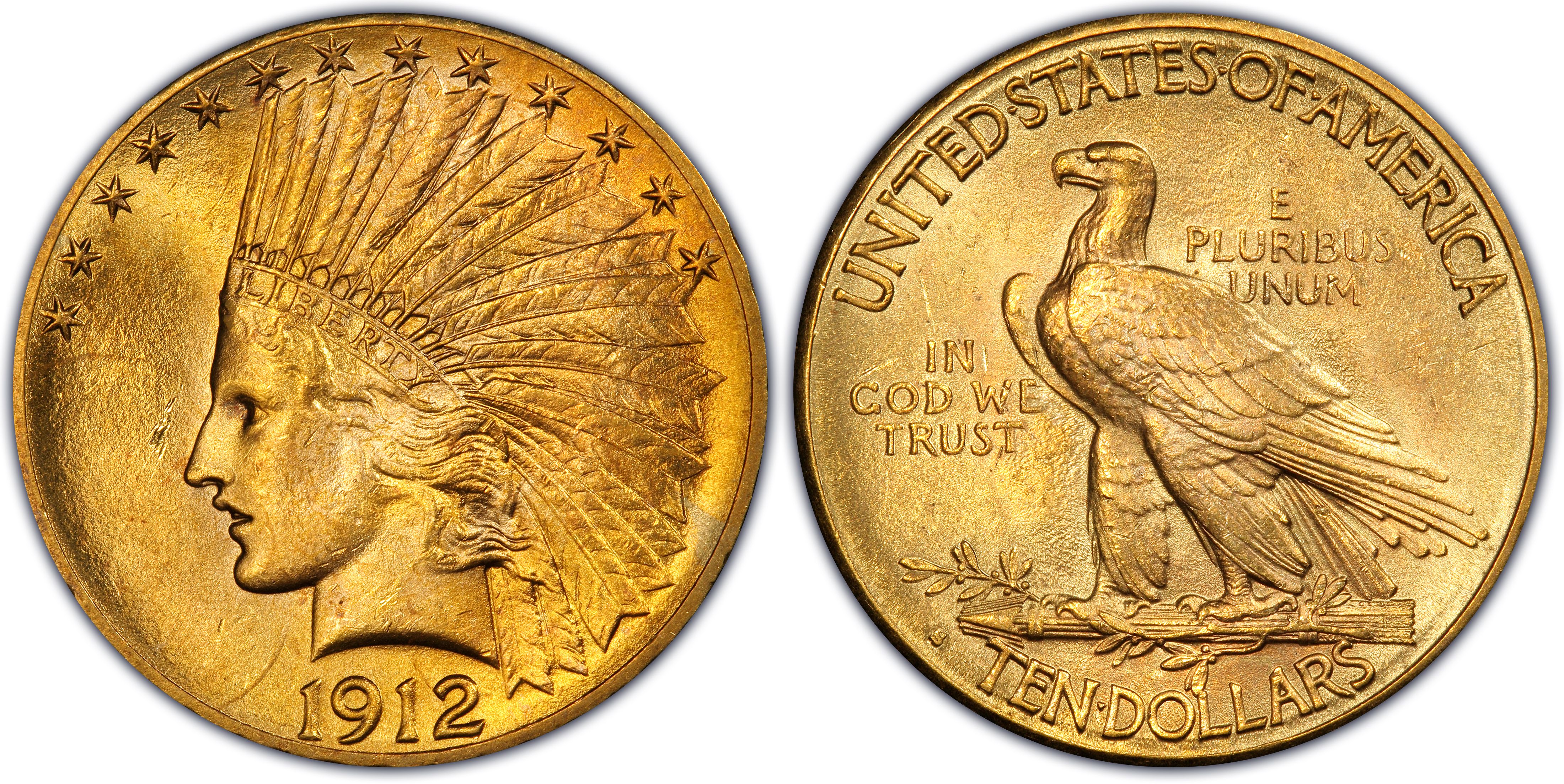 #3 MS65 PCGS grade
|
|
#3 MS65 PCGS grade
Bentley Shores Collection - Stack’s/Bowers 8/2013:4551, $64,625 |
| #3 MS65 PCGS grade |
| #3 MS65 PCGS grade |
| #3 MS65 PCGS grade |
| #8 MS65 PCGS grade |
| #9 MS65 estimated grade |
| #10 MS65 estimated grade |
David Akers (1975/88):
The 1912-S is a very difficult issue to obtain in high grade and, for the 1912-S, "high grade" starts at MS-63. When one factors overall appearance and "eye appeal" into the rarity equation, the 1912-S emerges as one of the absolute rarest issues of the series since "high grade and attractive" and "1912-S eagle" are almost mutually exclusive terms. Robert E. Kruthoffer, Jr. now owns the finest piece I have seen, a highly lustrous coin grading as least MS-65+, possibly even higher. A few other gems do exist, including specimens owned by Dr. Steven Duckor, Dr. Thaine Price, Ed Trompeter and a prominent Eastern collector, among others. A mini-hoard of this issue (fewer than a dozen pieces?) was discovered a few years ago but all of them were in the MS-60 to 63 range with soft strikes and dull lsutre.
The typical 1912-S is one of the most poorly struck issues of the series, certainly far more weak than the usual 1911-S or 1913-S. The hair around the face is almost always indistinct, and there is usually relatively little feather detail on the eagle's shoulder. Luster is generally well below average for the series although I have seen a few (very few) highly lustrous examples as well. The surfaces are always frosty and quite granular, and the color is usually light orange and greenish gold. Overall, the issue is typically one of the least attractive of the series. With one exception, even the few gem quality pieces that I have seen do not have very good "eye appeal," at least not by the high standards of the series.
The typical 1912-S is one of the most poorly struck issues of the series, certainly far more weak than the usual 1911-S or 1913-S. The hair around the face is almost always indistinct, and there is usually relatively little feather detail on the eagle's shoulder. Luster is generally well below average for the series although I have seen a few (very few) highly lustrous examples as well. The surfaces are always frosty and quite granular, and the color is usually light orange and greenish gold. Overall, the issue is typically one of the least attractive of the series. With one exception, even the few gem quality pieces that I have seen do not have very good "eye appeal," at least not by the high standards of the series.