1914-S $20 (Regular Strike)
Series: St. Gaudens $20 1907-1933
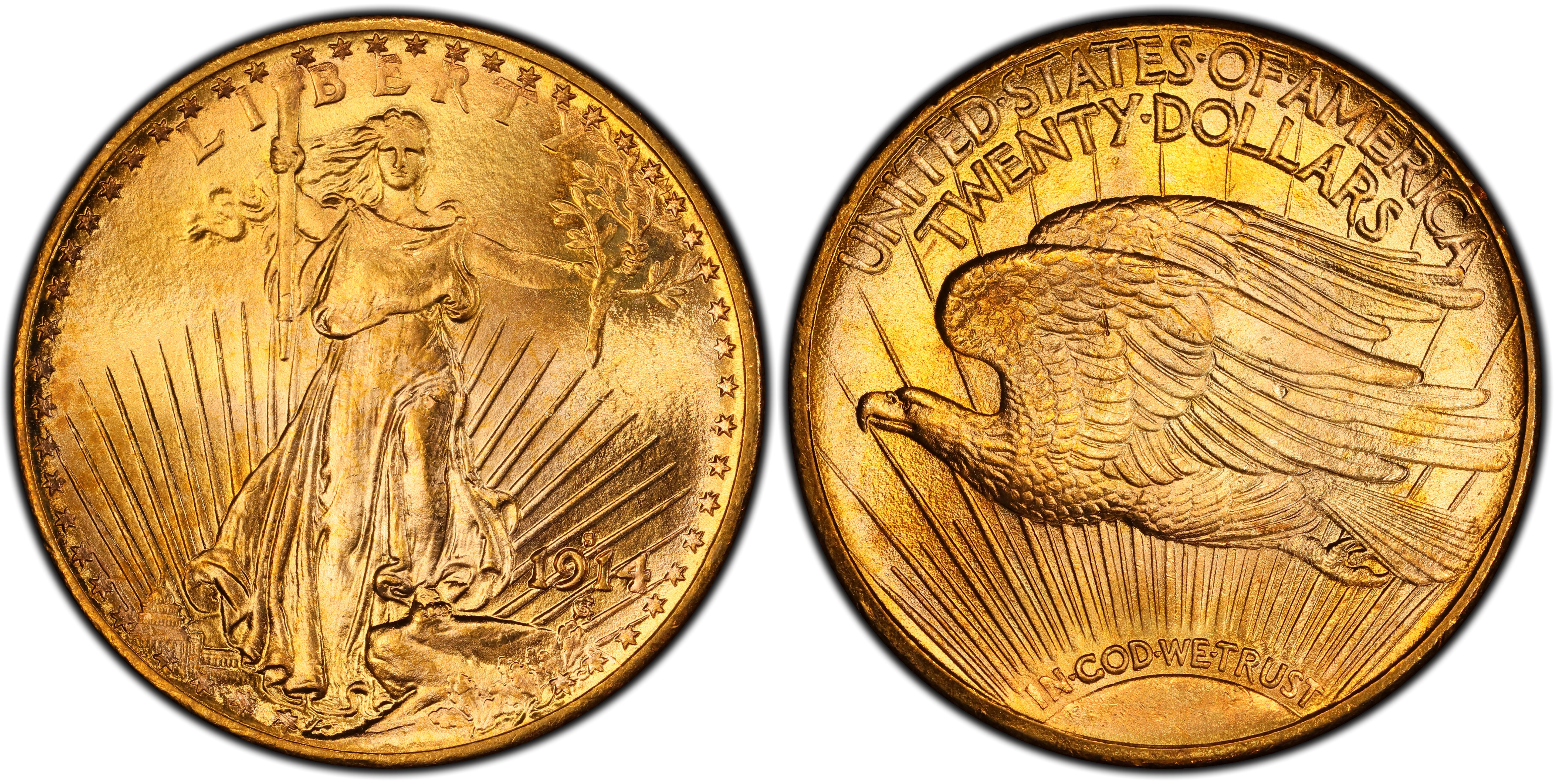
PCGS MS66+
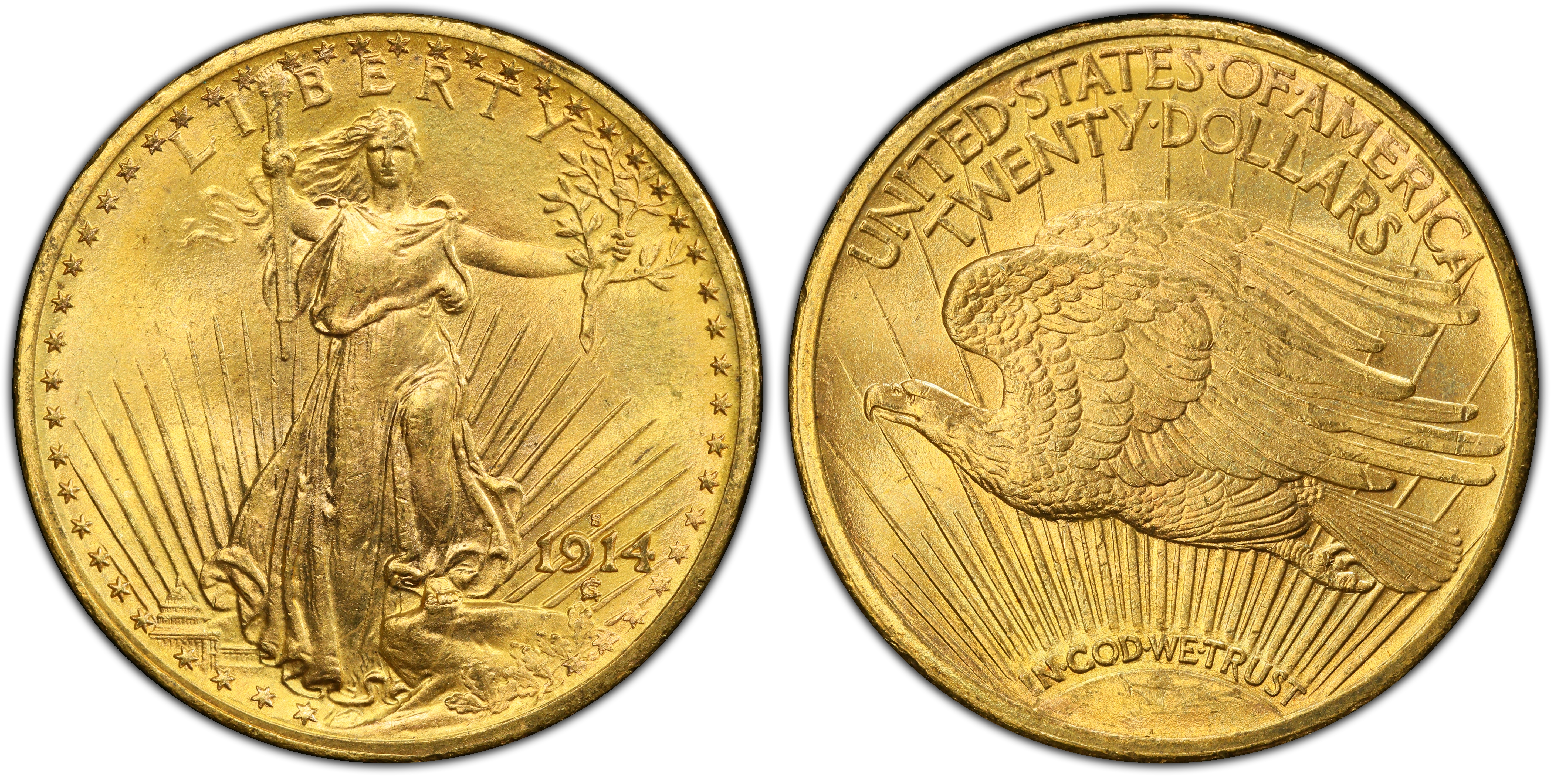
PCGS MS66+
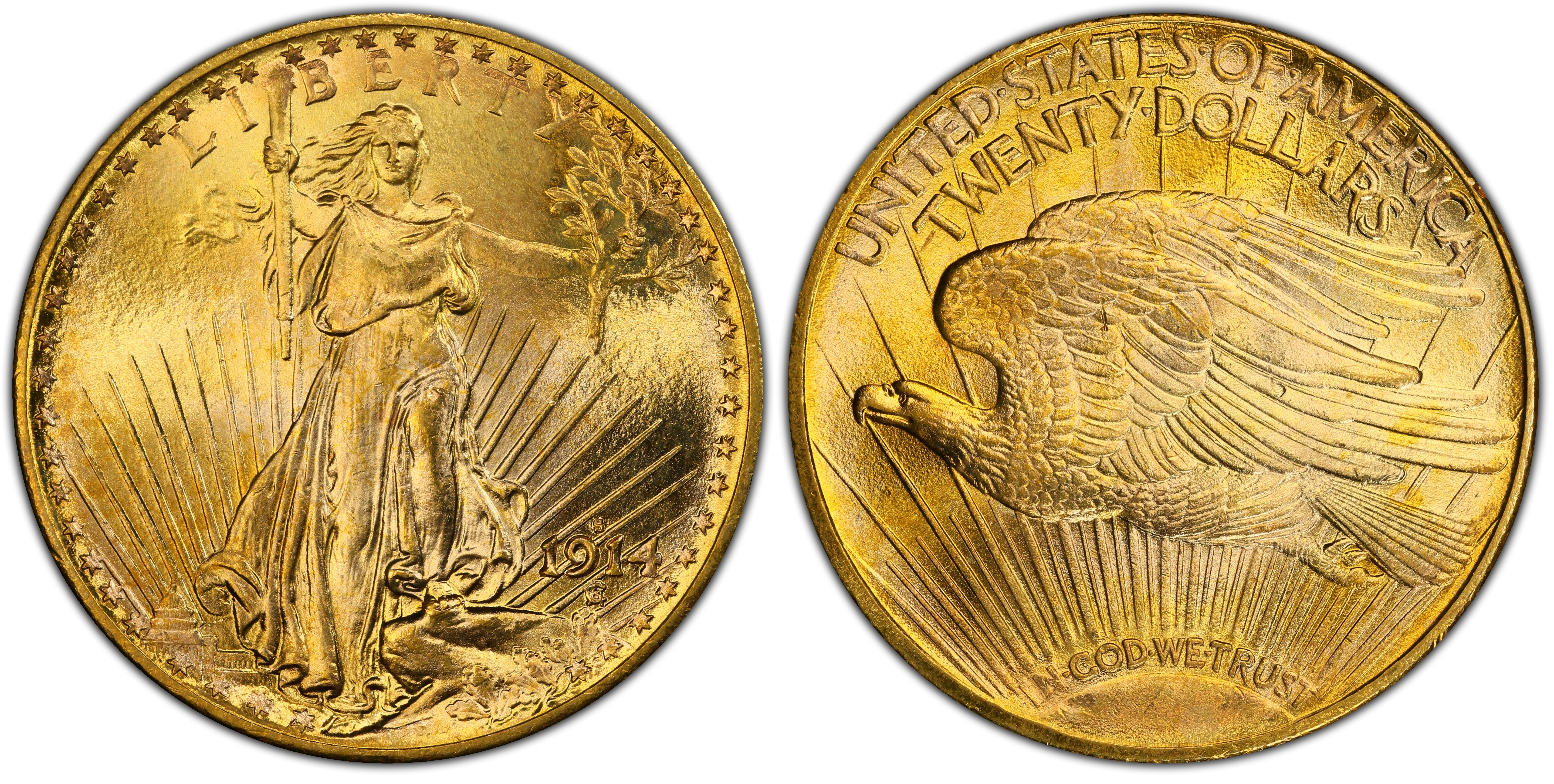
PCGS MS66+
- PCGS #:
- 9166
- Designer:
- Augustus Saint Gaudens
- Edge:
- Lettered
- Diameter:
- 34.00 millimeters
- Weight:
- 33.40 grams
- Mintage:
- 1,498,000
- Mint:
- San Francisco
- Metal:
- 90% Gold, 10% Copper
- Auction Record:
- $69,000 • MS66+ • 08-28-2022 • Heritage Auctions
Major Varieties
- 1914-S $20
Rarity and Survival Estimates Learn More
| Survival Estimate | |
|---|---|
| All Grades | 118,333 |
| 60 or Better | 85,833 |
| 65 or Better | 8,000 |
| Numismatic Rarity | |
|---|---|
| All Grades | R-1.9 |
| 60 or Better | R-2.1 |
| 65 or Better | R-3.4 |
| Relative Rarity By Type All Specs in this Type | |
|---|---|
| All Grades | 42 / 49 TIE |
| 60 or Better | 42 / 49 |
| 65 or Better | 43 / 49 |
| Relative Rarity By Series All Specs in this Series | |
|---|---|
| All Grades | 46 / 54 TIE |
| 60 or Better | 46 / 54 |
| 65 or Better | 47 / 54 |
Condition Census What Is This?
|
#1 PCGS MS66+
|
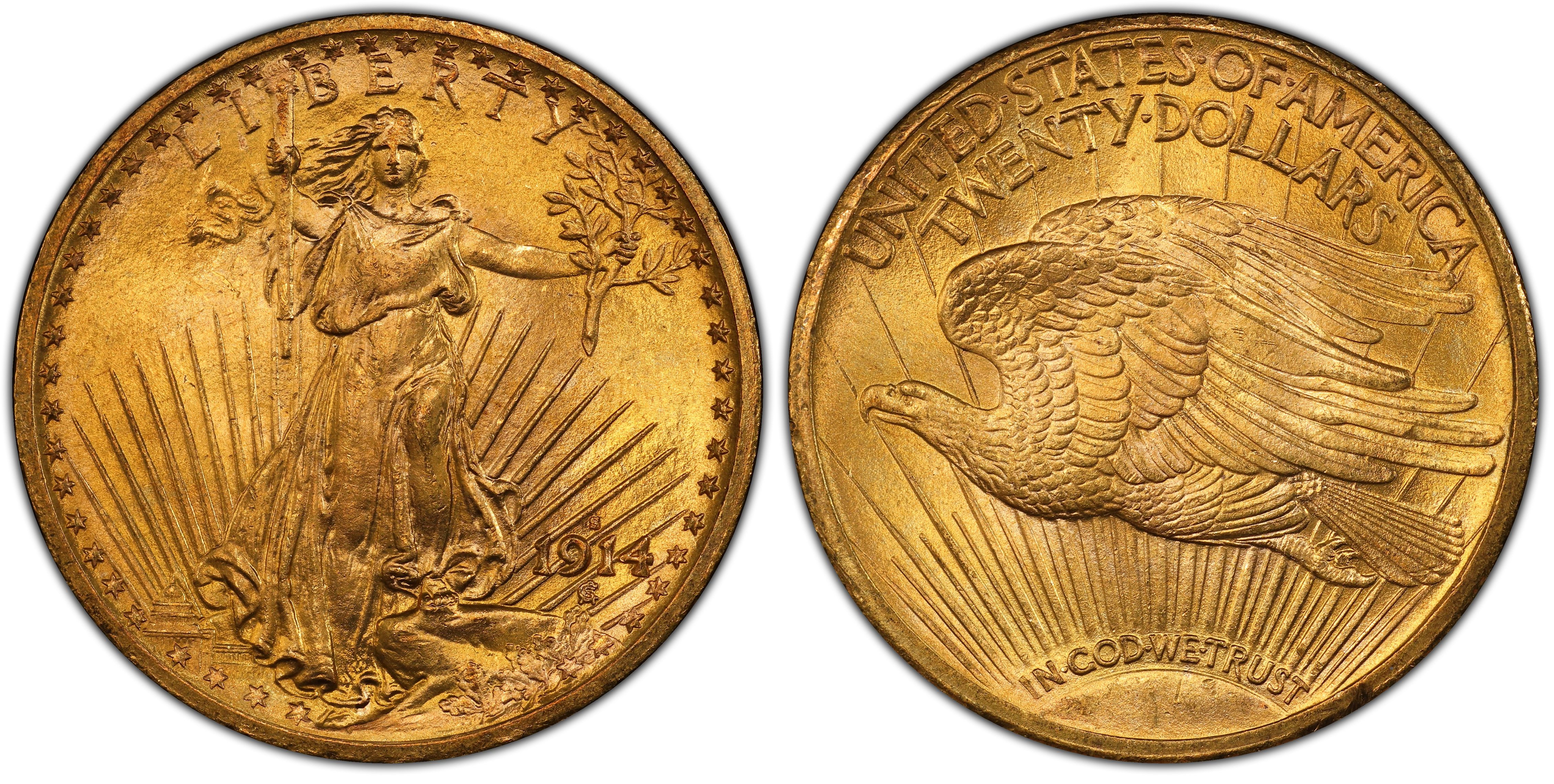 #1 PCGS MS66+
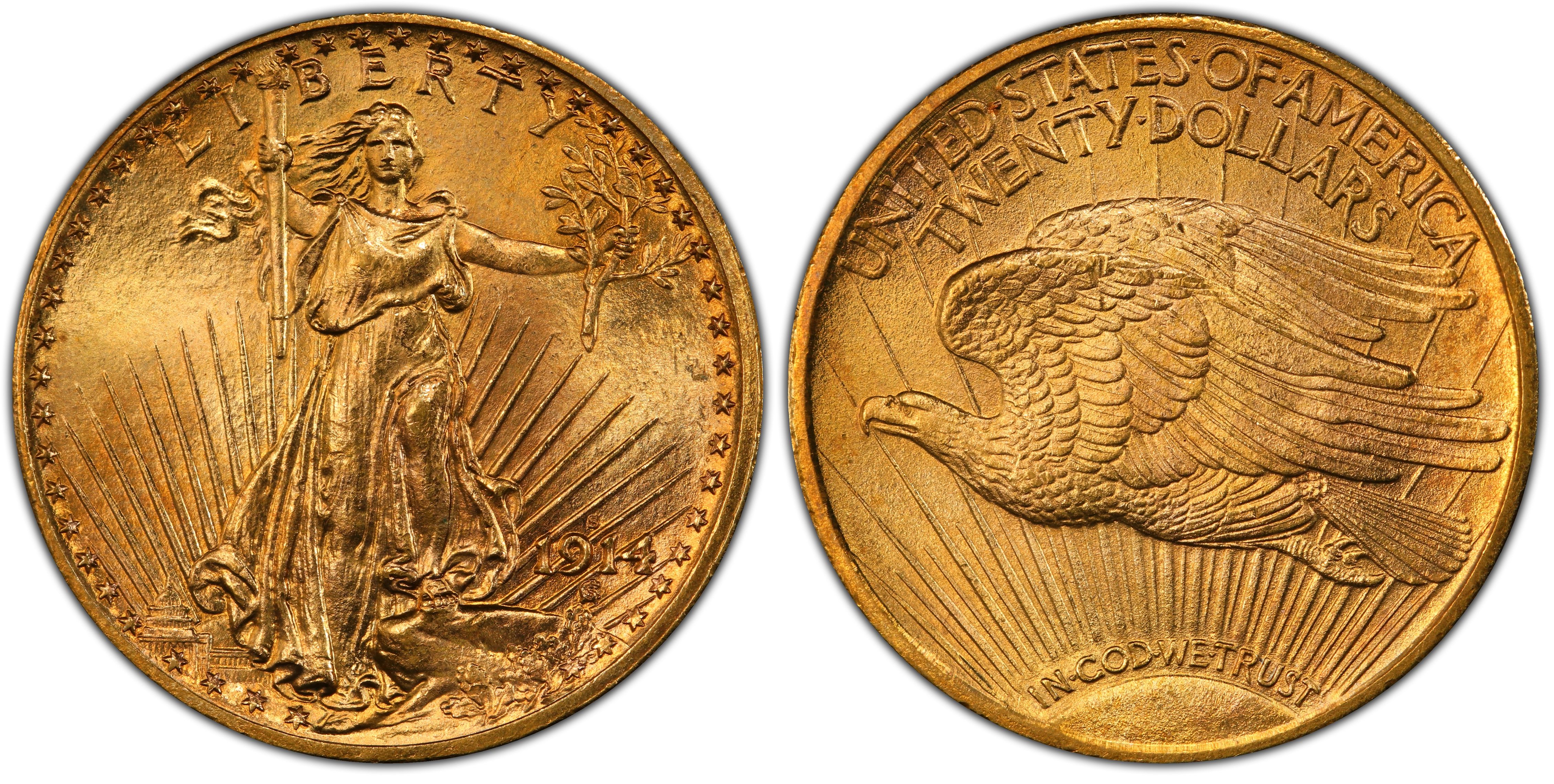
Heritage Auctions, December 15, 2024, Lot 3176 - $18,120. Pedigree marker between rays 7 and 8. Small tick on sun under T. |
 #1 PCGS MS66+
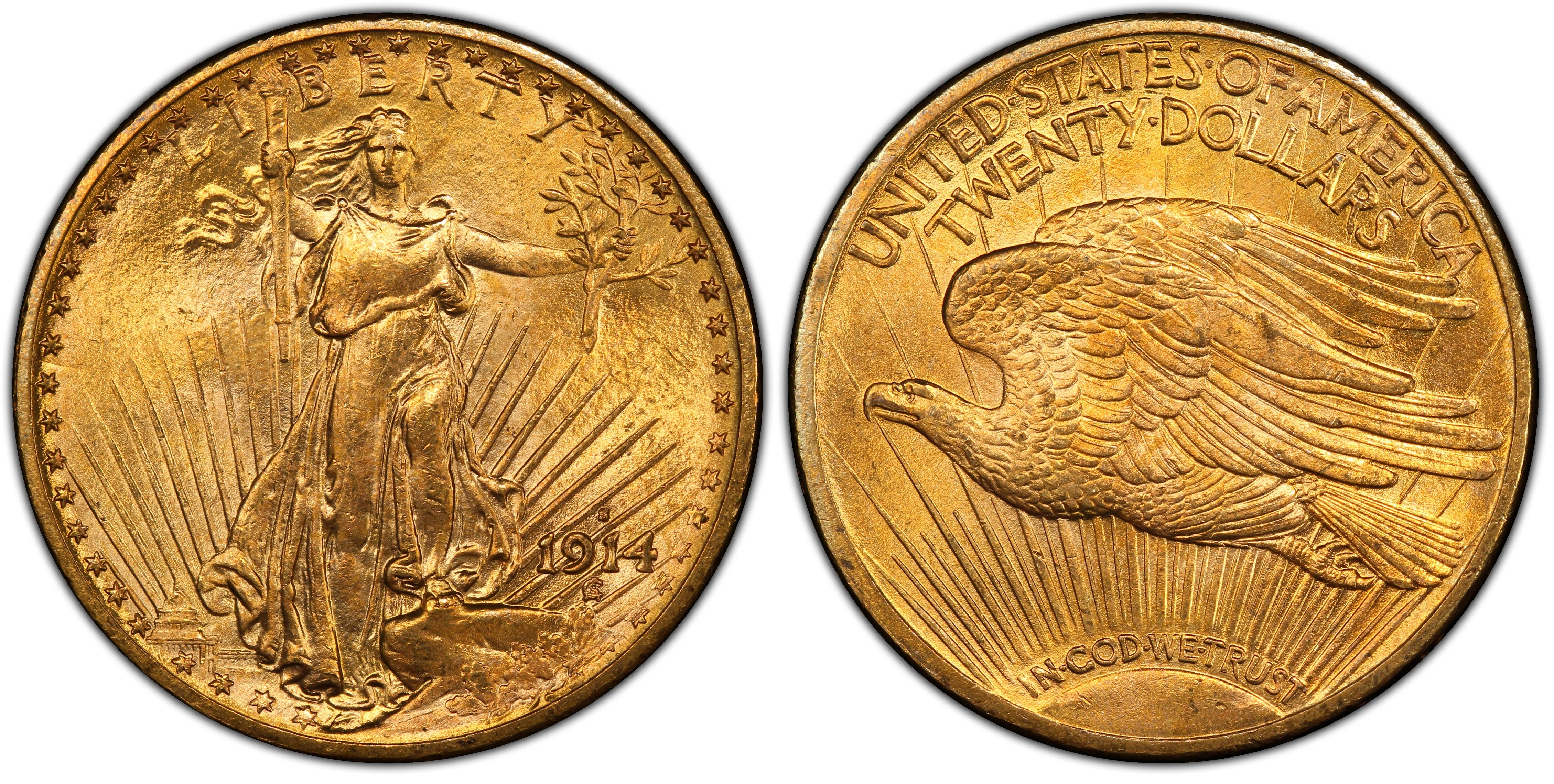
Heritage Auctions, August 24, 2022, Lot 4150 – $69,000. Orange peel surfaces. Light mark on the top of the eagle's left wing under TY serves as a pedigree marker. |
 #1 PCGS MS66+
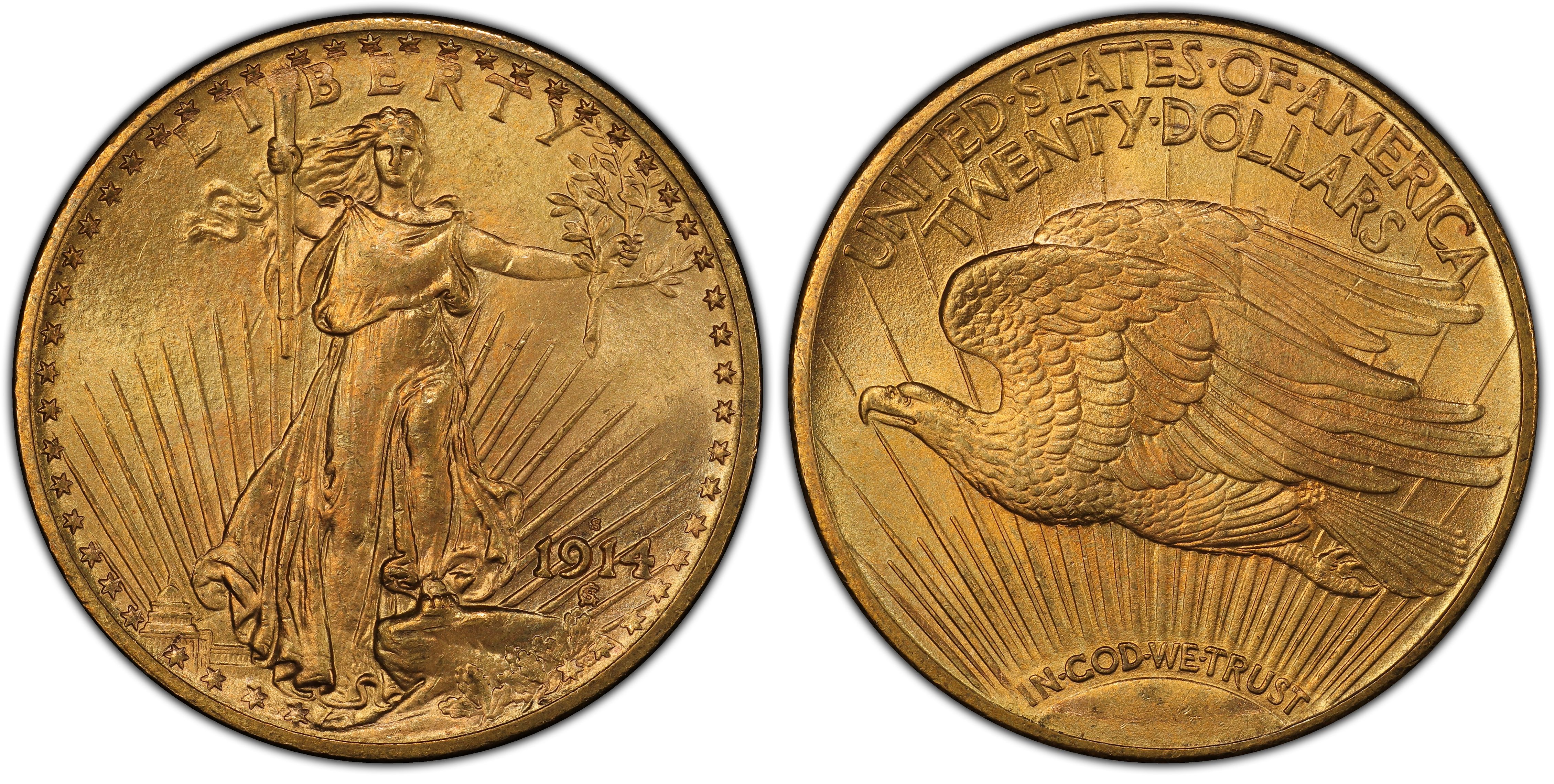
As PCGS MS66+ #37543081: “The Rollo Fox Collection of $20 Saint-Gaudens Gold,” Heritage Auctions, January 9, 2020, Lot 4025 – $11.700. As PCGS MS66+ #38967466. "The Hanalei Bay Saint Collection" (PCGS Set Registry). Small mark above rays 8 and 9. Diagonal mark under branch. Small patch of dark toning over eagle's left wing. Small planchet void on the sun under RU. |
 #1 PCGS MS66+
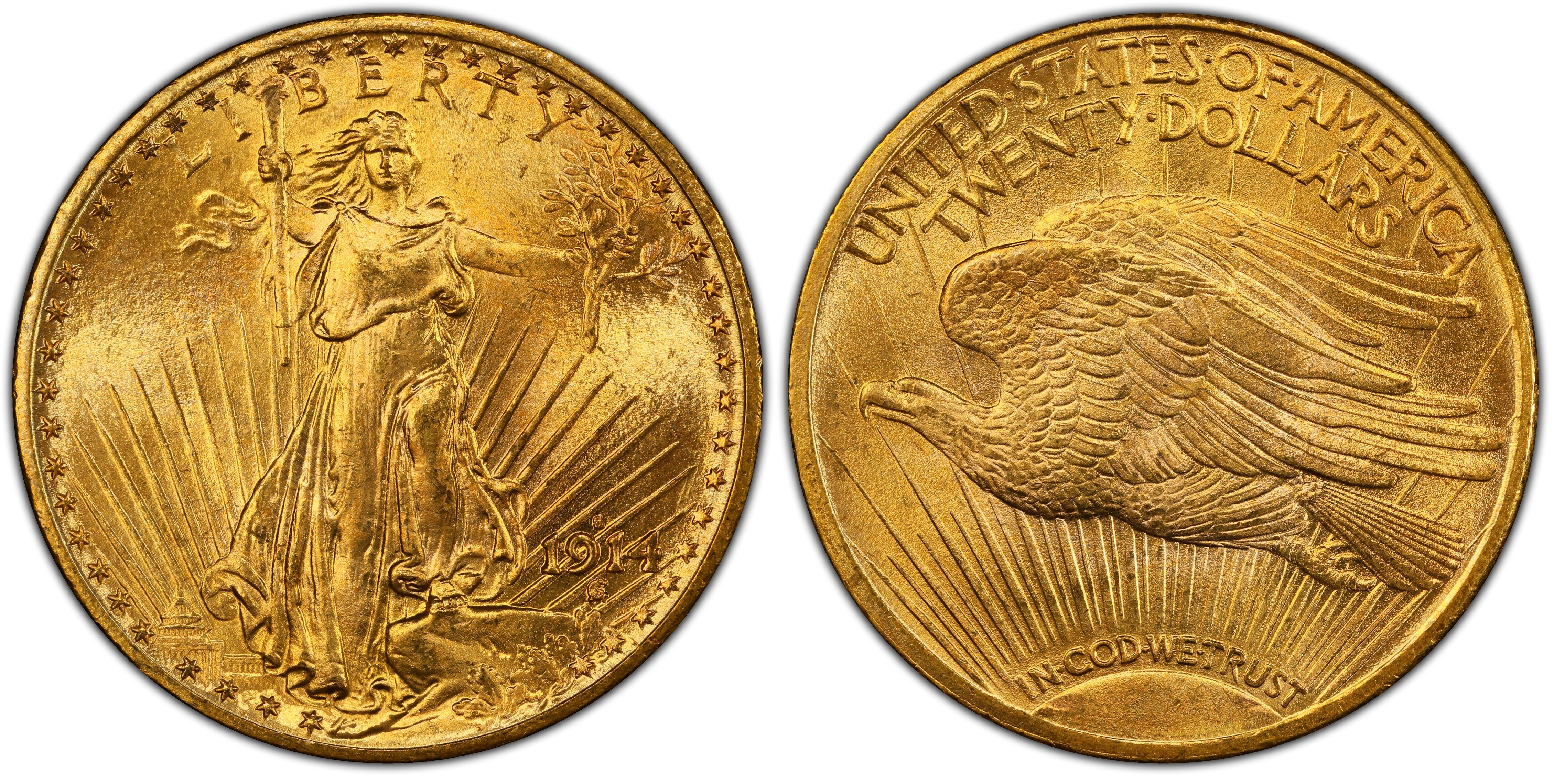
GreatCollections, August 4, 2019, Lot 649520 – $14,062.50; "The Luna Collection" (PCGS Set Registry). Thin diagonal mark on the eagle's right wing under the S of DOLLARS. Top of ER of LIBERTY lighty struck. |
| #1 PCGS MS66+ |
 #1 PCGS MS66+
"The Bella Collection"; "The A&A Saints Collection"; "The Elite Collection" (PCGS Set Registry). Orange peel surfaces. Faint diagonal mark under Y of TWENTY. |
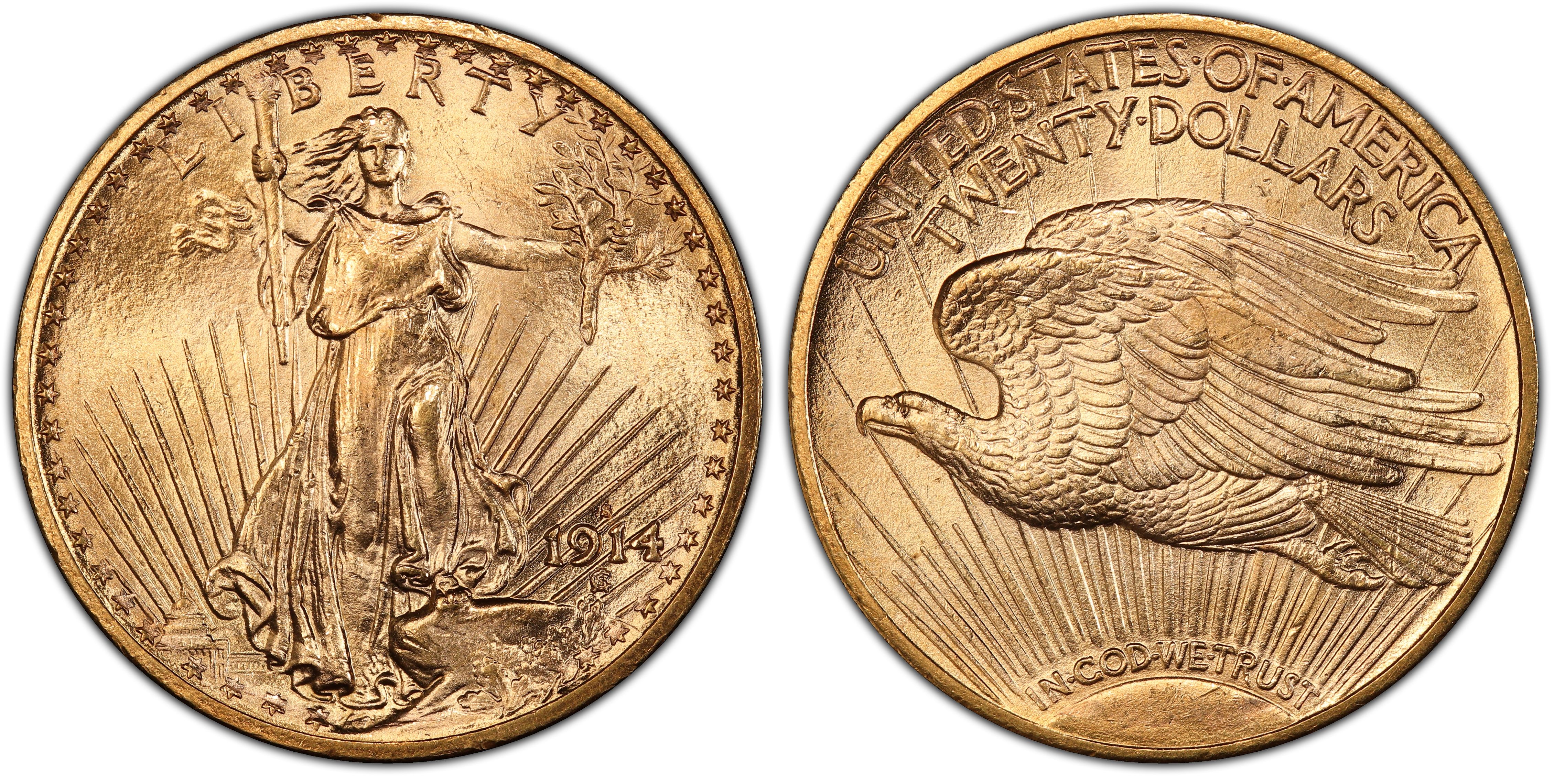 #1 PCGS MS66+
Small tick under WE of TWENTY. |
|
#1 PCGS MS66+
|
Within years of its founding in 1854, the San Francisco Mint quickly became the nation's primary producer of the Double Eagle ($20) gold coin. The reason was simple: California was the source of the gold. Even after the conclusion of the California Gold Rush era (roughly 1848 to the 1860s), the state sustained a profitable gold mining industry, though operations shifted from alluvial deposits to large-scale hard-rock mining.
This dominance continued into the era of the Saint-Gaudens Double Eagle. Early San Francisco's issues in this series, such as the 1909-S, the 1910-S, and the 1914-S, were struck in numbers significantly higher than their Philadelphia (P) and Denver (D) Mint counterparts.San Francisco's prolific output far surpassed that of the other mints until around 1922, when production concentration gradually shifted eastward.
These high mintages make the early San Francisco coins, like the 1914-S, excellent choices for type coin collectors or as a bullion investment.
Explaining Today's Availability of the 1914-S Saint-Gaudens Double Eagle
The abundance of 1914-S available today is largely attributed to hoards containing thousands of examples that began to surface in the 1960s. Most of these coins had been shipped overseas for international payments before the U.S. government recalled its gold coinage in 1933.
Due to this substantial repatriation, well-preserved 1914-S Saint-Gaudens Double Eagles are abundant and often display an attractive, satiny appearance. Many coins grading Gem or even near Superb Gem are readily available, with PCGS-graded examples most commonly found in the MS63 to MS64 grade range.
* * *