1976-S 50C Clad, DCAM (Proof)
Series: Kennedy Half Dollars 1964 to Date

PCGS PR70DCAM
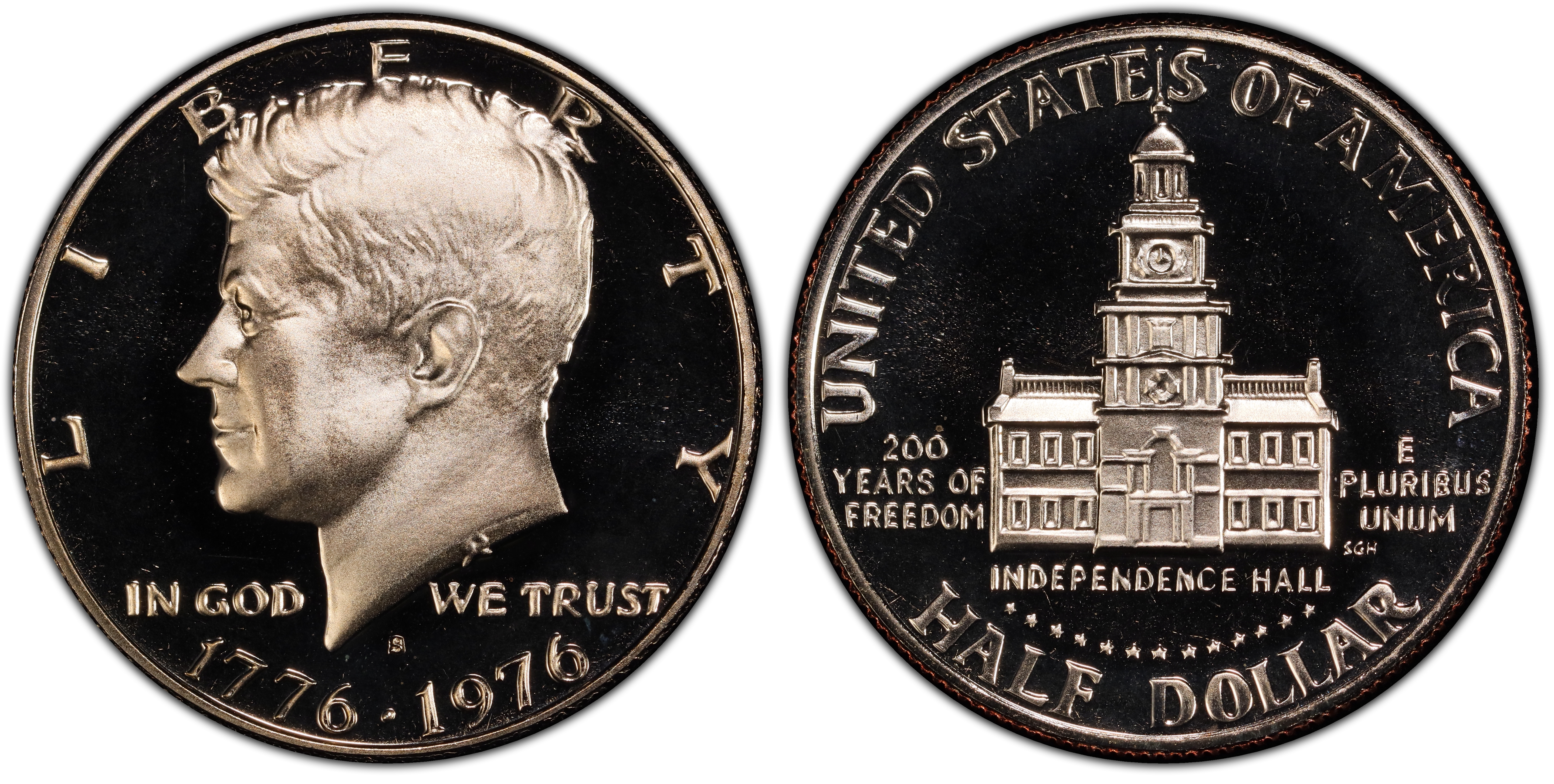
PCGS PR70DCAM
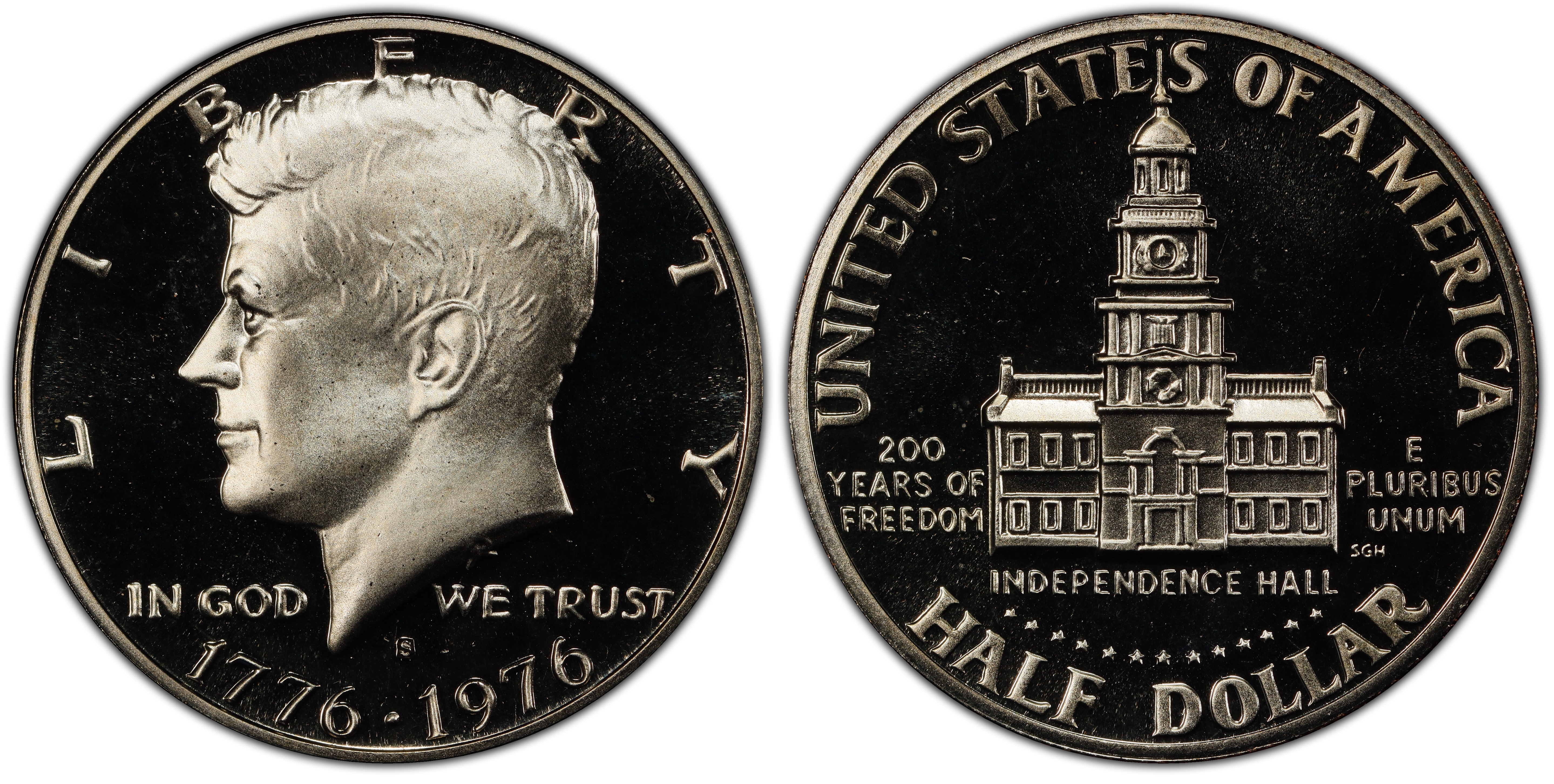
PCGS PR70DCAM
- PCGS #:
- 96811
- Designer:
- Gilroy Roberts/Frank Gasparro
- Edge:
- Reeded
- Diameter:
- 31.00 millimeters
- Weight:
- 11.30 grams
- Mintage:
- 7,059,099
- Mint:
- San Francisco
- Metal:
- 75% Copper, 25% Nickel over a pure Copper center
- Auction Record:
- $5,175 • PR70 • 01-09-2008 • Heritage Auctions
Die Varieties
- 1976-S (1975) 50C Clad 1975 Proof Set, CAM
- 1976-S (1975) 50C Clad 1975 Proof Set
- 1976-S 50C Clad Joe Orlando Signature, DCAM
- 1976-S 50C Clad Thomas Cleveland MSS, DCAM
- 1976-S (1975) 50C Clad 1975 Proof Set, DCAM
- 1976-S 50C Clad DDR FS-801
- 1976-S 50C Clad DDR FS-801, CAM
- 1976-S 50C Clad DDR FS-801, DCAM
- 1976-S 50C Clad LB Treasure Hunt, CAM
- 1976-S 50C Clad LB Treasure Hunt, DCAM
- 1976-S 50C Clad David Hall Signature, DCAM
- 1976-S 50C Clad Thomas Cleveland Proof Set, DCAM
Rarity and Survival Estimates Learn More
| Survival Estimate | |
|---|---|
| All Grades | 5,717,870 |
| 60 or Better | 5,717,870 |
| 65 or Better | 4,860,189 |
| Numismatic Rarity | |
|---|---|
| All Grades | R-1.0 |
| 60 or Better | R-1.0 |
| 65 or Better | R-1.0 |
| Relative Rarity By Type All Specs in this Type | |
|---|---|
| All Grades | 1 / 1 |
| 60 or Better | 1 / 1 |
| 65 or Better | 1 / 1 |
| Relative Rarity By Series All Specs in this Series | |
|---|---|
| All Grades | 11 / 19 TIE |
| 60 or Better | 11 / 19 TIE |
| 65 or Better | 14 / 19 TIE |
Condition Census What Is This?
|
#1 PCGS PR70DCAM
GreatCollections, March 15, 2026, Lot 2086950 - $343.13. |
|
#1 PCGS PR70DCAM
GreatCollections, February 15, 2026, Lot 1952333 - $324. |
|
#1 PCGS PR70DCAM
GreatCollections, February 15, 2026, Lot 2049407 - $276.75. |
|
#1 PCGS PR70DCAM
"The Basque Guy #1 All-Time PCGS Registry Set," Heritage Auctions, February 3, 2011, Lot 3856 - $3,737.50; Heritage Auctions, August 16, 2015, Lot 5293 - $2,232.50; "The Corum Collection" (PCGS Set Registry). Old Green Holder. Gold toning. First PCGS PR70DCAM certified. |
|
#1 PCGS PR70DCAM
Heritage Auctions, September 1, 2003, Lot 7419 - $3,795. |
The 1976-S Kennedy Half Dollar Clad Proof
The 1976-S Bicentennial Kennedy Half Dollar Clad Proof is one of five distinct half dollar issues struck by the United States Mint in 1975 and 1976 to celebrate the nation’s 200th birthday. These coins all feature Seth G. Huntington’s "Independence Hall" reverse and the 1776–1976 dual date. The lineup includes the 1976 (Philadelphia, #6726) and 1976-D (Denver, #6727) copper-nickel clad coins struck for circulation, alongside the 1976-S silver-clad Proof (#96812) and Uncirculated (#6728) versions. The silver-clad coins were sold in special three-coin collector sets, and the Clad Proof was sold in the 1975 and 1976 United States Proof Sets, and while these coins were not issued into general circulation, the occasional example has been broken out of its original packaging and spent at face value.
Origins of a Circulating Commemorative
The journey of the Bicentennial coinage began in 1970, when the American Revolution Bicentennial Commission proposed special designs to mark the anniversary. Initially, the Treasury Department was hesitant. Following a policy established after the speculative boom of commemorative issues in the 1930s, many of which were returned after failing to sell, the Treasury preferred to stay out of the commemorative coin business and avoid its concomitant headaches.
However, the coin-collecting community, led by the American Numismatic Association (ANA), lobbied aggressively for the Mint to celebrate the Bicentennial by issuing commemorative coins. The ANA’s plan was grandiose; while they were unsuccessful in their push for the first legal tender gold coins since 1933, they eventually swayed the administration to mark the occasion numismatically.
On October 18, 1973, just two days before the "Saturday Night Massacre" upended his presidency, President Richard Nixon signed Public Law 93-127. This mandated new, "emblematic" Bicentennial designs for the Washington Quarter, the Kennedy Half Dollar, and the Eisenhower Dollar.
The National Design Competition
To find these designs, the Treasury held a national competition beginning in October 1973. From a field of over 1,000 entries, five judges selected the winners, who each received $5,000. Mint Director Mary Brooks unveiled the winning designs on NBC’s Today show on March 7, 1974.
Seth Huntington’s winning reverse for the half dollar features a detailed view of the rear facade of Independence Hall in Philadelphia. This Georgian-style structure, designed by Edmund Woolley, was completed in 1753. It served as the meeting place for the Second Continental Congress and was the site where George Washington was named Commander-in-Chief in 1775 and the Declaration of Independence was signed in 1776.
Sales and Collector Value
The 1976-S Clad Proof was sold within the standard 1975 and 1976 annual Proof Sets. Because the Mint began striking Bicentennial coins in 1975, no coins with a "1975" date were issued for the quarter, half dollar, or dollar; those year's sets simply contained the 1776–1976 dual-dated versions.
The program was a massive success:
- 1975 Proof Set Sales: 2,845,450 sets
- 1976 Proof Set Sales: 4,149,730 sets
Each set carried a face value of $1.91 and an original issue price of $7.00. Today, these clad sets remain readily available, typically trading for $25 to $30. Because the original government packaging is not airtight, exposure often causes the proof coins to develop an unattractive layer of surface haze. While professional curation can remove most of this film, extreme care must be taken to avoid damaging the coin's delicate surfaces. Any environmental damage done to the copper cent, however, is typically permanent.
The 1976-S Kennedy Half Dollar Proof remains a popular modern issue and is regularly submitted to PCGS alongside its silver-clad counterpart. Population data indicates that the clad proof is actually the tougher of the two to achieve a PCGS PR70DCAM grade. The harder coinage metal and the specific level of frost on the dies contribute to this disparity, but more often than not, it appears the Mint simply exercised a bit more care when striking the silver-clad collector versions.
* * *