
We've come to the seventh and final installment of our look at coins of the same denomination and date, with different designs. This time, we'll look at the three examples in the U.S. gold series of the late 18th and early 19th century.
One of the most puzzling transitions took place in the early Half Eagle and Eagle series. Robert Scot's "Small Eagle" design that appeared in 1795 was not popular, with contemporary criticism aimed at the "sickly and scrawny looking bird" on the reverse of our two flagship coins. Taken from an early Roman design, it depicts an eagle with outstretched wings holding a wreath in its beak and a palm branch in its claws.
That design appeared on coins dated from 1795 to 1798. However, coins dated 1795, 1797 and 1798 also appear with a Heraldic Eagle reverse. That reverse, also by Robert Scot, is based on the Great Seal of the United States, with the "error" of reversing the arrows and olive branch. It is generally concluded that the early pre-1798 Half Eagles with the Heraldic Eagle reverse were struck at a later date, using obverse dies from previous years. These "backdated" coins have been the subject of much research and speculation as to the usage of particular die pairings.

The Eagles had similar overlap in the 1797 issue, with the Small Eagle design being struck in the spring of 1797, and the Heraldic Eagle design struck during the last half of the year. Unlike the Half Eagle, it does not appear any backdated coins were struck. Mintage figures were extremely low however, and fewer than 14,000 coins of the Small Eagle design were struck during 1795, 1796 and 1797. The Heraldic Eagle design, while still scarce, saw a total mintage of about 120,000 pieces through 1804.
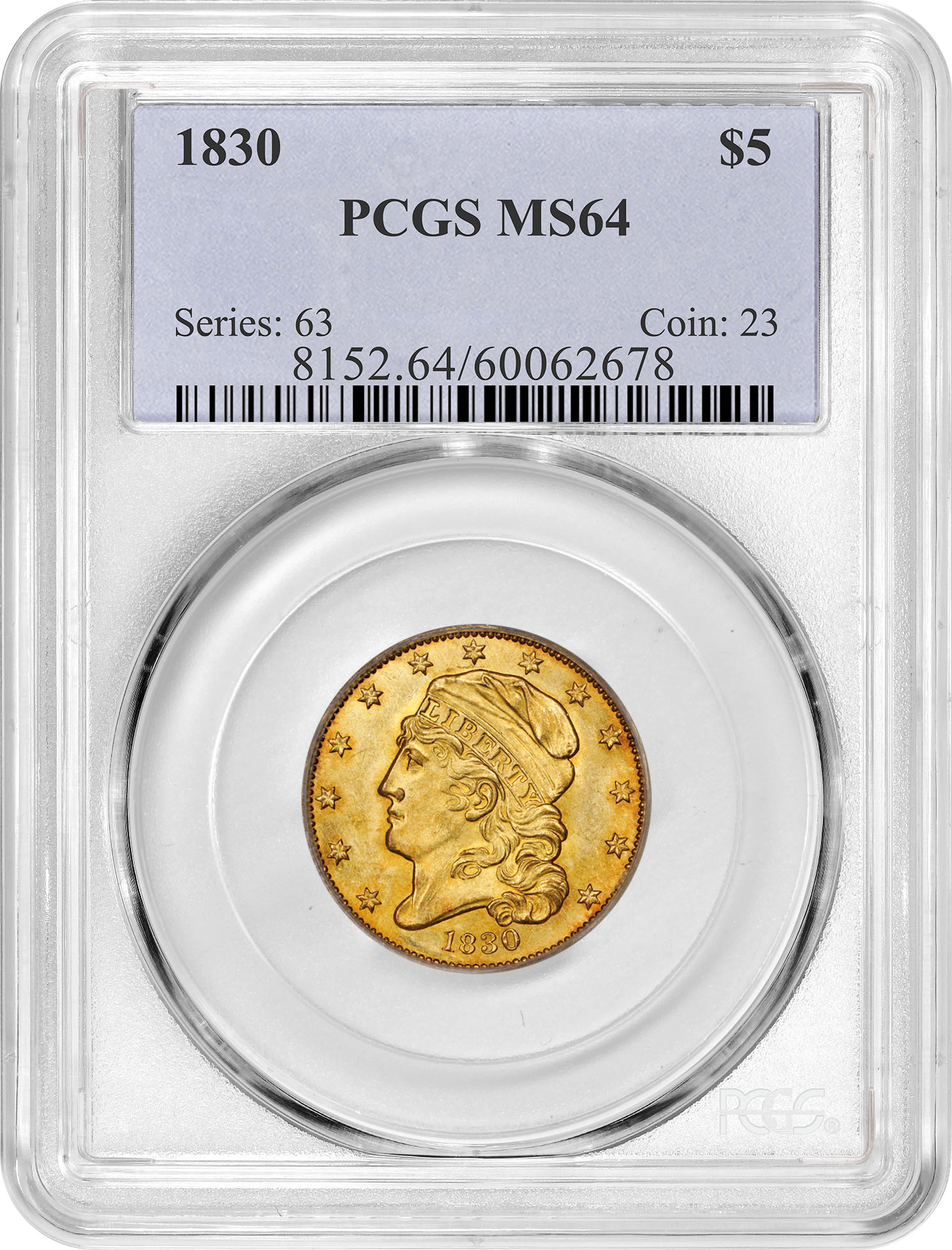
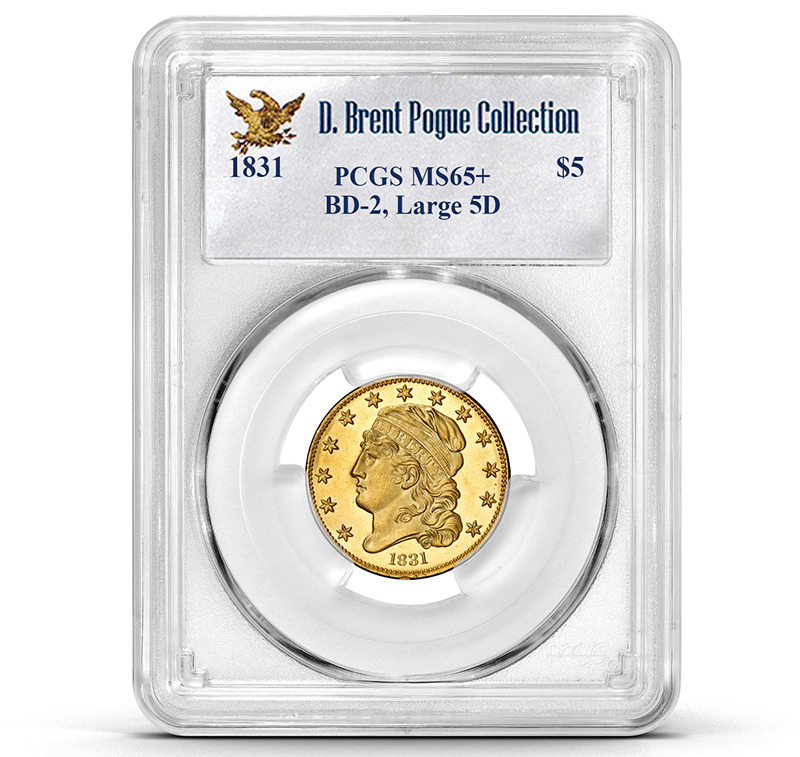
Last, but certainly not least, was the changeover in 1807 from Robert Scot's Capped Bust Right to John Reich's Capped Bust Left design. Reich was assigned to improve the designs of America's circulating coinage, but public reaction to his new designs was not good; some referring to the effigy of "Liberty" as "the artist's fat mistress."
In any event, the new design on the Half Eagle appeared September 30, 1807, and some 51,600 were struck in the last part of the year versus about 32,500 of the older design, struck from February through June.

This brings to a close our series on "Same Date – Different Type." While completing an entire set of all coins in this series would be quite a challenge, many of the mid-19th and 20th century examples are quite affordable and would make an outstanding and interesting display.


 Copper & Nickel
 Silver Coins
 Gold Coins
 Commemoratives
 Others
 Bullion
 World
World
 Coin Market
 Auctions
 Coin Collecting
 PCGS News