1961-D 25C (Regular Strike)
Series: Washington Quarters 1932-1964

PCGS MS67+

PCGS MS67+
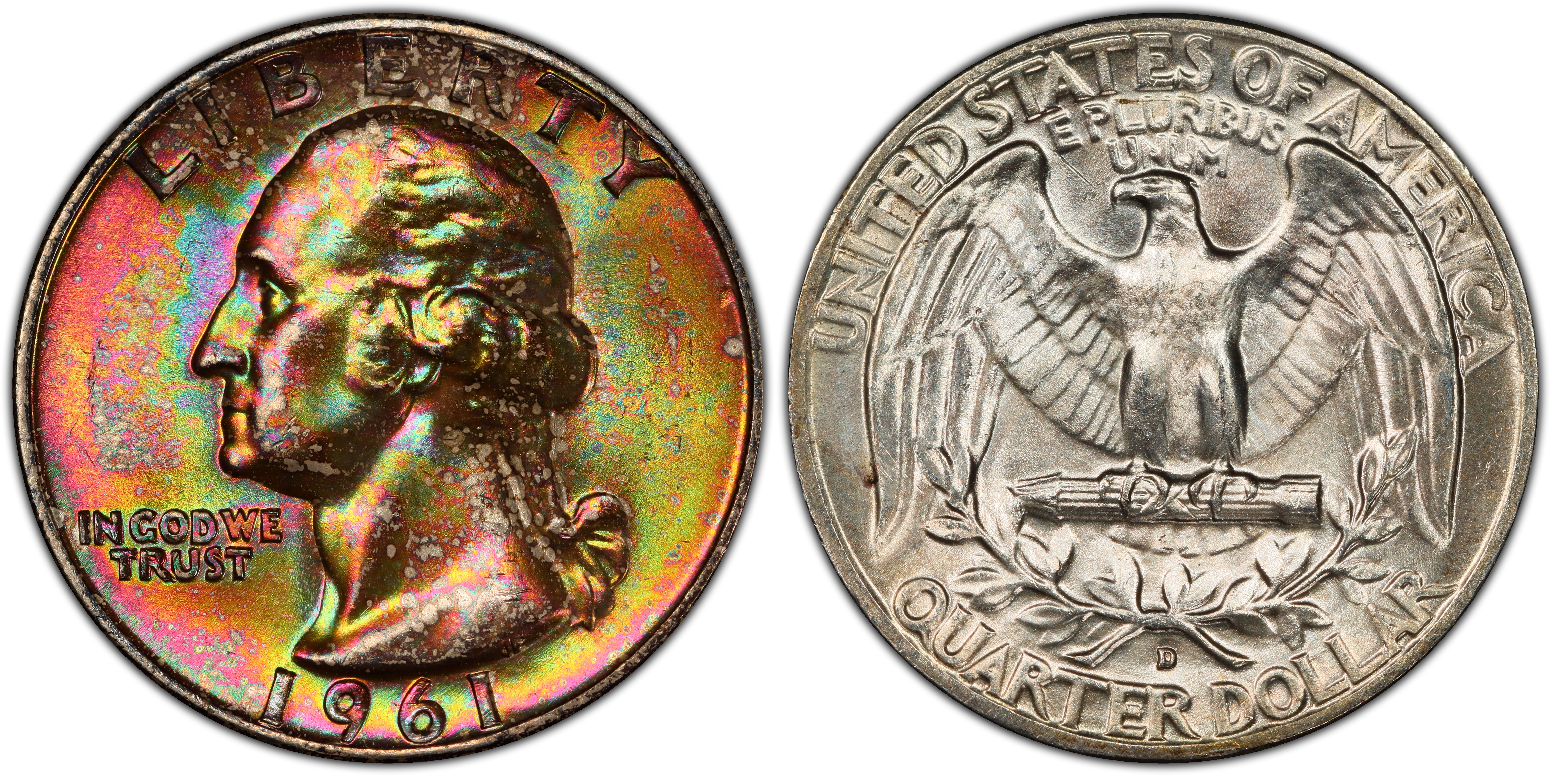
PCGS MS67+
- PCGS #:
- 5871
- Designer:
- John Flanagan
- Edge:
- Reeded
- Diameter:
- 24.30 millimeters
- Weight:
- 6.30 grams
- Mintage:
- 83,656,928
- Mint:
- Denver
- Metal:
- 90% Silver, 10% Copper
- Auction Record:
- $24,000 • MS67+ • 08-20-2019 • Stack's Bowers
Major Varieties
- 1961-D 25C
Rarity and Survival Estimates Learn More
| Survival Estimate | |
|---|---|
| All Grades | 8,366,000 |
| 60 or Better | 75,000 |
| 65 or Better | 5,000 |
| Numismatic Rarity | |
|---|---|
| All Grades | R-1.0 |
| 60 or Better | R-2.2 |
| 65 or Better | R-4.0 |
| Relative Rarity By Type All Specs in this Type | |
|---|---|
| All Grades | 35 / 93 TIE |
| 60 or Better | 76 / 93 TIE |
| 65 or Better | 15 / 93 TIE |
| Relative Rarity By Series All Specs in this Series | |
|---|---|
| All Grades | 35 / 93 TIE |
| 60 or Better | 76 / 93 TIE |
| 65 or Better | 15 / 93 TIE |
Condition Census What Is This?
 #1 PCGS MS67+
|
|
#1 PCGS MS67+
GreatCollections, September 17, 2023, Lot 1420355 - $5,906.25. Ample original brilliance remains beneath a scattered patchwork of gold and orange peripheral toning. A small diagonal mark is noted in Washington's hair to the right of the ear, while the reverse remains 95% brilliant. |
|
#1 PCGS MS67+
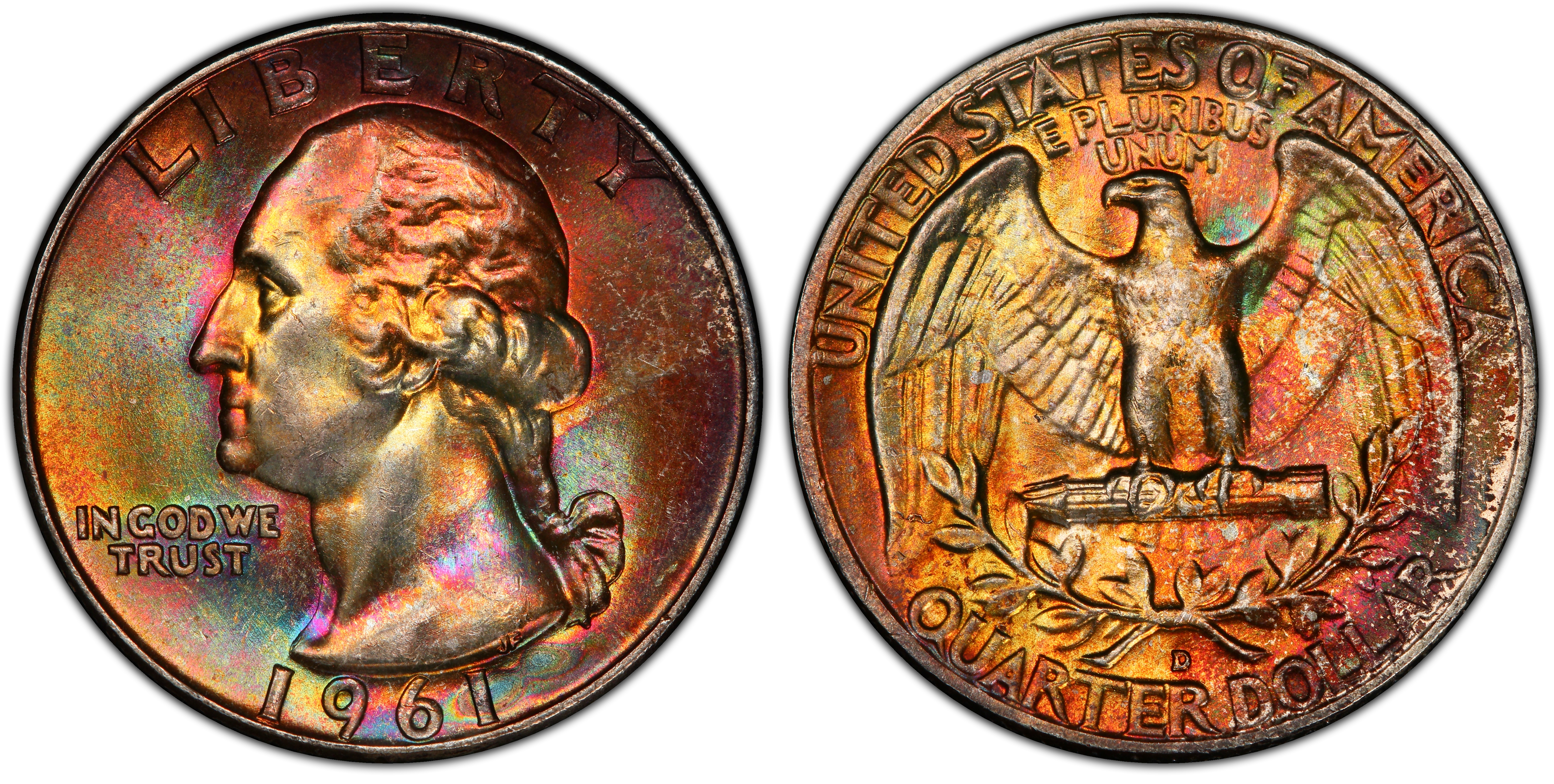
GreatCollections, March 12, 2023, Lot 1070715 - $7,593.75; Dr. John O. Phillips; "The Brodie Collection" (PCGS Set Registry). Intense gold, green, and magenta toning covers the obverse with scattered splatters of untoned areas. Reverse is brilliant, save for a small toning spot bordering the tip of the eagle's right wing. |
 #1 PCGS MS67+
As NGC MS67+ #4882988-013. Heritage Auctions, January 9, 2020, Lot 3714 – $3,120. As PCGS MS67+ #41459428. Legend Rare Coin Auctions, September 2, 2021, Lot 278 - $12,337.50; "The Twin Oaks Collection" (PCGS Set Registry). Red, blue, and green toning saturates the obverse, highlighted by a vivid diagonal band across the lower-right field. |
 #1 PCGS MS67+
GreatCollections, December 20, 2020, Lot 602499 - $8,493.75; "The Charlie56 Collection" (PCGS Set Registry). Creamy pearlescent surfaces with gold and orange toning at the left and lower border of the obverse. |
 #1 PCGS MS67+
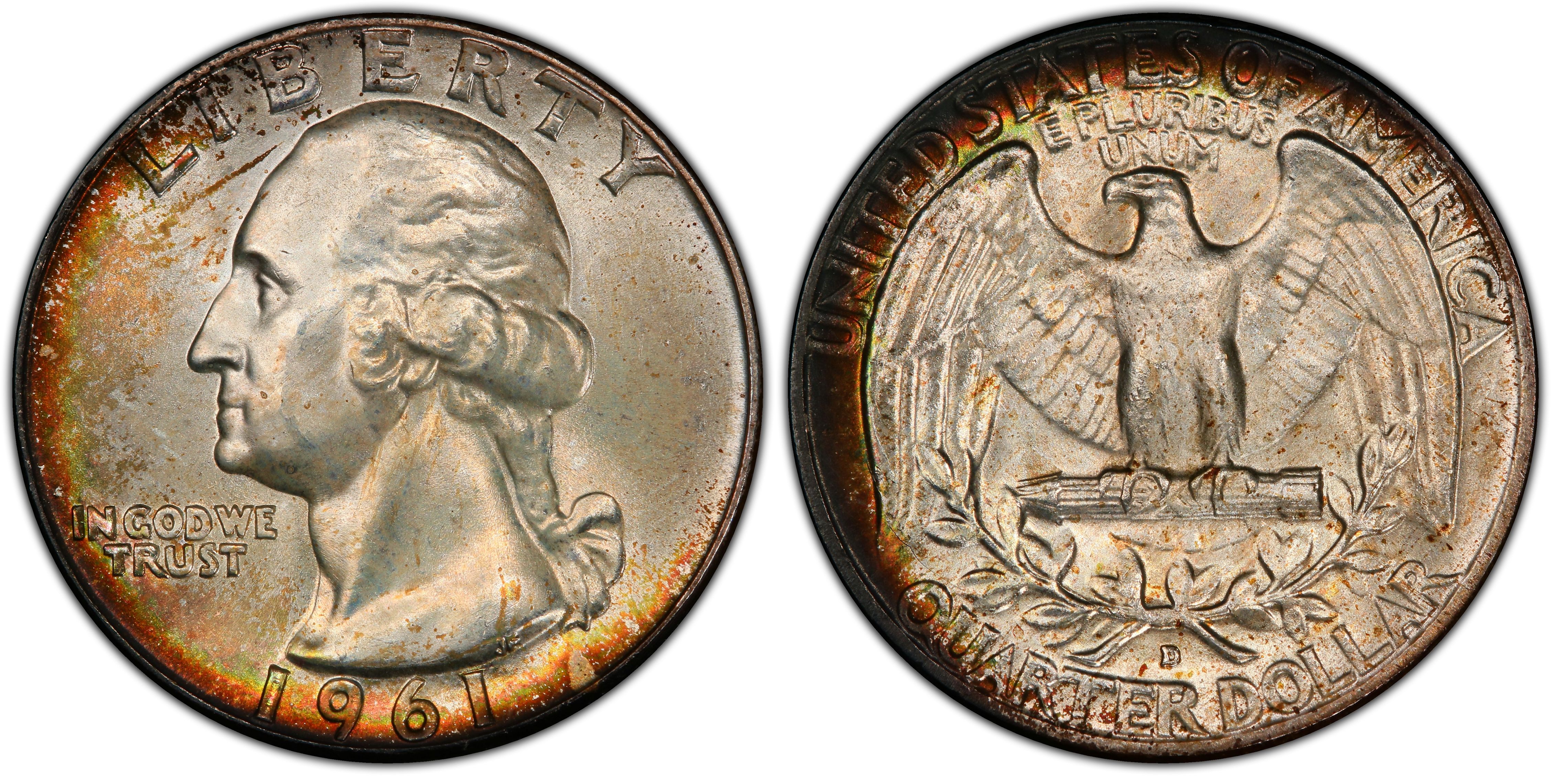
GreatCollections, September 27, 2020, Lot 887233 - $8,606.25. Creamy surfaces with a thin band of green and russet-brown toning along the left and lower obverse periphery, and the left and upper reverse periphery. |
 #1 PCGS MS67+
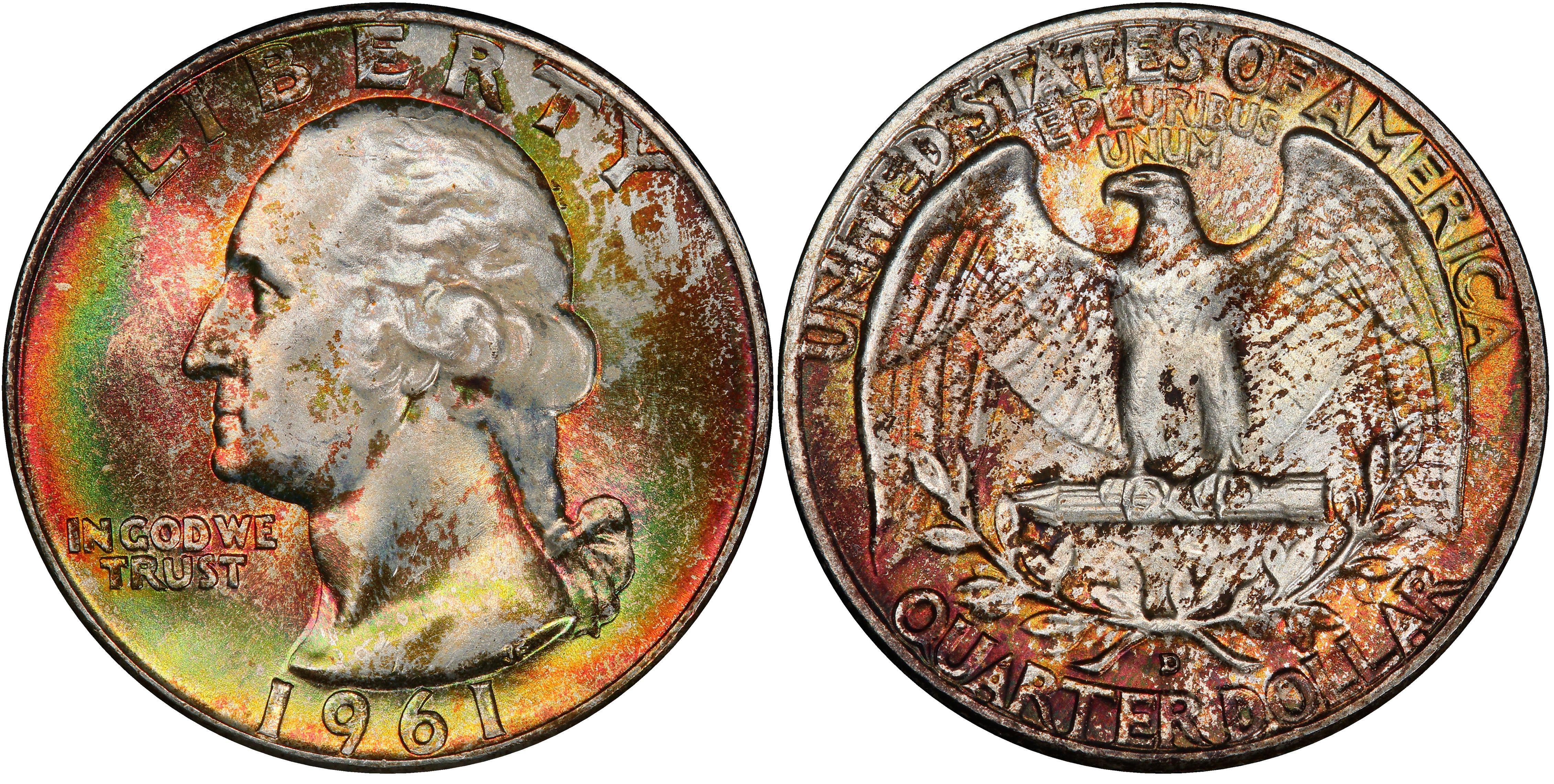
"The Escalante Collection" (PCGS Set Registry). Intense rainbow toning on both sides. The obverse features concentric green and gold bands framed by ruby red; the reverse is predominantly red, with gold and green undertones appearing below AMERICA. |
|
#1 PCGS MS67+
Gold and green obverse toning with a russet crescent along the right and lower borders; reverse shows ice-blue and peach color. |
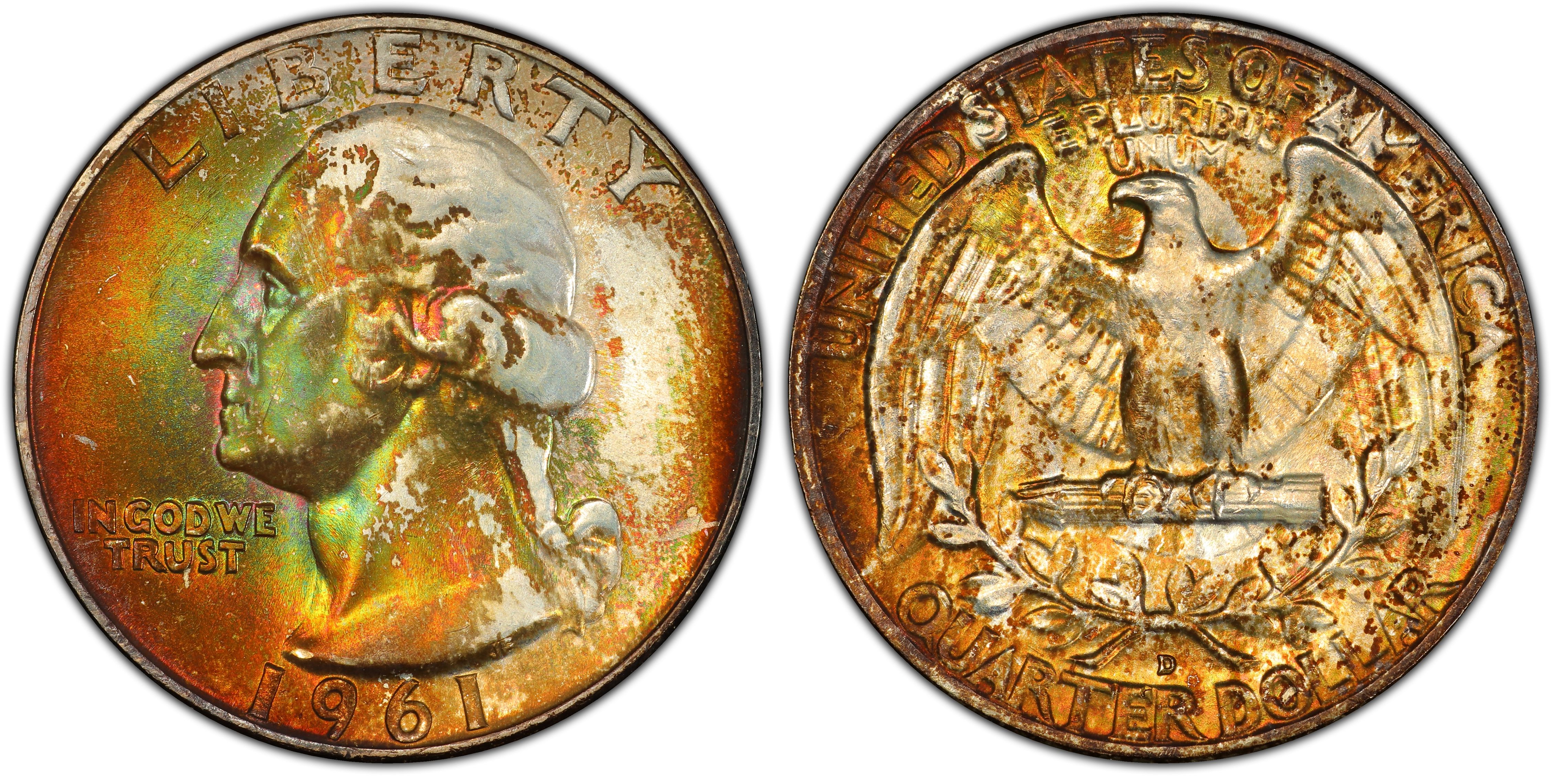 #1 Est. MS67+
As PCGS MS67 #36759624. Heritage Auctions, April 25, 2019, Lot 3436 – $5,760. As PCGS MS67+ #32749901. Stack’s Bowers, August 15, 2019, Lot 5203 – $24,000. Dell Loy Hansen. As CACG MS67+ #446747714. Vivid gold, green, and orange toning covers the obverse and the left and bottom fields, while patchy gold and russet hues cover most of the reverse. |
The 1961-D Washington Quarter
In fiscal year 1962 (which spanned the latter half of 1961), the United States Mint hit a production milestone, churning out over seven billion coins split between domestic and foreign orders. Despite running the presses 24/7, the Mint couldn't keep pace with a surging domestic appetite for subsidiary coinage. The "penny" dominated the floor, making up 73% of total output and leaving the Mint unable to stockpile inventory. This shortage forced major banks to ration coins, creating a crisis that would only intensify throughout the decade due to the explosive growth of vending machines.
The Denver Mint struck 83,656,928 1961-D Washington Quarters (#5871), setting a new record for the facility. While Philadelphia had been the primary hub for quarters during the 1940s, occasionally surpassing the 100-million mark, the tide was officially shifting west. From this point on, Denver would consistently lead the charge in quarter production until the end of the 90% silver era.
Collecting the 1961-D Washington Quarter
Circulated examples are rarely encountered in change and primarily trade for their intrinsic value as 90% silver coins. Despite the high mintage of this issue, the Treasury Department and silver speculators removed the majority of examples from circulation during the mid-to-late 1960s. The Treasury eventually melted its stockpile, while many privately held coins were likely melted during the Hunt Brothers' silver boom from the late 1970s through early 1980. Due to these mass meltings, the exact survival rate remains unclear. However, a sufficient number of coins evidently remain, as they appear regularly on auction sites like eBay as both individual pieces and part of 1961 United States Mint Uncirculated Coin Sets.
As PCGS-certified coins, these are primarily screened by submitters for Gem-quality examples that might grade PCGS MS66 or finer. The price gap between PCGS MS65 and PCGS MS66 is significant, and it becomes even steeper between PCGS MS66 and PCGS MS67.
What typically holds the issue back is the presence of hairline scratches from counting machines and bag marks caused by the incidental contact of coins during shipping and storage. Premium quality color also comes at a premium and are less plentiful than coins issued during the Double Mint Set period of 1947-1958.
* * *
Though a very high mintage date that's very common in all grades up to MS64, the 1961-D is actually one of the rarer 1941-1964 Washington quarters in Gem condition. Marks are a big issue with this coin as surfaces as usually pretty rough. Most Gems are frosty white, as toned Gems are in the minority.