1815 25C Browning 1 "E" (Regular Strike)
Series: Capped Bust Quarters 1815-1838
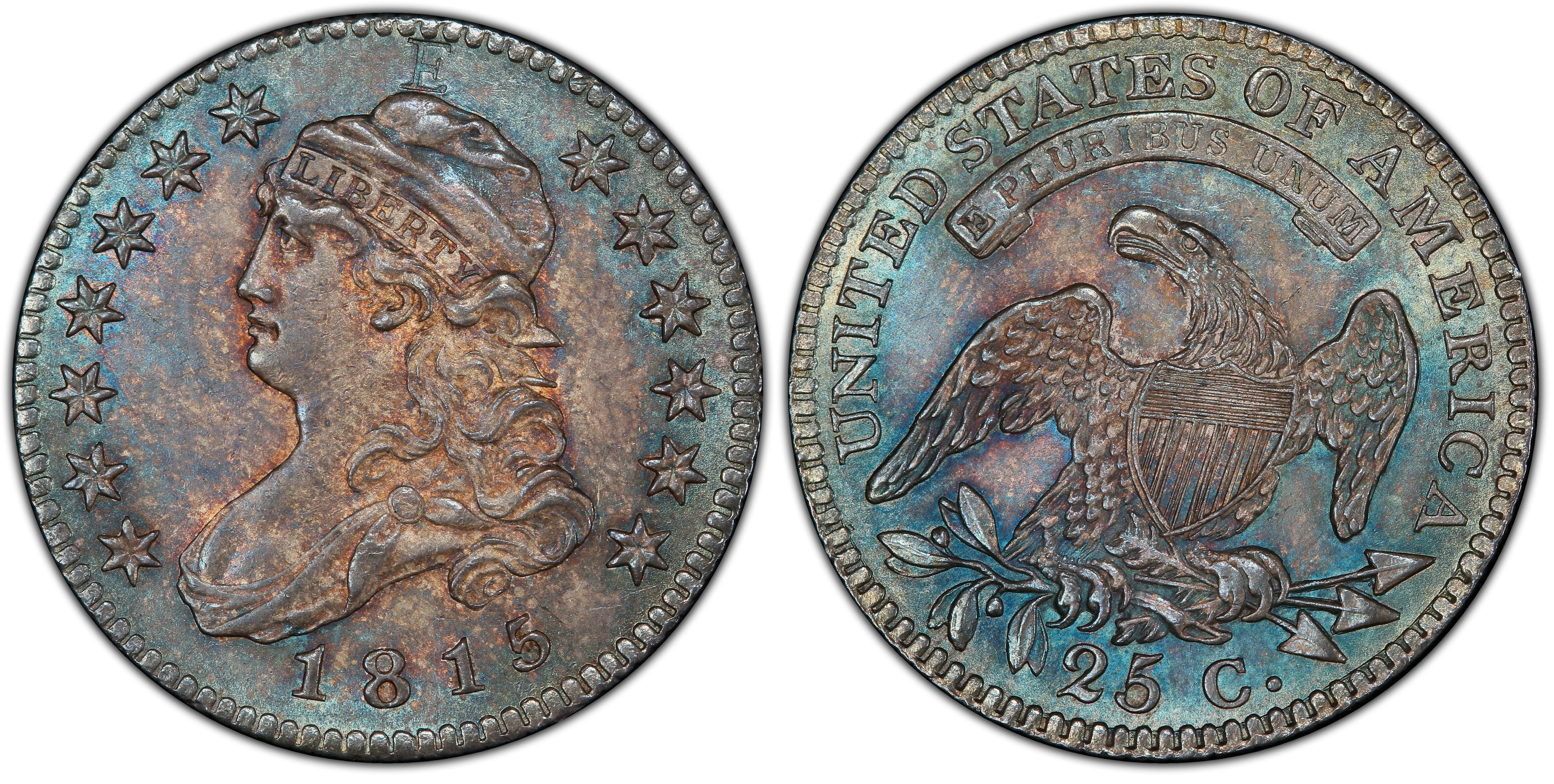
PCGS MS65
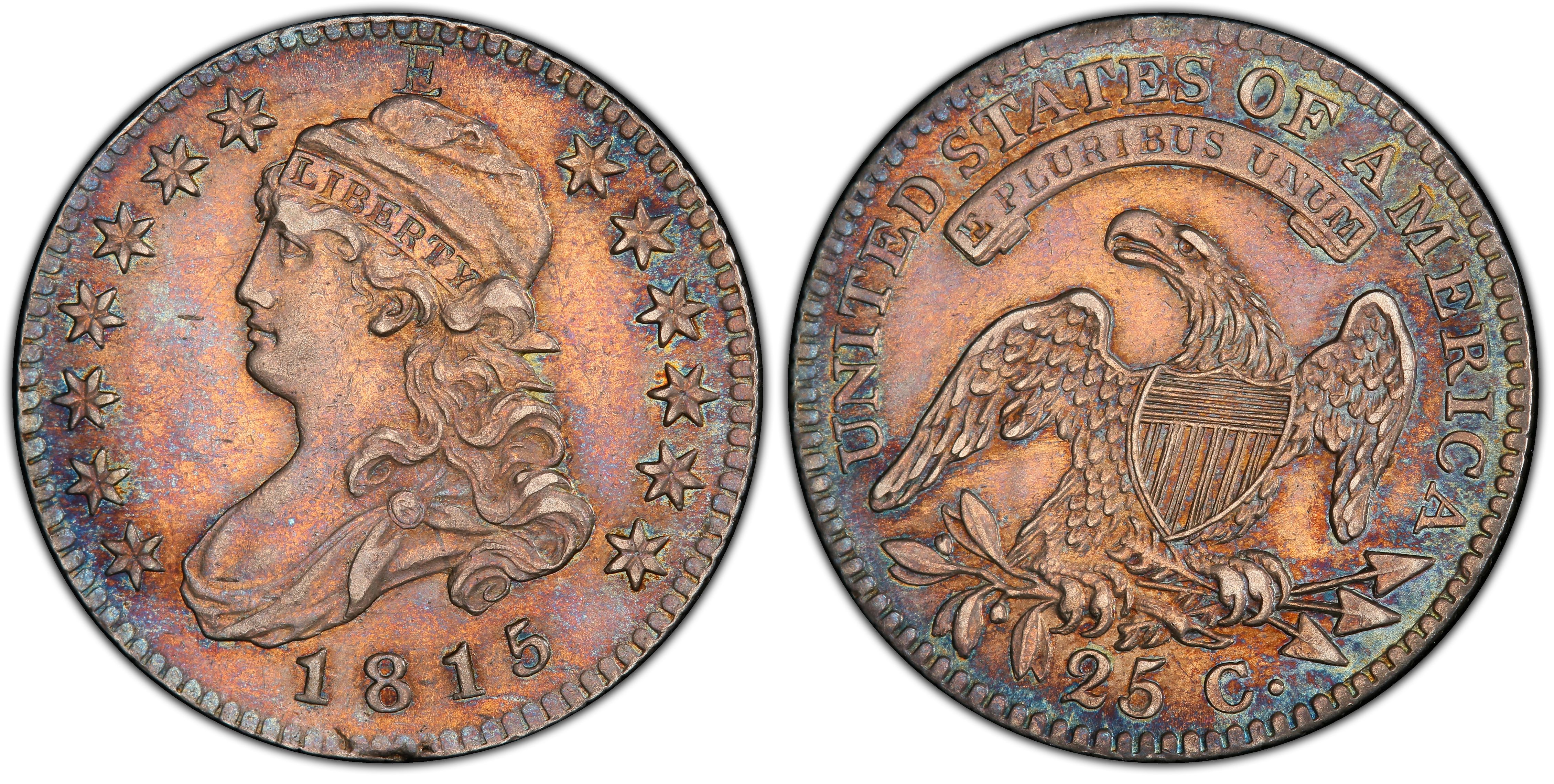
PCGS AU58
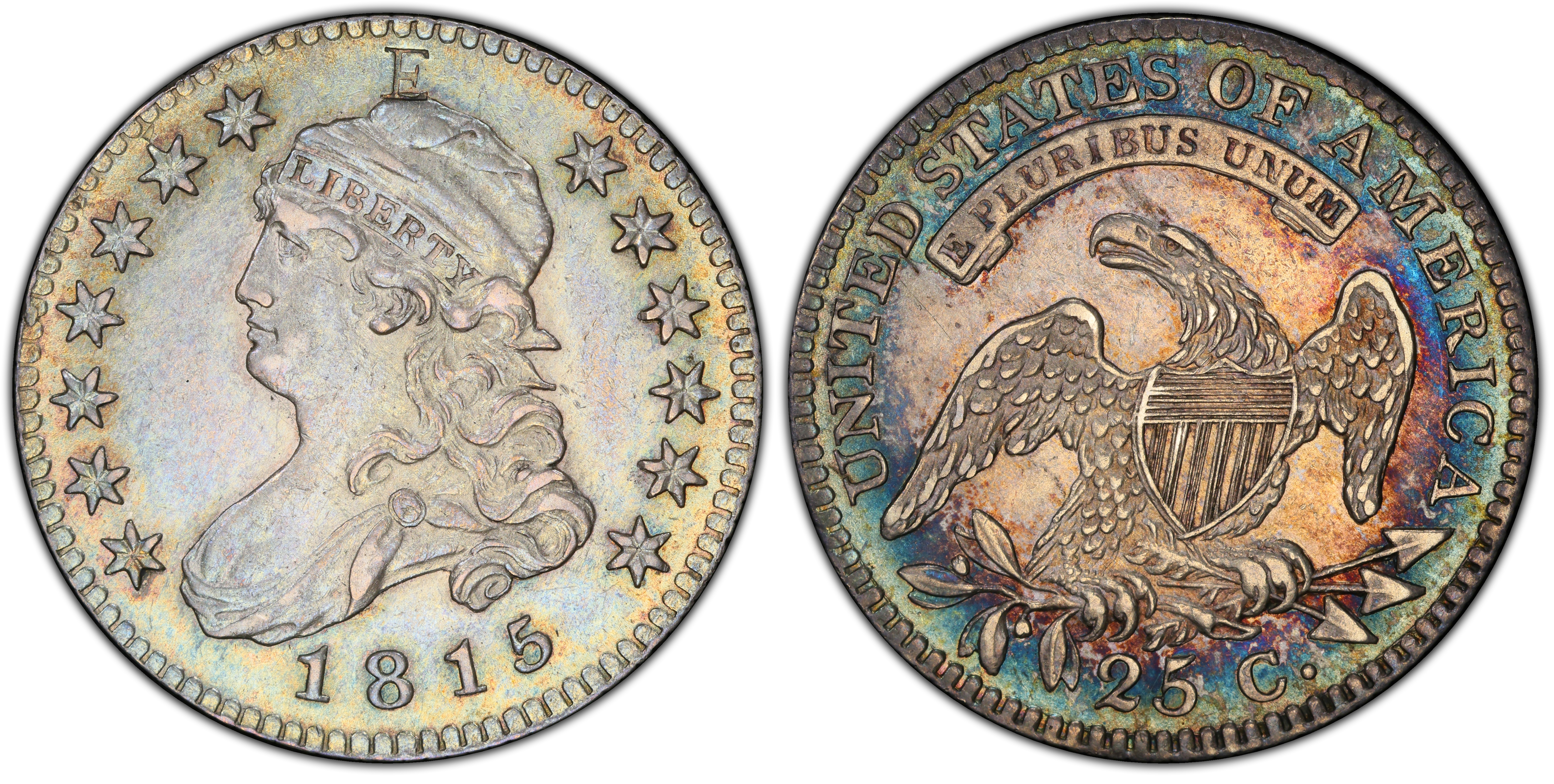
PCGS AU58
- PCGS #:
- 809461
- Designer:
- N/A
- Edge:
- N/A
- Diameter:
- 27.50 millimeters
- Weight:
- N/A
- Mintage:
- 89,235
- Mint:
- N/A
- Metal:
- 89.2% Silver, 10.8% Copper
- Auction Record:
- N/A
Condition Census What Is This?
|
#1 PCGS MS65
|
|
#1 Est. MS65
As NGC MS66 #506969-008. Heritage Auctions, January 3, 2007, Lot 905 – $34,500; “The Madison Collection,” Heritage Auctions, January 10, 2008, Lot 2776 – $35,937.50. Pleasing aqua, rose, and reddish gold toning. Small hit below eagle’s right wing. |
|
#3 PCGS AU58
"The gpeters Collection" (PCGS Set Registry). Lime green, periwinkle, and cotton candy toning on the obverse. The reverse displays an apricot center with bold blue and green toning along the periphery. |
|
#3 PCGS AU58
All-over salmon toning with splashes of blue and aubergine along the periphery. Mark to the left of Liberty's mouth. |
The 1815 Capped Bust Quarter
The production of 1815 Capped Bust Quarters (#5321) was primarily driven by a July 1815 order from the Planter’s Bank of New Orleans. At the time, the United States Mint lacked both an inventory of quarters and the dies required to strike them. Although the Mint initially requested the bank accept dimes instead, an August 14 letter saw the bank double down on its demand for quarters. In response, engraver John Reich was tasked with creating new designs.
| 1815 Capped Bust Quarter Dollar Deliveries | |||
| December 16, 1815 | 69,232 delivered | January 10, 1816 | 20,003 delivered |
| Total: 89,235 coins | |||
By December, between 60,000 and 69,000 quarters were struck and shipped to New Orleans. Most of the remaining mintage went to Jones, Firth and Company, which received another 20,000 coins dated 1815 in early 1816.
The "E" and "L" Counterstamps
Numismatists have recognized two distinct counterstamps—"E" (#809461) and "L" (#809323)—since the 1870s, with the "L" variety being significantly scarcer.
In a July 2004 John Reich Journal article, researcher Ted McAuley posited that these marks originated at the Harmonist Community of Economy in Harmony, Pennsylvania. Under this theory: "E" stands for Economite. "L" stands for Leonite.
Technical Specifications & Die States
The 1815 Capped Bust Quarter was struck by a single known die marriage, catalogued as Browning-1 (B-1). The die is clashed early in production, but in Die State III, the distinct die clash mark is joined by a repunching at the second "T" in STATES—the result of the dies being lapped (polished) to remove clash marks.
* * *