1856 10C Large Date (Regular Strike)
Series: Liberty Seated Dimes 1837-1891
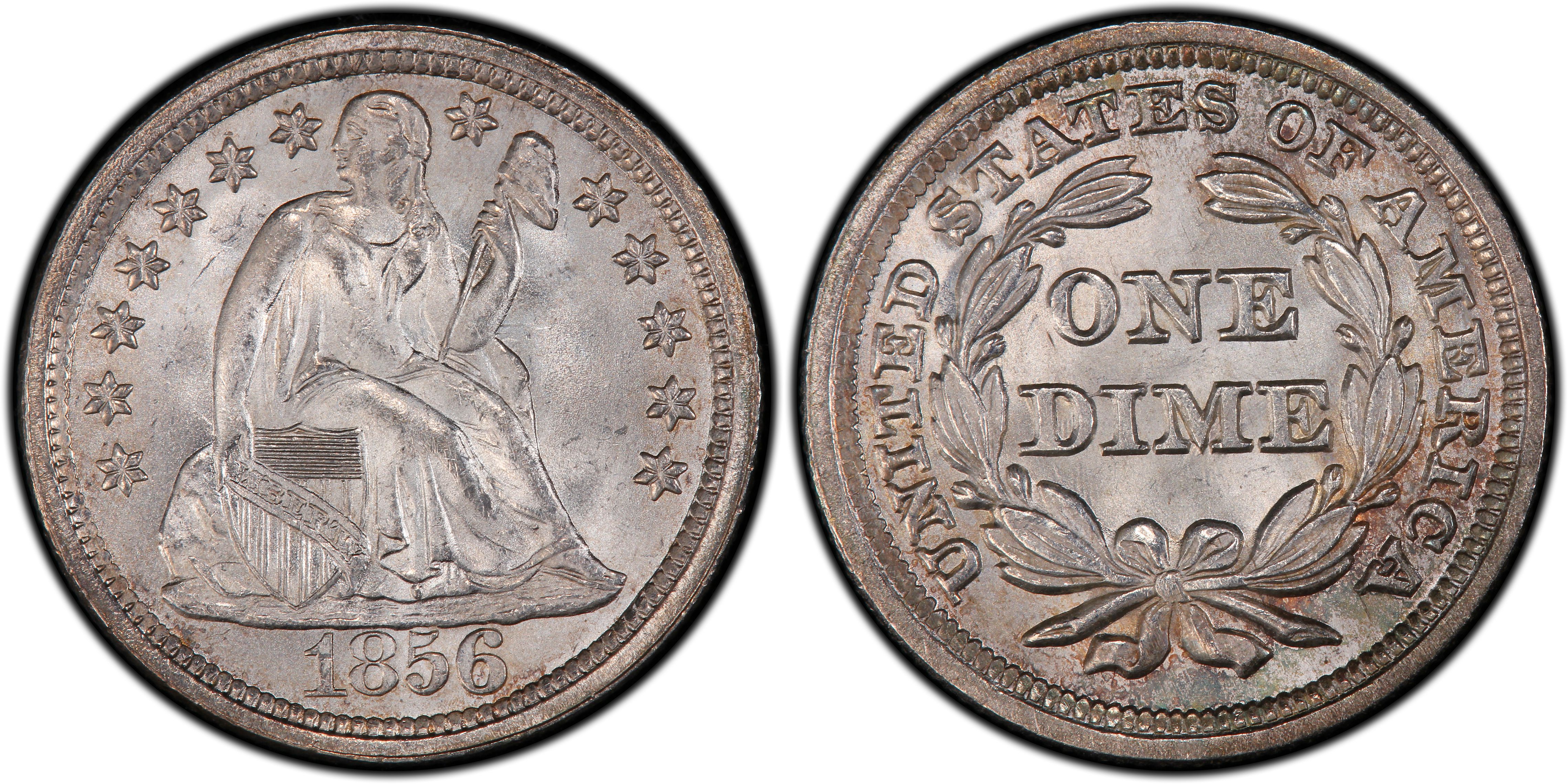
PCGS MS67
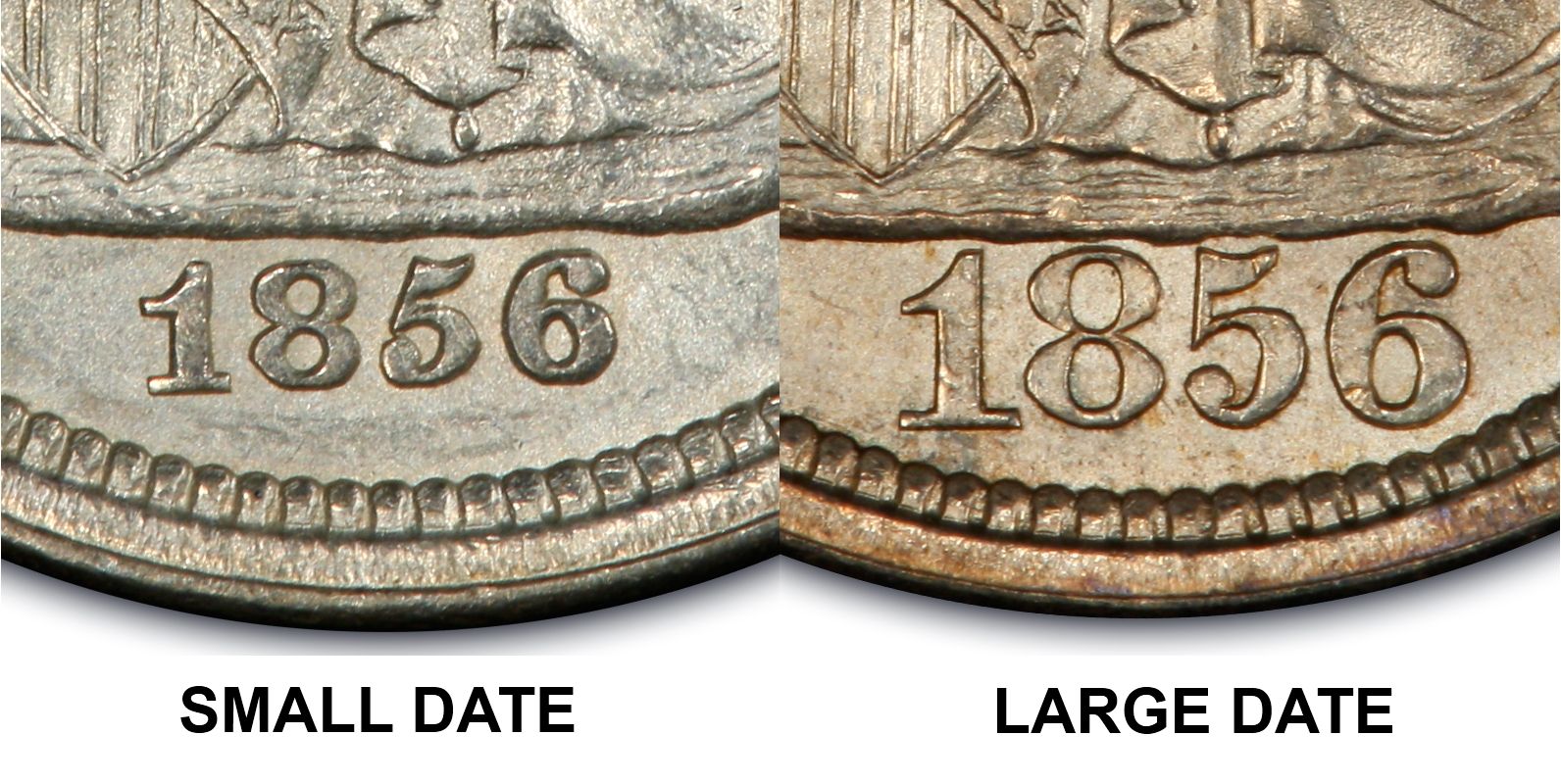
DATE COMPARISON
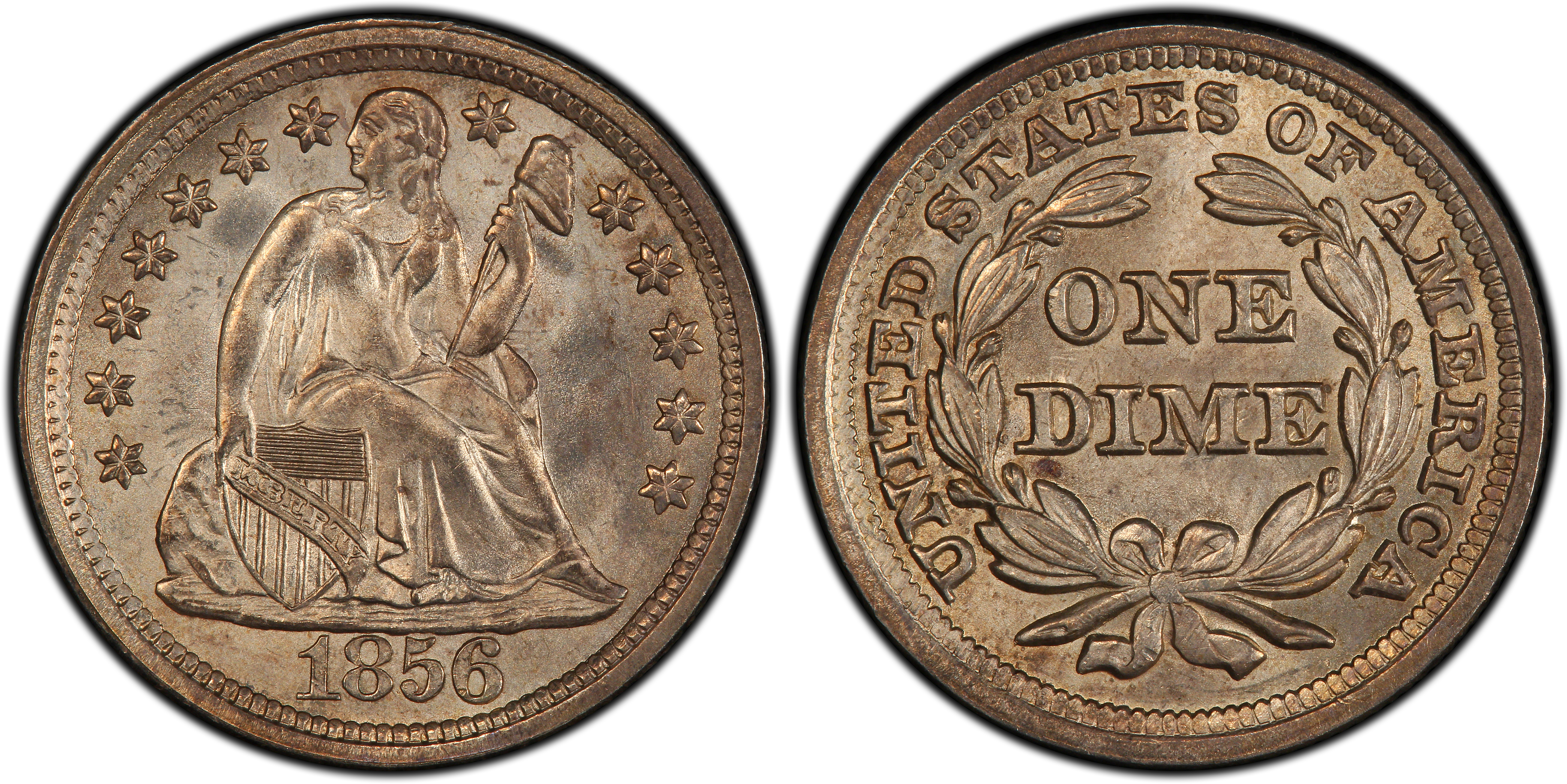
PCGS MS66
- PCGS #:
- 4610
- Designer:
- Robert Ball Hughes/Christian Gobrecht
- Edge:
- Reeded
- Diameter:
- 17.90 millimeters
- Weight:
- 2.48 grams
- Mintage:
- 5,780,000
- Mint:
- Philadelphia
- Metal:
- 90% Silver, 10% Copper
- Auction Record:
- $16,450 • MS65 • 08-08-2013 • Heritage Auctions
Go To Grade
Current Auctions - PCGS Graded
Current Auctions - NGC Graded
For Sale Now at Collectors Corner - PCGS Graded
For Sale Now at Collectors Corner - NGC Graded
Rarity and Survival Estimates Learn More
| Survival Estimate | |
|---|---|
| All Grades | 200 |
| 60 or Better | 10 |
| 65 or Better | 1 |
| Numismatic Rarity | |
|---|---|
| All Grades | R-7.0 |
| 60 or Better | R-9.5 |
| 65 or Better | R-10.0 |
| Relative Rarity By Type All Specs in this Type | |
|---|---|
| All Grades | 1 / 34 TIE |
| 60 or Better | 6 / 34 TIE |
| 65 or Better | 1 / 34 TIE |
| Relative Rarity By Series All Specs in this Series | |
|---|---|
| All Grades | 5 / 122 TIE |
| 60 or Better | 13 / 122 TIE |
| 65 or Better | 1 / 122 TIE |
Condition Census What Is This?
|
#1 MS67 PCGS grade
|
| #2 MS66 PCGS grade |
| #3 MS64 PCGS grade |
| #3 MS64 PCGS grade |
| #5 MS63 PCGS grade |
| #5 MS63 estimated grade |
| #7 MS62 PCGS grade |
| #7 MS62 PCGS grade |
| #7 MS62 PCGS grade |
| #7 MS62 estimated grade |
Gordon Wrubel:
You are at a coin convention and you are offered a "raw" Mint State 1856 10C at a favorable price. How can you tell if it is the very common Small Date or the much rarer Large Date? This is an easy call if you look at the 5 in the date. The Small Date variety has a "Slanted" 5, while the Large Date has an "Upright" 5. The Large Date is about 5 times scarcer than the Small Date. As of this writing, the Population Report for the Large Date shows one 66 and one 67 at the top. The next highest is MS 64. The Small Date census boasts more than two dozen specimens 65 or better, topped with a lone MS 67.