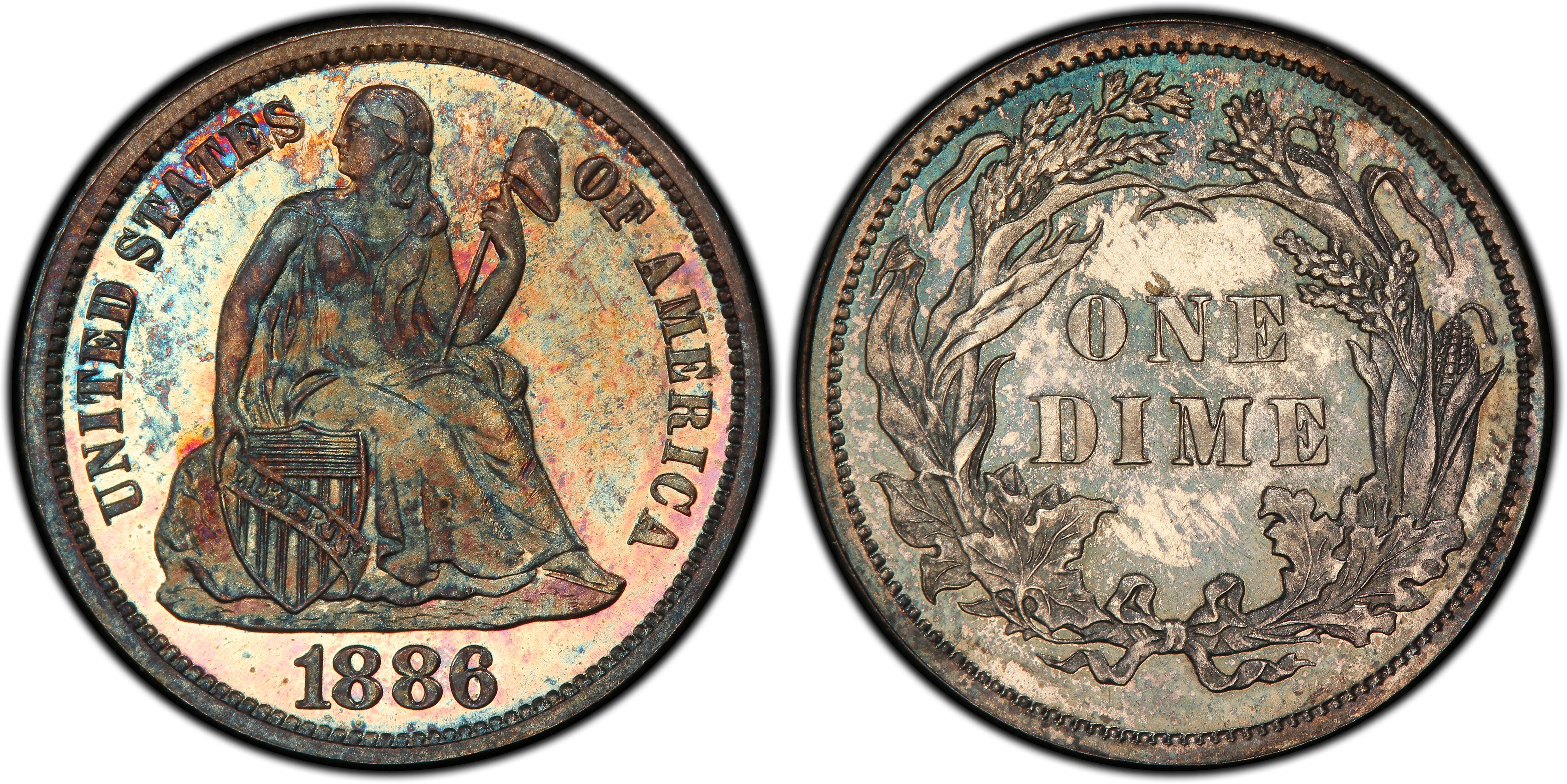
1886 10C (Proof)
Series: Liberty Seated Dimes 1837-1891
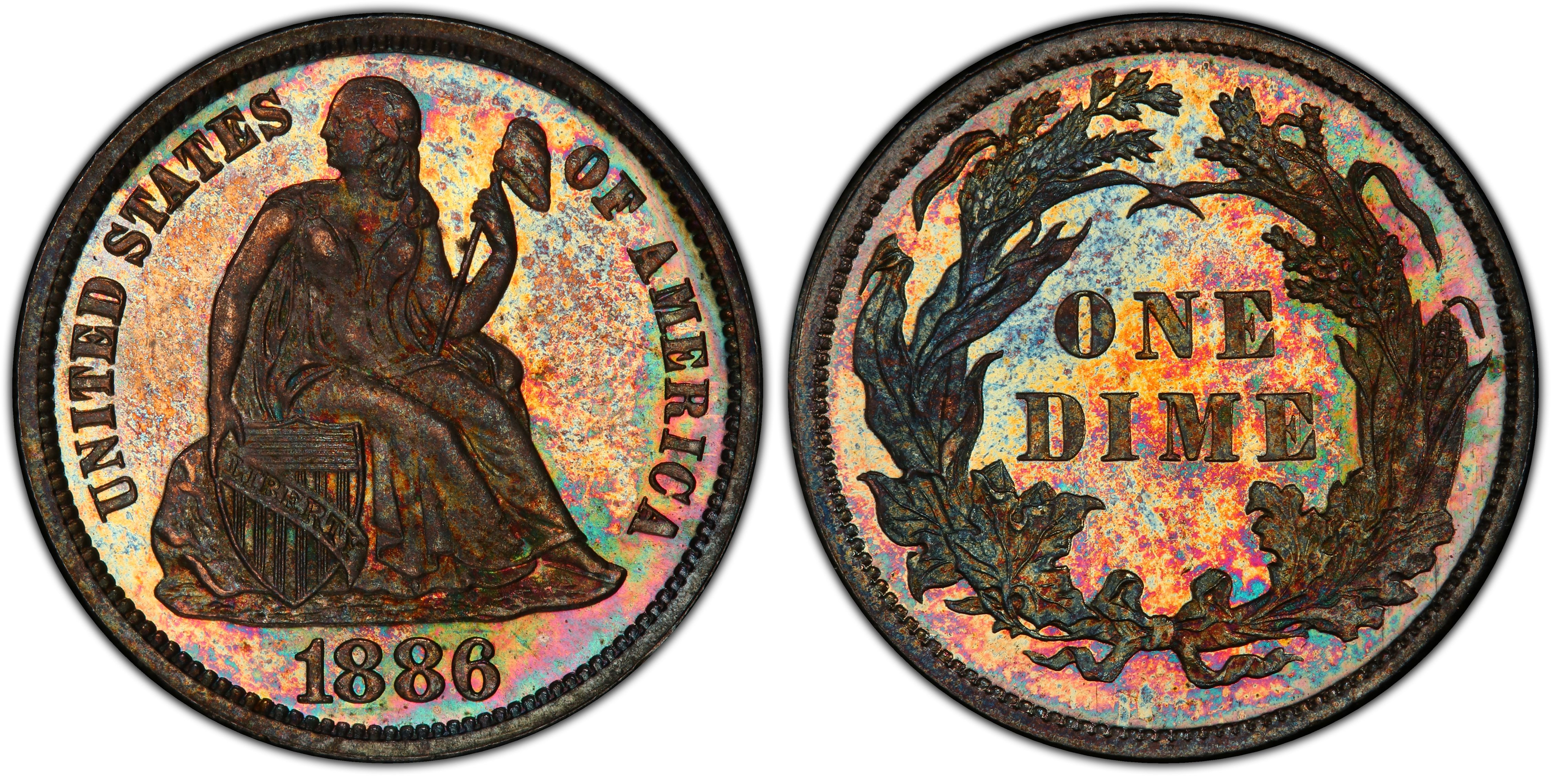
PCGS PR67+

PCGS PR67

PCGS PR67
- PCGS #:
- 4783
- Designer:
- James Barton Longacre
- Edge:
- Reeded
- Diameter:
- 17.90 millimeters
- Weight:
- 2.50 grams
- Mintage:
- 886
- Mint:
- Philadelphia
- Metal:
- 90% Silver, 10% Copper
- Auction Record:
- $8,800 • PR66 • 08-10-1990 • RARCOA
Go To Grade
Current Auctions - PCGS Graded
Current Auctions - NGC Graded
For Sale Now at Collectors Corner - PCGS Graded
For Sale Now at Collectors Corner - NGC Graded
Rarity and Survival Estimates Learn More
| Survival Estimate | |
|---|---|
| All Grades | 700 |
| 60 or Better | 675 |
| 65 or Better | 125 |
| Numismatic Rarity | |
|---|---|
| All Grades | R-5.6 |
| 60 or Better | R-5.6 |
| 65 or Better | R-7.7 |
| Relative Rarity By Type All Specs in this Type | |
|---|---|
| All Grades | 24 / 31 |
| 60 or Better | 24 / 31 |
| 65 or Better | 22 / 31 TIE |
| Relative Rarity By Series All Specs in this Series | |
|---|---|
| All Grades | 49 / 58 |
| 60 or Better | 49 / 58 |
| 65 or Better | 46 / 58 TIE |
Condition Census What Is This?
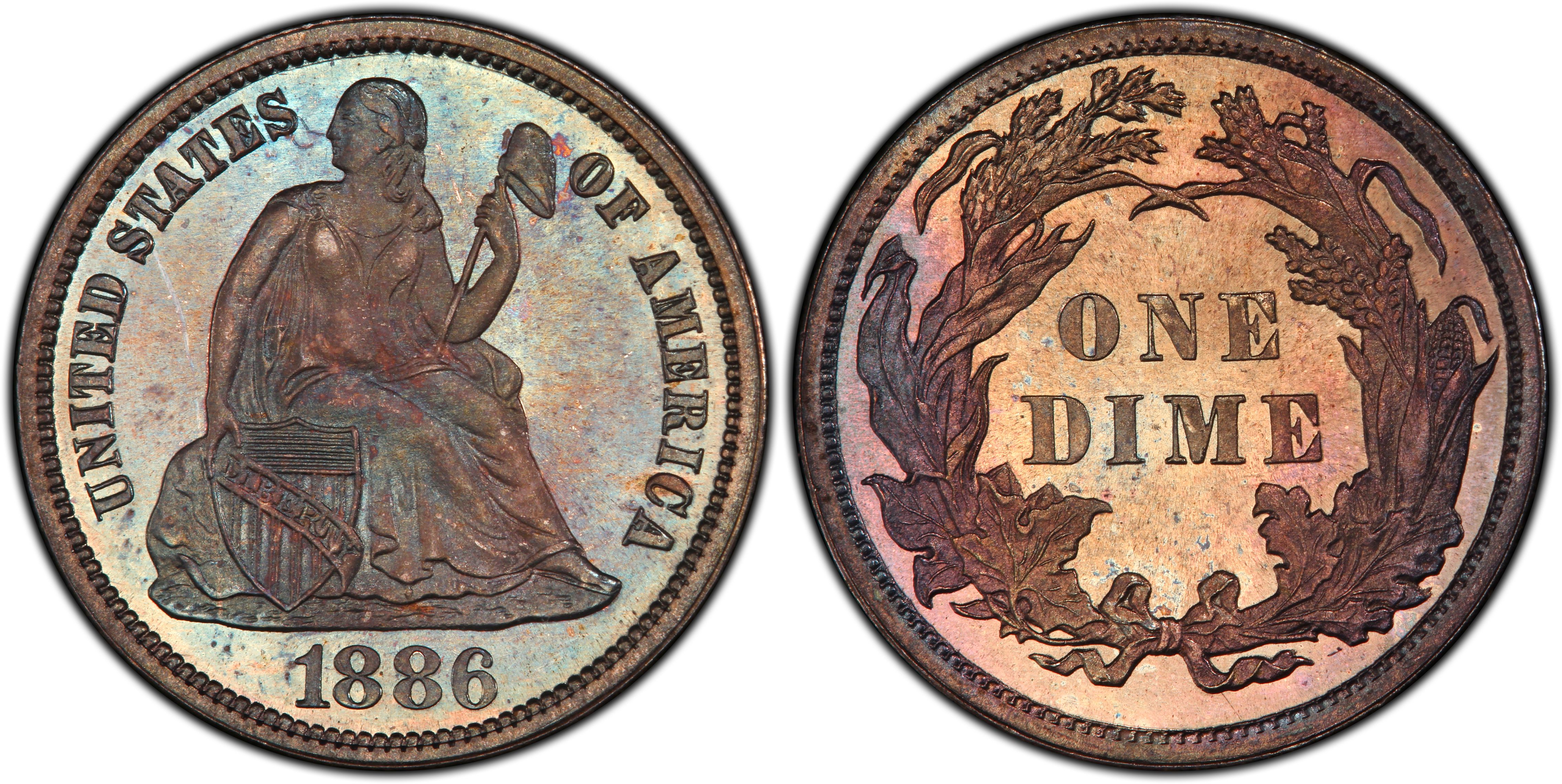 #1 PR67 PCGS grade
|
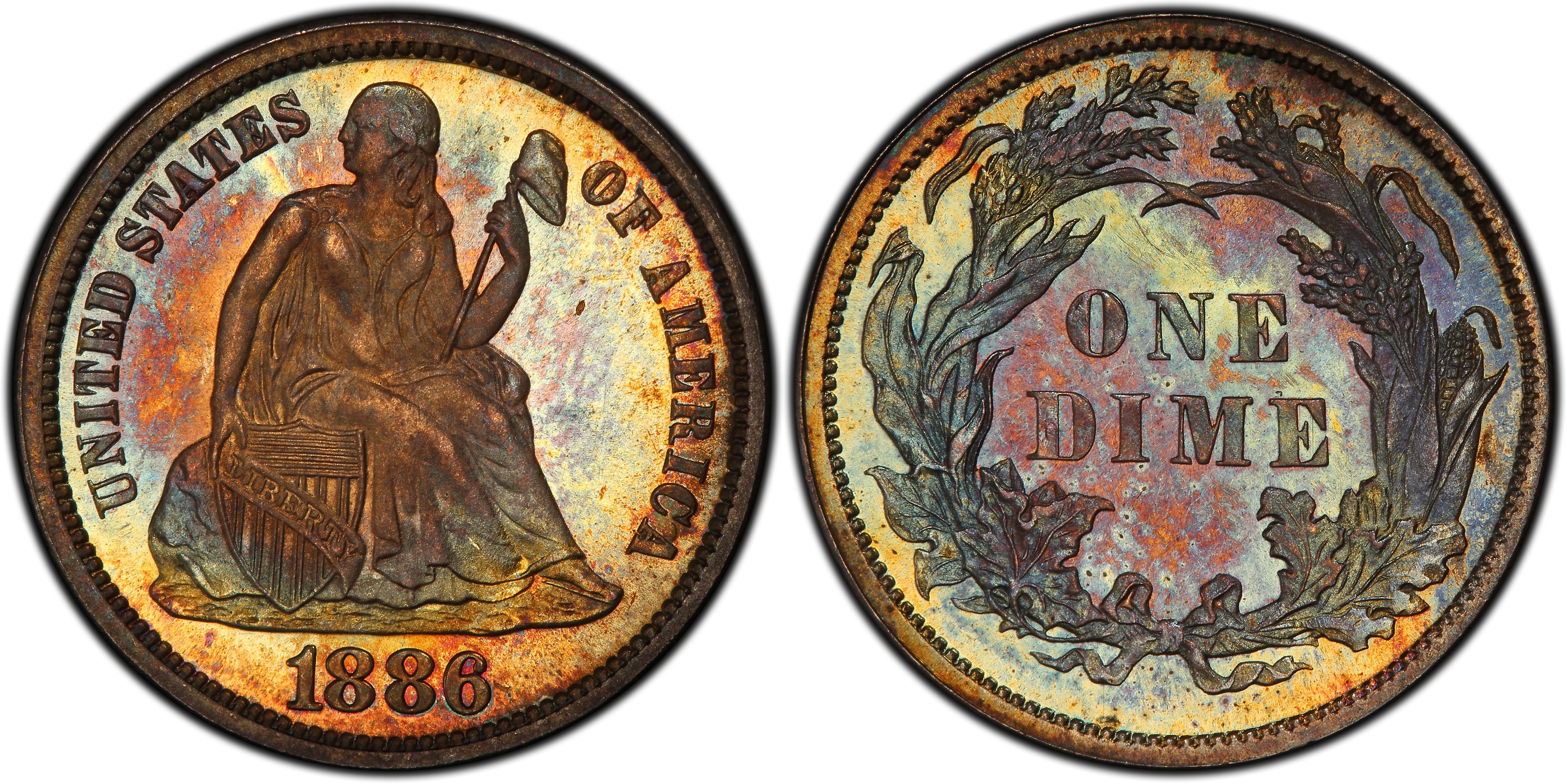 #1 PR67 PCGS grade
|
| #1 PR67 PCGS grade |
| #1 PR67 PCGS grade |
| #1 PR67 PCGS grade |
| #1 PR67 PCGS grade |
| #1 PR67 PCGS grade |
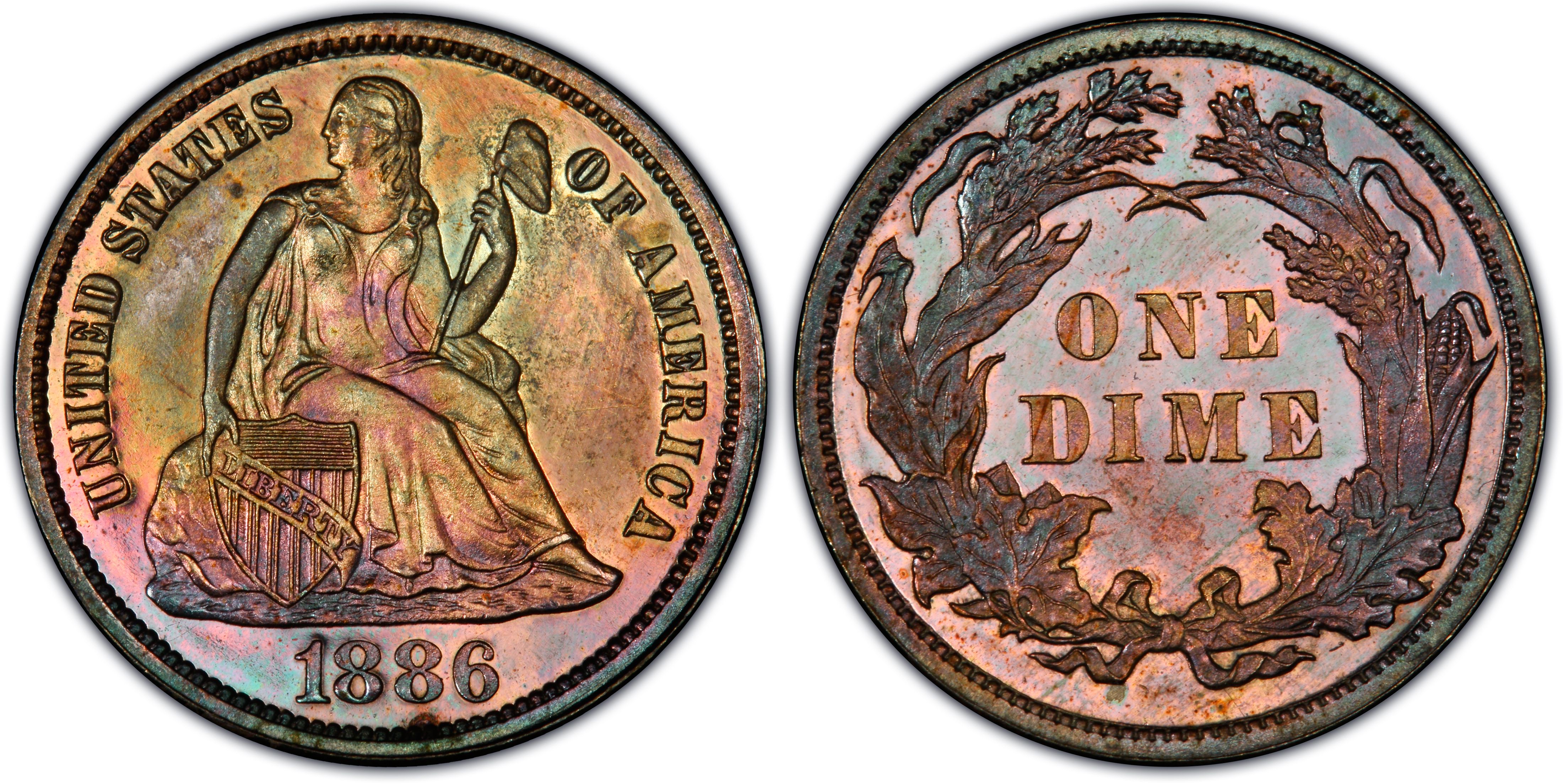 #8 PR66+ PCGS grade
|
 #9 PR66 PCGS grade
|
| #9 PR66 PCGS grade |
Ron Guth:
The 1886 Dime is one of the more plentiful Proofs of the Seated Liberty series, though it is not the most common (that title goes to the Proofs of 1879 and 1880). The vast majority of the certified Proof 1886 Dimes are brilliant; approximately 20% are Cameos; and only a very few examples are Deep Cameos. This date comes well struck and many of the top examples have tremendous eye appeal. PR64 is the typical grade, and the finest Proofs certified by PCGS include a handful of PR67s.