1888 50C (Proof)
Series: Liberty Seated Half Dollars 1839-1891
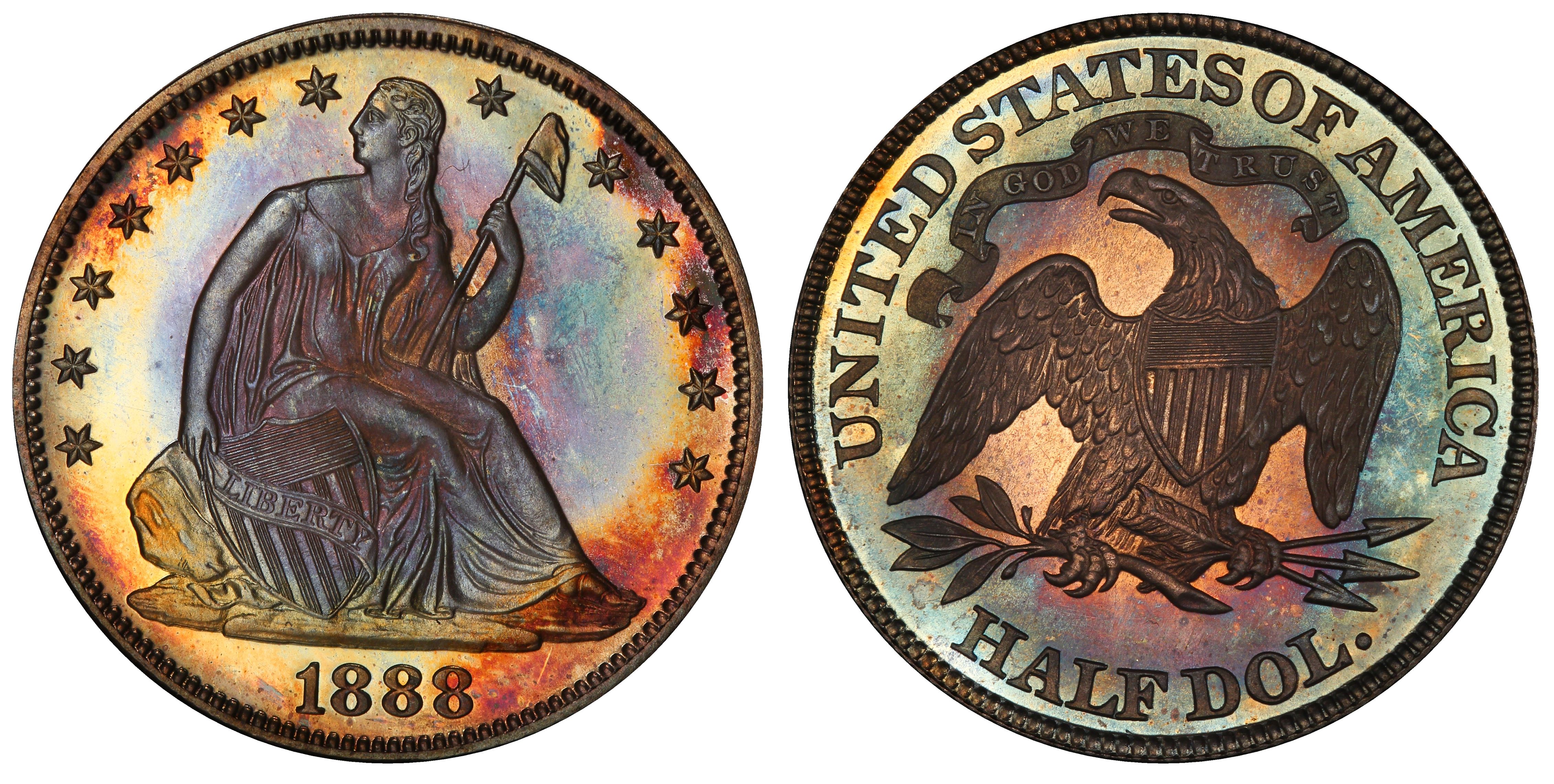
PCGS PR68

PCGS PR66+

PCGS PR66
- PCGS #:
- 6449
- Designer:
- Thomas Sully/Christian Gobrecht
- Edge:
- Reeded
- Diameter:
- 30.00 millimeters
- Weight:
- 12.50 grams
- Mintage:
- 800
- Mint:
- Philadelphia
- Metal:
- 90% Silver, 10% Copper
- Auction Record:
- $22,325 • PR67+ • 11-16-2012 • Stack's Bowers
Rarity and Survival Estimates Learn More
| Survival Estimate | |
|---|---|
| All Grades | 700 |
| 60 or Better | 675 |
| 65 or Better | 80 |
| Numismatic Rarity | |
|---|---|
| All Grades | R-5.6 |
| 60 or Better | R-5.6 |
| 65 or Better | R-8.2 |
| Relative Rarity By Type All Specs in this Type | |
|---|---|
| All Grades | 16 / 25 |
| 60 or Better | 16 / 25 |
| 65 or Better | 13 / 25 TIE |
| Relative Rarity By Series All Specs in this Series | |
|---|---|
| All Grades | 45 / 55 TIE |
| 60 or Better | 46 / 55 |
| 65 or Better | 38 / 55 TIE |
Condition Census What Is This?
|
#1 PR68 PCGS grade
Stack's/Bowers 11/2012:3157, $22,325 |
|
#2 PR67 PCGS grade
Daryl J. Haynor Collection - Heritage 8/2011:7198, $9,775 - Heritage 7/2015:3148, $8,225 |
|
#2 PR67 PCGS grade
Larry Whitlow, sold privately in 8/2006 - Eugene H. Gardner Collection - Heritage 6/2014:30545, $12,925 |
|
#2 PR67 estimated grade
Stack's/Bowers 3/2014:4029, $14,687.50 |
|
#5 PR66+ PCGS grade
Stack's/Bowers 3/2017:2146, $8,519 |
| #5 PR66+ PCGS grade |
| #5 PR66+ PCGS grade |
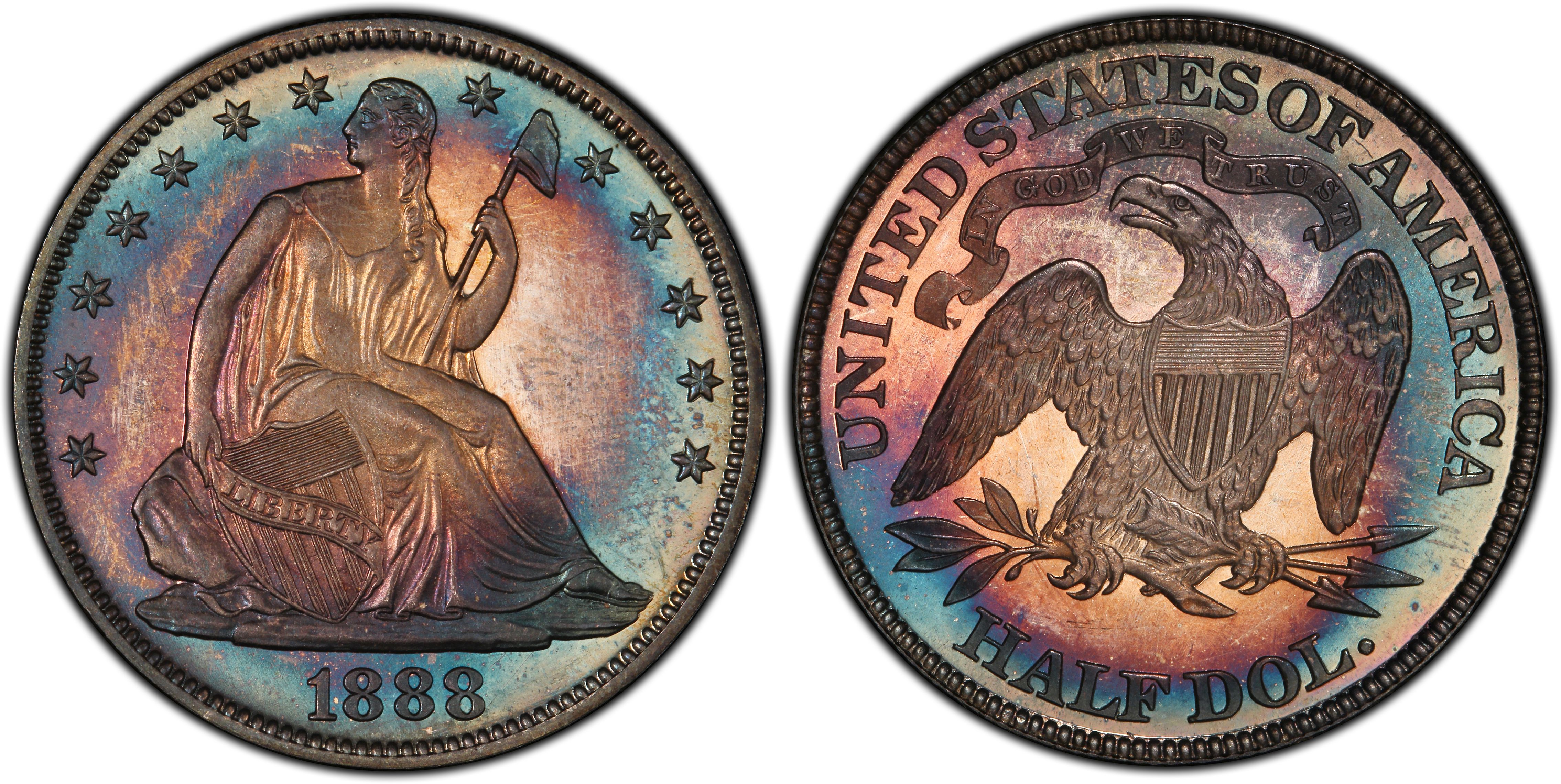 #8 PR66 PCGS grade
|
| #8 PR66 PCGS grade |
| #8 PR66 PCGS grade |
Collector demand for Proof Half Dollars appears to have increased in 1888, though the mintage of 832 coins still falls short of the decade's record of 1,355 Proofs (of the1880 Half Dollars). A simultaneous doubling of the output of 1888 circulation strikes relieved some of the demand from future collectors because it is now slightly easier to locate a nice example. The most frequently-seen grades are PR63 and PR64. Most Proof 1888 Half Dollars are non-Cameos. Approximately one-fifth show some Cameo contrast and only a small handful are Deep Cameos