1941 10C (Proof)
Series: Mercury Dimes 1936-1942

PCGS PR68+

PCGS PR68+

PCGS PR68+
- PCGS #:
- 5076
- Designer:
- Adolph Alexander Weinman
- Edge:
- Reeded
- Diameter:
- 17.90 millimeters
- Weight:
- 2.50 grams
- Mintage:
- 16,557
- Mint:
- Philadelphia
- Metal:
- 90% Silver, 10% Copper
- Auction Record:
- $13,200 • PR69 • 02-23-2020 • Heritage Auctions
Rarity and Survival Estimates Learn More
| Survival Estimate | |
|---|---|
| All Grades | 14,125 |
| 60 or Better | 14,075 |
| 65 or Better | 8,250 |
| Numismatic Rarity | |
|---|---|
| All Grades | R-2.9 |
| 60 or Better | R-2.9 |
| 65 or Better | R-3.3 |
| Relative Rarity By Type All Specs in this Type | |
|---|---|
| All Grades | 6 / 7 |
| 60 or Better | 6 / 7 |
| 65 or Better | 6 / 7 |
| Relative Rarity By Series All Specs in this Series | |
|---|---|
| All Grades | 6 / 7 |
| 60 or Better | 6 / 7 |
| 65 or Better | 6 / 7 |
Condition Census What Is This?
|
#1 PCGS PR68+
GreatCollections, November 9, 2025, Lot 1350396 - $10,968.75. Obverse toned with ice blue and periwinkle centers. Dark toning spot above 19. Reverse exhibits a sheen in peach color at the upper right. |
|
#1 PCGS PR68+
GreatCollections, August 11, 2024, Lot 946146 – $5,906.25; "The daning Collection" (PCGS Set Registry). Fully brilliant. |
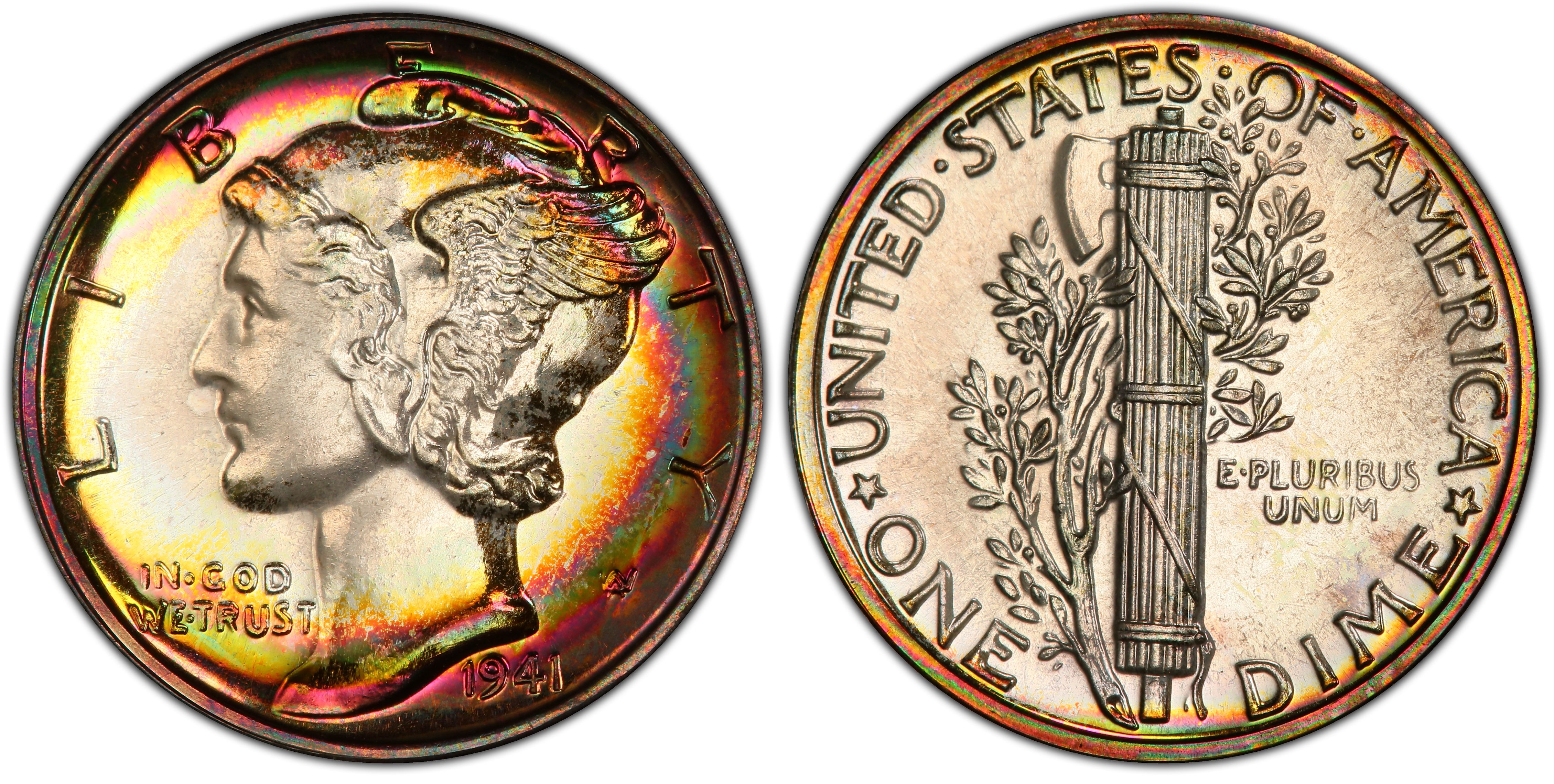 #1 PCGS PR68+
Rich crescent toning in green, gold, and red along the obverse rim, reaching into the field on the coin's right side. Similar toning on the revese rim. |
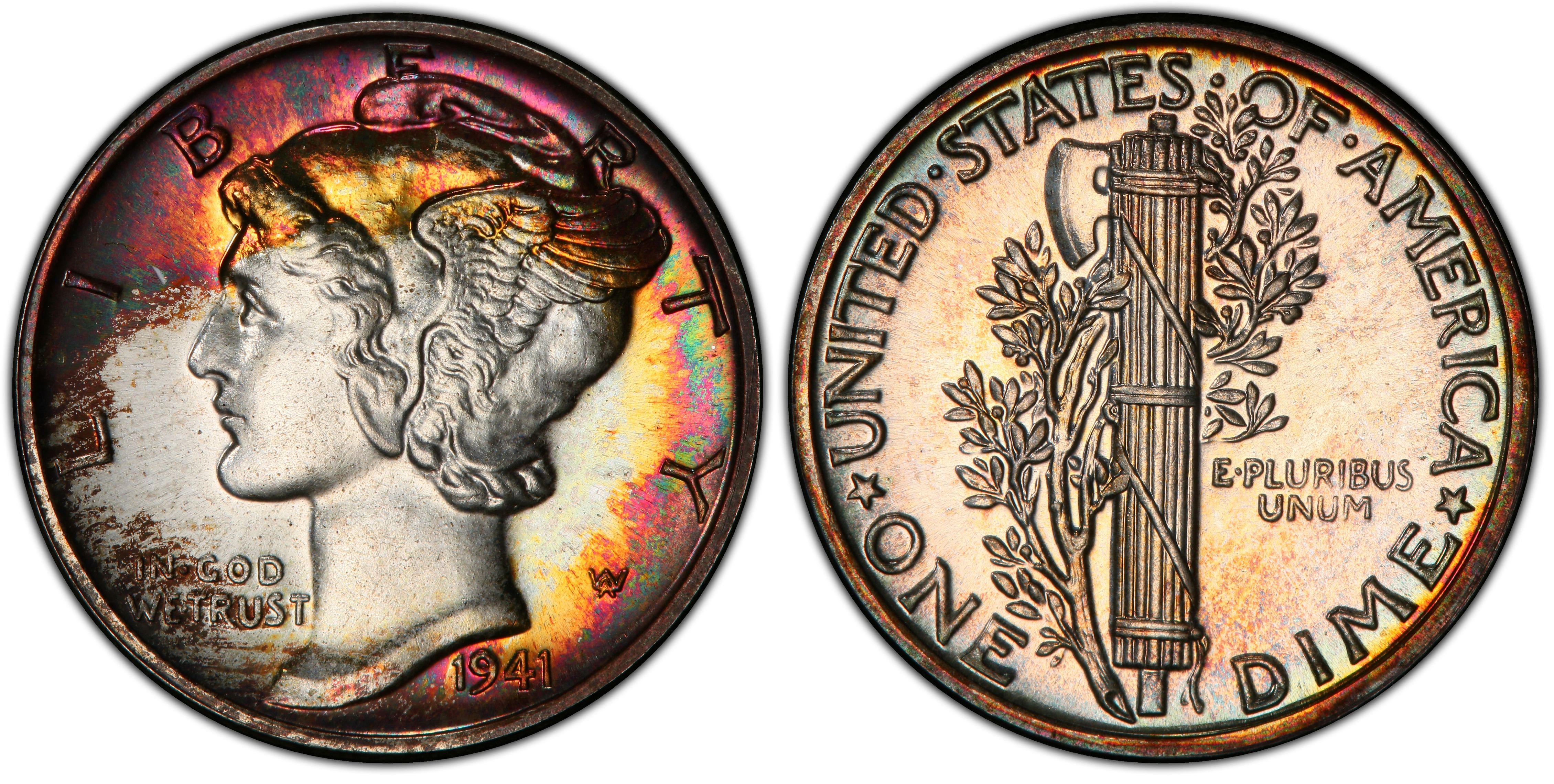 #1 PCGS PR68+
As NGC PF69 #3809774-001. Heritage Auctions, February 4, 2016, Lot 3171 – $11,162.50; Heritage Auctions, February 20, 2020, Lot 3045 – $13,200; Heritage Auctions, August 3, 2020, Lot 3132 – $7,500; Heritage Auctions, January 21, 2021, Lot 3494 – $10,500. As PCGS PR68+ CAC #41885791. Stack’s Bowers, June 10, 2021, Lot 1446 – $10,800. Vivid crescent rim toning in orange, red, and green on the obverse. Scattered peach, red, and green toning on the reverse. |
| #1 PCGS PR68+ |
 #1 PCGS PR68+
GreatCollections, February 5, 2023, Lot 1308149 - $18,000. Obverse is fully toned in gold, red, and green. Diagonal streaks of red-brown toning wash across the coin's surface. The reverse features a more standard target toning pattern. |
 #1 PCGS PR68+
As PCGS PR68 #21765628. "The Bruce Scher #1 All-Time PCGS Registry Set Collection," Heritage Auctions, February 24, 2005, Lot 4081 - $6,900. As PCGS PR68+ #21765628. Purple and blue centers with gold and rust red toning along the rims. |
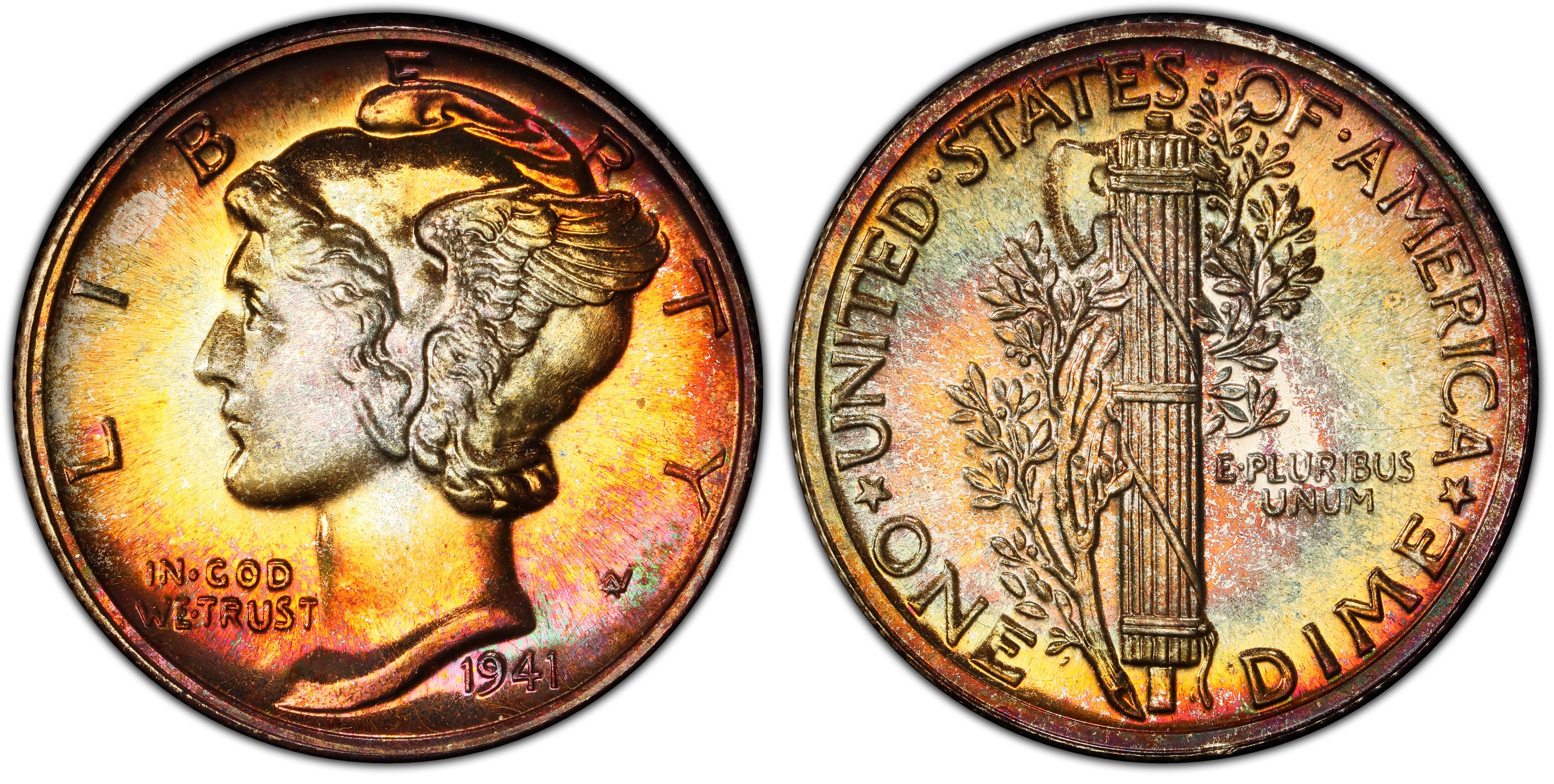 #1 PCGS PR68+
MADHATTER's "MERC MADNESS Collection" (PCGS Set Registry). Completely toned with the obverse center dominated by bright gold, which turns red, magenta (with patches of iridescent green) towards the rim. The reverse features a target toning pattern the is slightly offset to the lower left. |
The iconic Mercury Dime, designed by Adolph A. Weinman, was a staple of American commerce from 1916 through 1945. However, Proof versions were only struck for a brief window between 1936 and 1942. During this period, collectors could order indivdual Proof denominations by paying a small premium per coin or purchase a complete "set" featuring one coin of each denomination. This flexible ordering system explains why mintage totals vary across denominations; for the 1941 Lincoln Cent Proof (BN #3348, RB #3349, RD #3350) reached a high of 21,100 pieces, while the 1941 Washington Quarter Proof (#5980) saw the lowest production. From a collecting standpoint, these mintage gaps do not greatly hinder the assembly of a complete year set.
According to numismatic researcher Roger Burdette, the Philadelphia Mint made 29 distinct deliveries of Proof Mercury dimes in 1941. These deliveries typically consisted of 503 or 603 pieces and remained consistent throughout the year, with the exception of a production break in July. It is important to note that the final mintage figures do not reflect the total number of coins struck. Burdette reports that approximately 20% of production was rejected due to quality control standards, ensuring only the finest specimens reached collectors.
| 1941 Mercury Dime Proof Deliveries | |||
| January 29 | 503 | February 5 | 503 |
| February 17 | 503 | February 27 | 503 |
| March 7 | 503 | March 13 | 603 |
| March 26 | 603 | April 4 | 603 |
| April 16 | 603 | April 24 | 603 |
| May 2 | 603 | May 16 | 603 |
| May 27 | 603 | June 10 | 603 |
| June 16 | 603 | June 23 | 663 |
| August 8 | 603 | August 27 | 603 |
| September 18 | 603 | October 22 | 603 |
| November 4 | 603 | November 24 | 503 |
| December 3 | 603 | December 8 | 603 |
| December 16 | 603 | December 22 | 503 |
| December 24 | 503 | December 29 | 503 |
| December 31 | 513 | Total: 16,557 | |
* Source: Burdette, Roger. United States Proof Coins 1936-1942. Seneca Mill Press.
Die Varieties and the Elusive "Cameo"
The Philadelphia Mint utilized five obverse and six reverse dies to strike the 1941 Proofs. While nearly every coin left the press with a uniform, glassy brilliance across both the fields and devices, the use of fresh die pairs created the potential for Cameo contrast.
Despite this potential, Cameo designations are nearly nonexistent for this year. To date, only a single specimen has been certified by any service with the distinction and the present author has not personally reviewed the coin to determine the depth of its Cameo frost and the coin is not in a PCGS holder.
Modern Condition and Eye Appeal
Today, a "brilliant" 1941 Mercury Dime Proof is often the result of professional dipping (PCGS offers a professional restoration service that may improve the eye appeal of your toned coin), as most surviving examples have naturally developed some degree of toning over the decades.
- Toned Examples: Specimens with attractive, multi-colored toning are highly sought after and typically command a significant market premium.
- Brilliant Examples: While "blast white" coins exist, collectors should inspect them closely for hairlines- a sign of an improper cleaning.
* * *