1911-S $20 (Regular Strike)
Series: St. Gaudens $20 1907-1933

PCGS MS67

PCGS MS66+
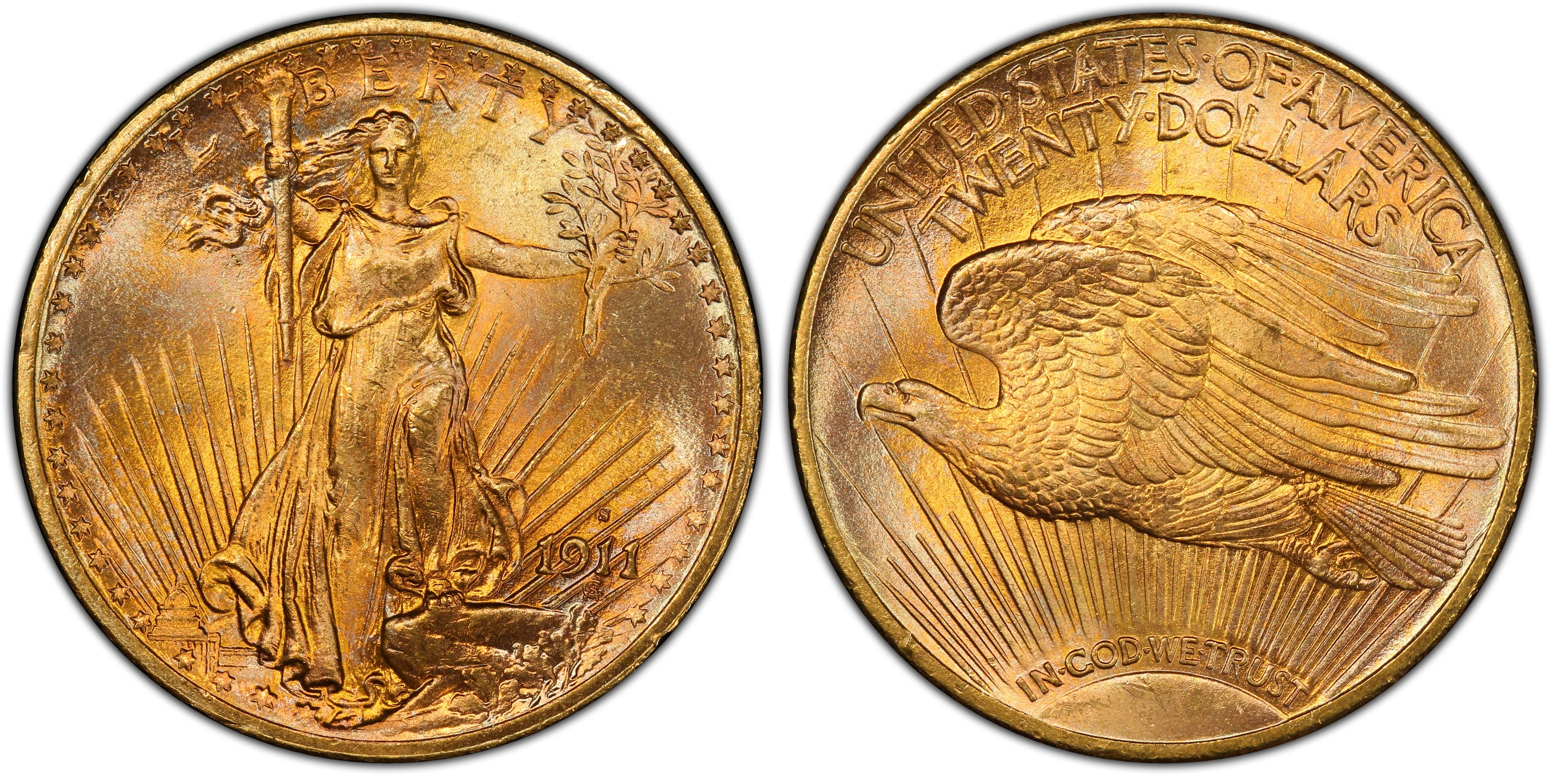
PCGS MS66+
- PCGS #:
- 9159
- Designer:
- Augustus Saint Gaudens
- Edge:
- Lettered
- Diameter:
- 34.00 millimeters
- Weight:
- 33.40 grams
- Mintage:
- 775,750
- Mint:
- San Francisco
- Metal:
- 90% Gold, 10% Copper
- Auction Record:
- $80,500 • MS67 • 01-01-2007 • Heritage Auctions
Major Varieties
- 1911-S $20
Go To Grade
Current Auctions - PCGS Graded
Current Auctions - NGC Graded
For Sale Now at Collectors Corner - PCGS Graded
For Sale Now at Collectors Corner - NGC Graded
Rarity and Survival Estimates Learn More
| Survival Estimate | |
|---|---|
| All Grades | 38,333 |
| 60 or Better | 19,000 |
| 65 or Better | 1,350 |
| Numismatic Rarity | |
|---|---|
| All Grades | R-2.6 |
| 60 or Better | R-2.8 |
| 65 or Better | R-4.8 |
| Relative Rarity By Type All Specs in this Type | |
|---|---|
| All Grades | 33 / 49 TIE |
| 60 or Better | 32 / 49 TIE |
| 65 or Better | 35 / 49 |
| Relative Rarity By Series All Specs in this Series | |
|---|---|
| All Grades | 36 / 54 TIE |
| 60 or Better | 34 / 54 TIE |
| 65 or Better | 38 / 54 |
Condition Census What Is This?
|
#1 MS67 PCGS grade
Kutasi Collection - Heritage 1/2007:3275, $80,500 |
 #2 MS66+ PCGS grade
“Fox” Collection (PCGS Set Registry) |
 #2 MS66+ PCGS grade
“Fox” Collection (PCGS Set Registry) |
 #2 MS66+ PCGS grade
|
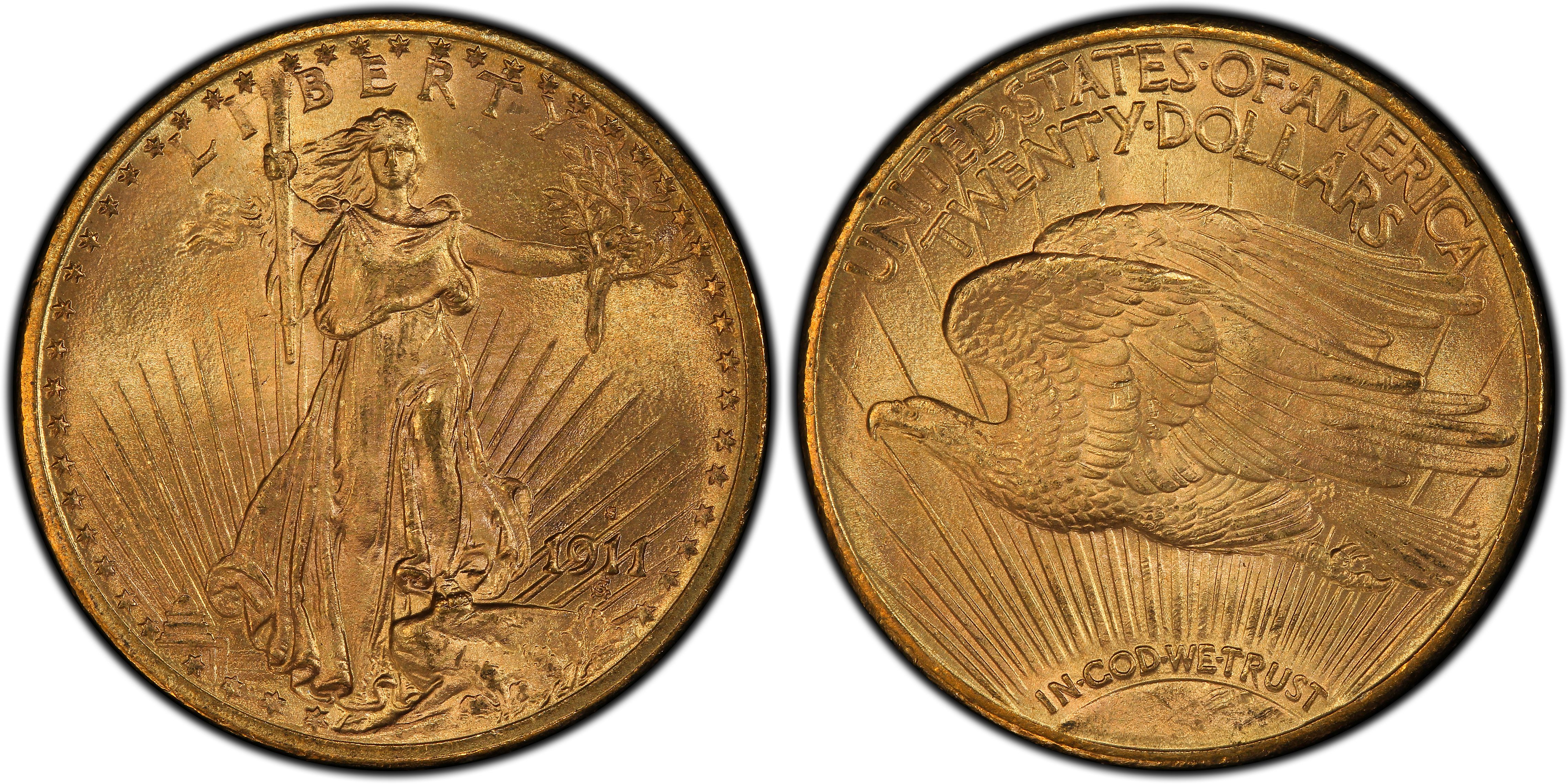 #5 MS66 PCGS grade
Bella Collection (PCGS Set Registry) |
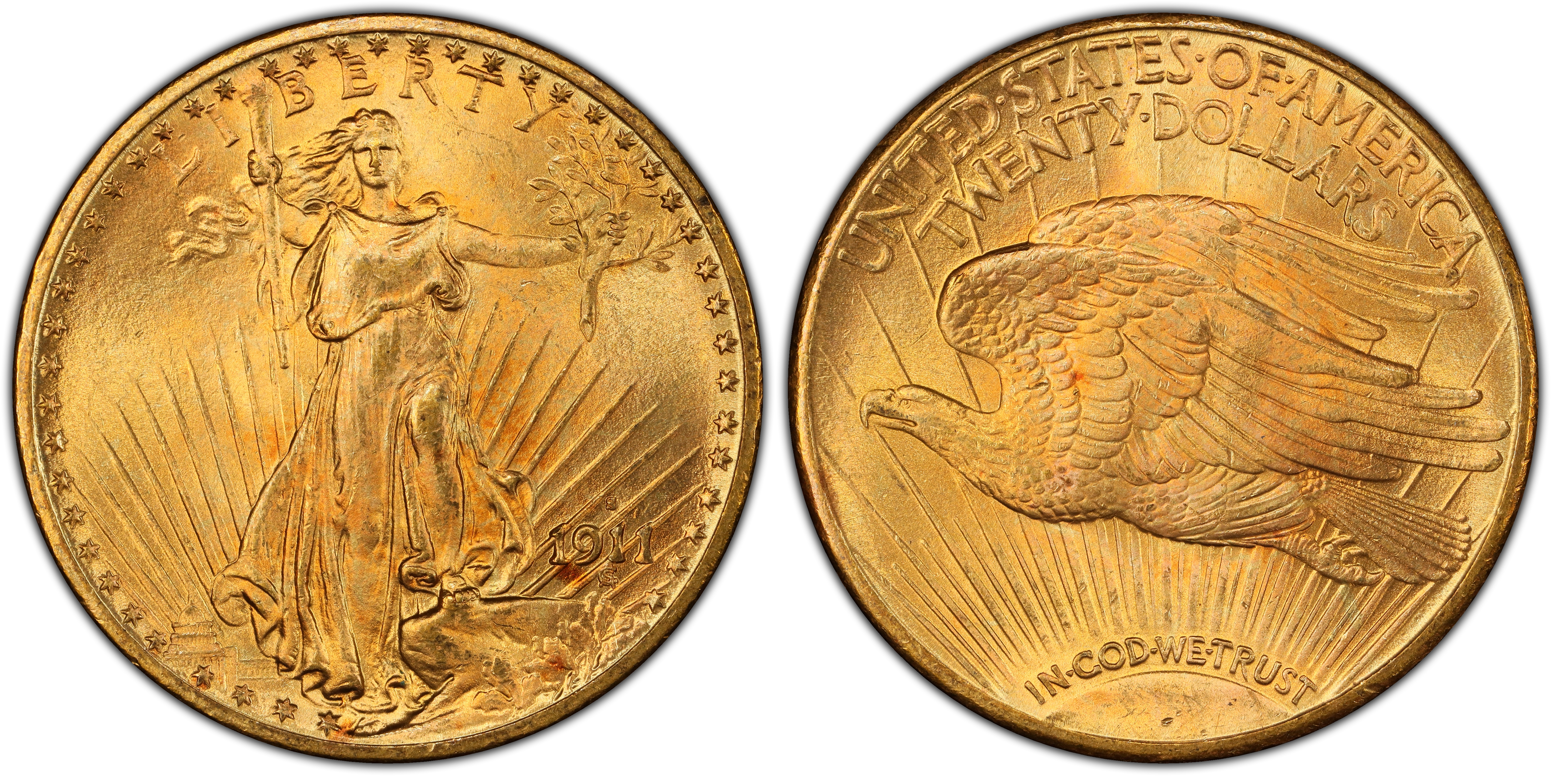 #5 MS66 PCGS grade
Dr. Steven Duckor Collection |
 #5 MS66 PCGS grade
Bob R. Simpson Collection |
| #5 MS66 PCGS grade |
| #5 MS66 PCGS grade |
| #5 MS66 PCGS grade |
David Akers (1975/88):
The 1911-S is very comparable in overall rarity and condition rarity to the 1910-S. Below the gem (MS-65) level it is a decidedly common issue, and literally thousands of Mint State examples exist. In 1983, a hoard of several thousand examples of this issue was uncovered in Central America and many were of relatively high quality. The hoard also contained a number of gems. I have seen just a few pieces better than MS-65, none of which had anything close to the "eye appeal" of the best examples of 1908-S, 1910-S or even 1909-S.
The 1911-S is nearly always very sharply struck and the surfaces are finely granular and frosty. (I don't recall ever seeing a satiny one like the usual 1910-S.) Lustre is generally only average at best and often below average for the series. In fact, one is not likely to find a 1911-S with the lustre of the average 1910-S. Color is almost always very good; a light to medium orange gold color is standard.
The 1911-S is nearly always very sharply struck and the surfaces are finely granular and frosty. (I don't recall ever seeing a satiny one like the usual 1910-S.) Lustre is generally only average at best and often below average for the series. In fact, one is not likely to find a 1911-S with the lustre of the average 1910-S. Color is almost always very good; a light to medium orange gold color is standard.