1922 50C Grant, with Star (Regular Strike)
Series: Silver Commemoratives

PCGS MS67+
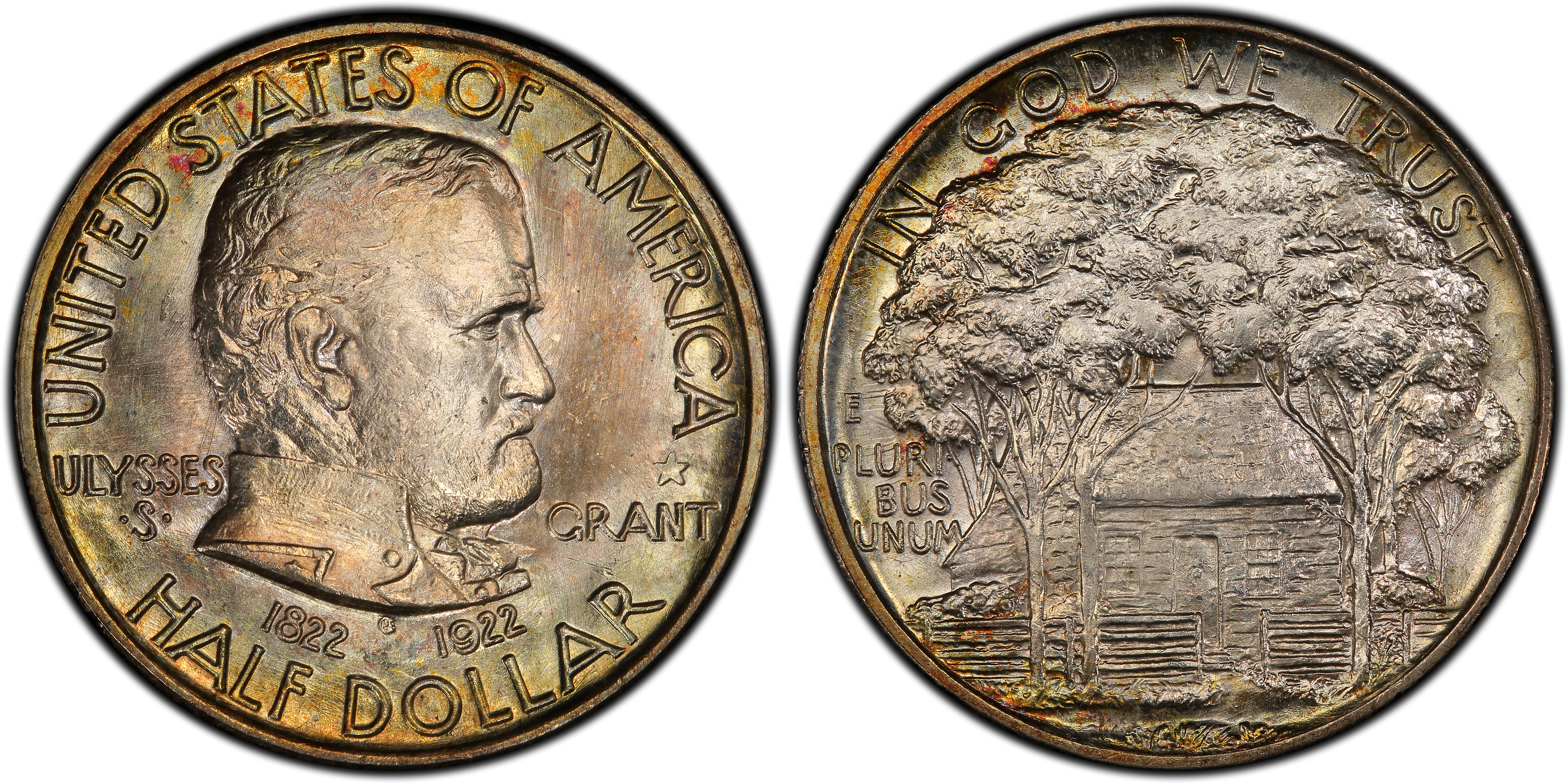
PCGS MS67+

PCGS MS67
- PCGS #:
- 9307
- Designer:
- Laura Gardin Fraser
- Edge:
- Reeded
- Diameter:
- 30.60 millimeters
- Weight:
- 12.50 grams
- Mintage:
- 4,256
- Mint:
- Philadelphia
- Metal:
- 90% Silver, 10% Copper
- Auction Record:
- N/A
Rarity and Survival Estimates Learn More
| Survival Estimate | |
|---|---|
| All Grades | 3,450 |
| 60 or Better | 2,875 |
| 65 or Better | 2,200 |
| Numismatic Rarity | |
|---|---|
| All Grades | R-4.3 |
| 60 or Better | R-4.4 |
| 65 or Better | R-4.5 |
| Relative Rarity By Type All Specs in this Type | |
|---|---|
| All Grades | 17 / 144 TIE |
| 60 or Better | 14 / 144 TIE |
| 65 or Better | 41 / 144 TIE |
| Relative Rarity By Series All Specs in this Series | |
|---|---|
| All Grades | 17 / 144 TIE |
| 60 or Better | 14 / 144 TIE |
| 65 or Better | 41 / 144 TIE |
Condition Census What Is This?
 #1 MS67+ PCGS grade
“J & L 144 Complete Set” Collection (PCGS Set Registry) |
 #2 MS67 PCGS grade
Heller Collection - Bowers & Merena 8/2010:647, $43,125 - Empire Collection - Heritage 1/2015:4445, $37,600 - Stack's/Bowers & Sotheby's 2/2016:251, not sold - Stack's/Bowers 4/2016:13242, $37,600 - Legend Rare Coin Auctions 1/2017:291, $42,300 - Heritage 8/2017:4230, $42,300 |
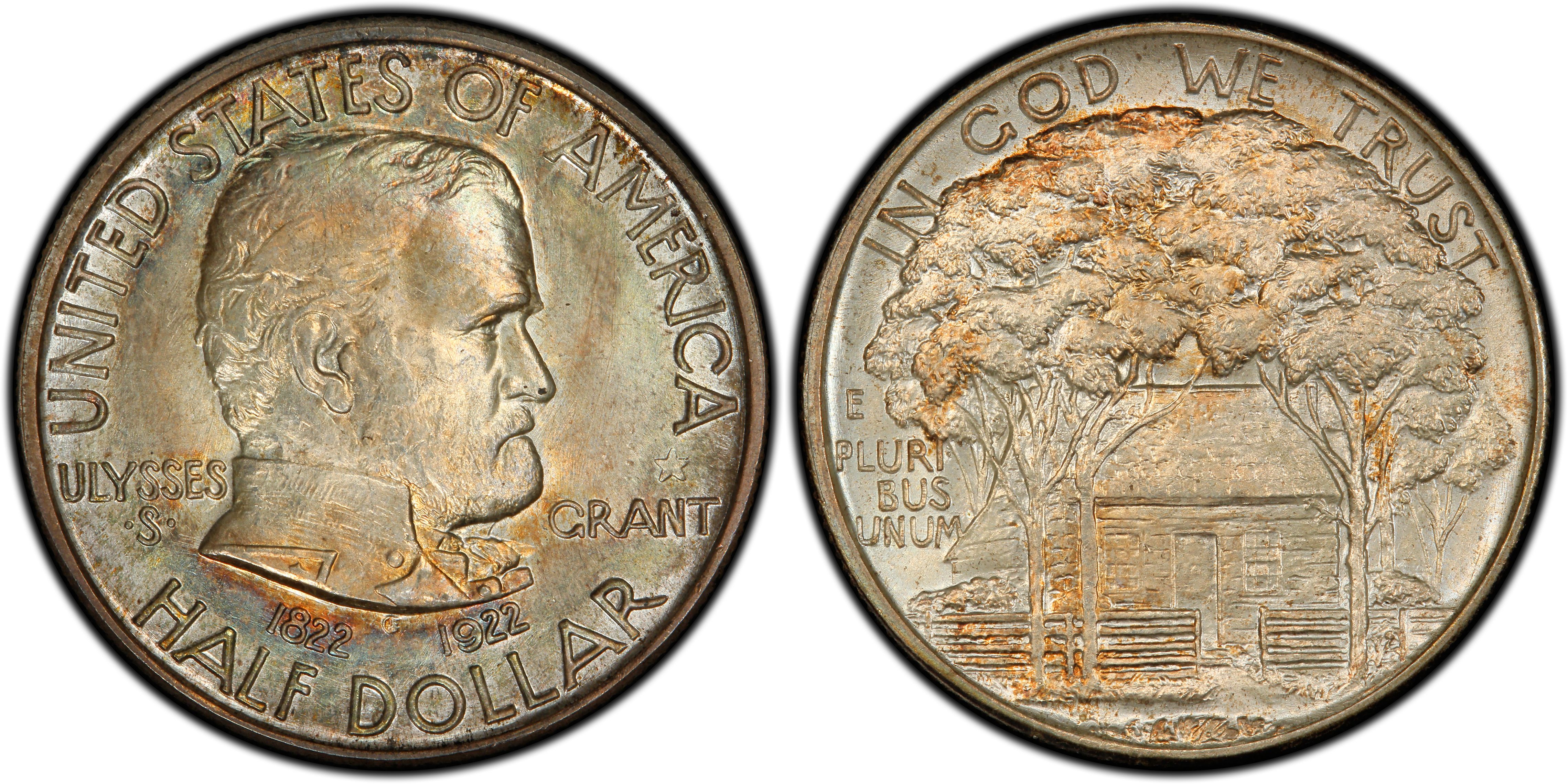 #2 MS67 PCGS grade
Paul Denby Collection |
| #2 MS67 PCGS grade |
| #2 MS67 PCGS grade |
 #6 MS66+ PCGS grade
|
| #6 MS66+ PCGS grade |
| #6 MS66+ PCGS grade |
| #6 MS66+ PCGS grade |
| #6 MS66+ PCGS grade |
The 1922 Grant half dollar is one of the earlier issues in the classic era (1892-1954) silver commemorative series. Like most of the early issues, the Grant is much scarcer in Gem condition than the later (post-1930) issues. Interestingly, the are two varieties of the Grant half dollar. The more common variety (original mintage of 67,405 coins) does not have a star in the obverse field and the rarer variety (original mintage of just 4256 coins) has a large star stamped into the right obverse field. The reason for the star was apparently to create a rarer variety and stimulate sales, though the "real reason" for the addition of the basically meaningless star is somewhat cloudy.
Whatever the reason for its existence, the Grant with star half dollar has long been considered one of the key rarities to the silver commemorative series. It has also been one of the most expensive coins in the series consistently over the past 50 to 60 years. And indeed, the Grant with star is a rare coin in any grade and a very rare coin in Gem condition.
The typical Grant with star has more satiny than frosty luster. Strike on Grant's hair can be problematic. And of course, toning can either add or subtract from eye appeal.