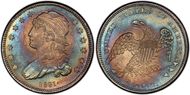
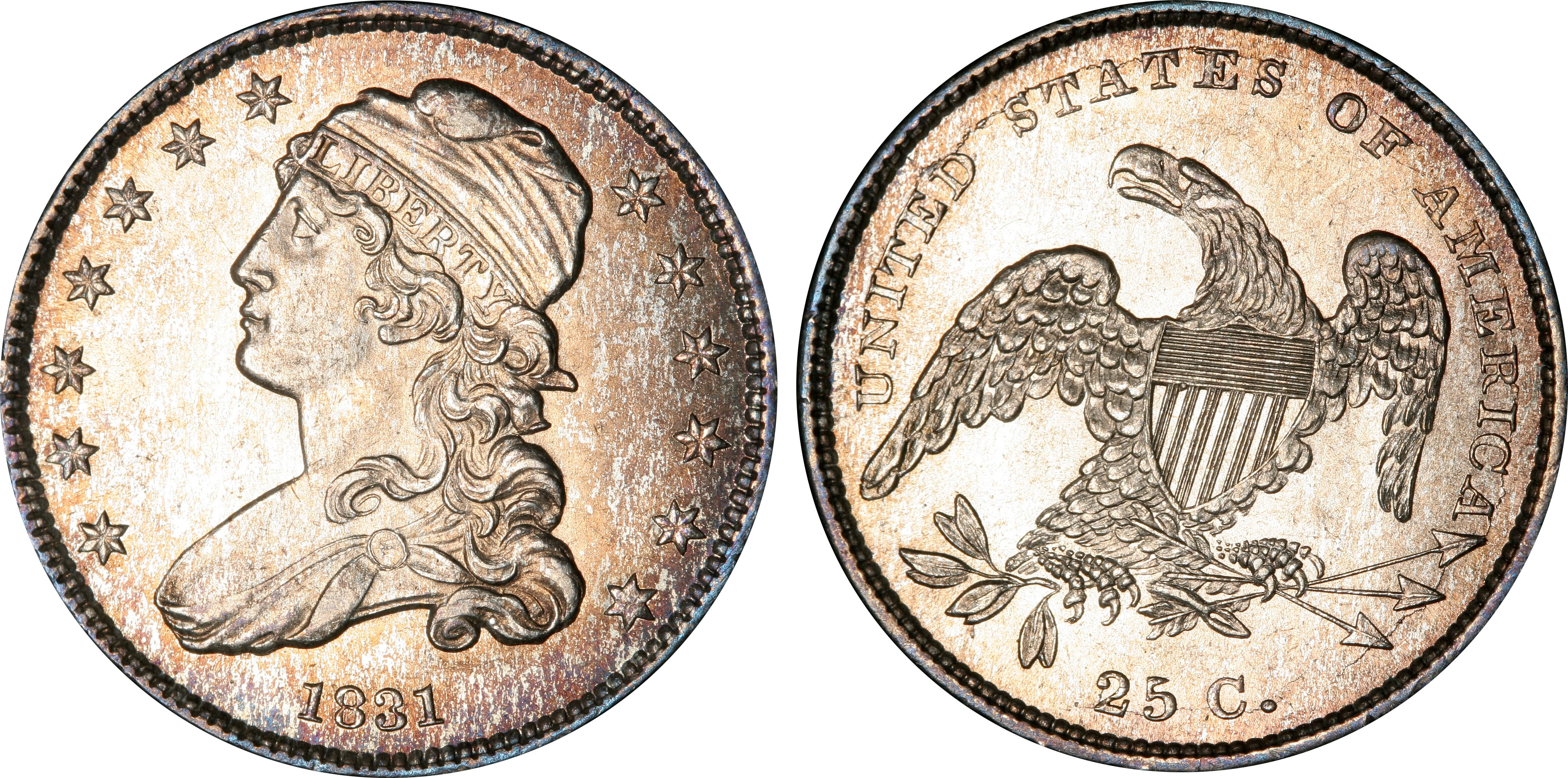
1831 25C Small Letters (Regular Strike)
Series: Capped Bust Quarters 1815-1838

PCGS MS66+
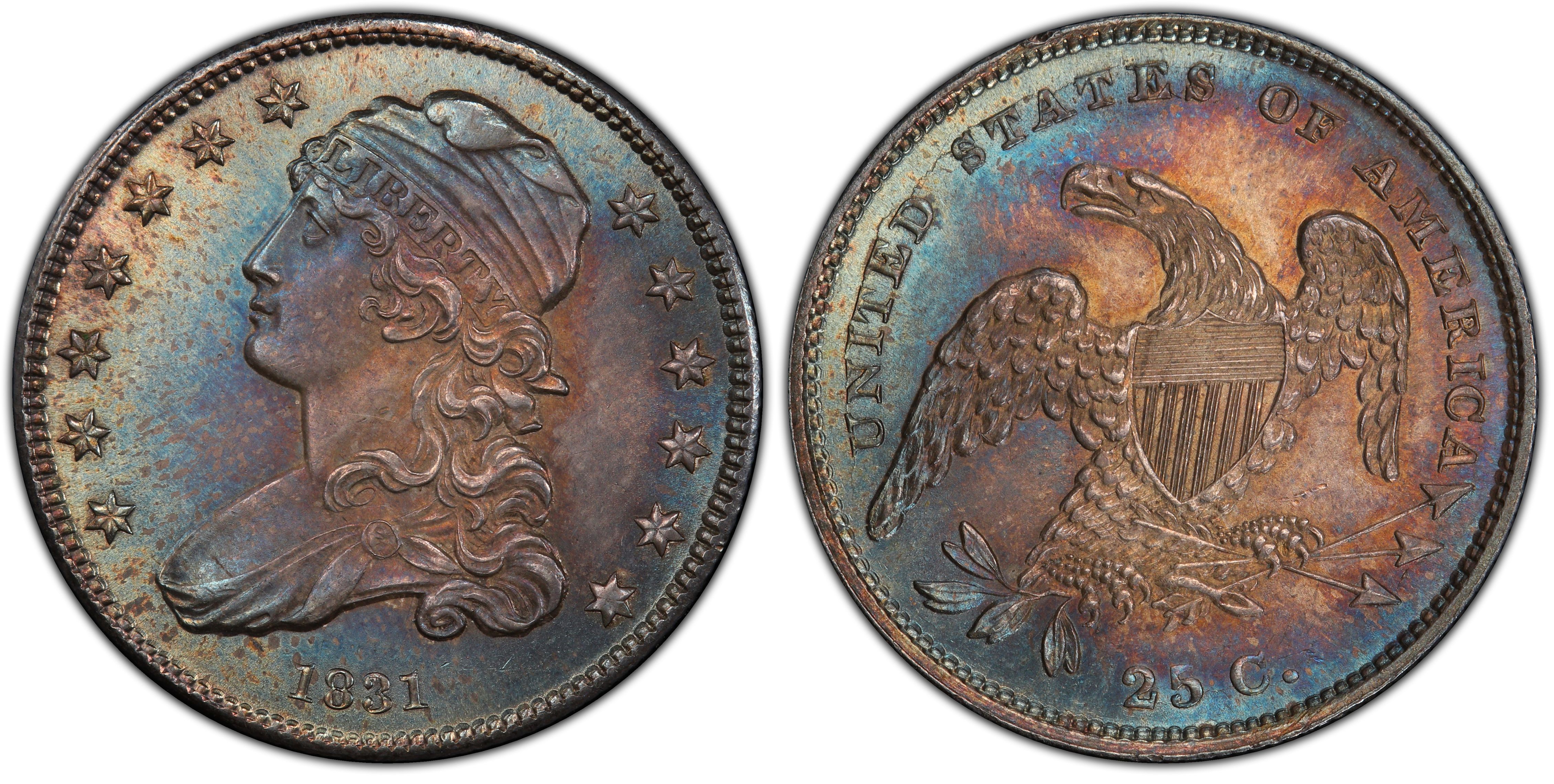
PCGS MS66+
- PCGS #:
- 5348
- Designer:
- John Reich
- Edge:
- Reeded
- Diameter:
- 24.30 millimeters
- Weight:
- 6.74 grams
- Mintage:
- 398,000
- Mint:
- Philadelphia
- Metal:
- 89.2% Silver, 10.8% Copper
- Auction Record:
- $117,500 • MS67+ • 11-15-2013 • Heritage Auctions
Major Varieties
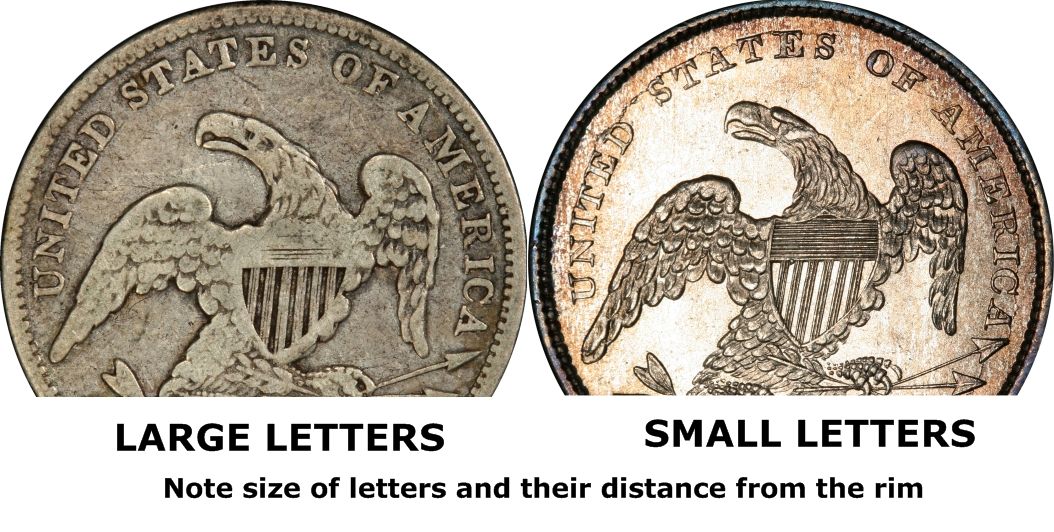
- 1831 25C Small Letters
- 1831 25C Small Letters, PL
- 1831 25C Large Letters
- 1831 25C Large Letters, PL
Rarity and Survival Estimates Learn More
| Survival Estimate | |
|---|---|
| All Grades | 3,625 |
| 60 or Better | 225 |
| 65 or Better | 21 |
| Numismatic Rarity | |
|---|---|
| All Grades | R-4.2 |
| 60 or Better | R-6.7 |
| 65 or Better | R-9.0 |
| Relative Rarity By Type All Specs in this Type | |
|---|---|
| All Grades | 7 / 9 |
| 60 or Better | 9 / 9 |
| 65 or Better | 9 / 9 |
| Relative Rarity By Series All Specs in this Series | |
|---|---|
| All Grades | 21 / 24 |
| 60 or Better | 24 / 24 |
| 65 or Better | 20 / 24 |
Condition Census What Is This?
|
#1 MS66+ PCGS grade
Goldbergs 6/2014:393, $49,350 - Goldbergs 9/2015:999, $49,350 - Heritage 1/2017:5600, $37,600 |
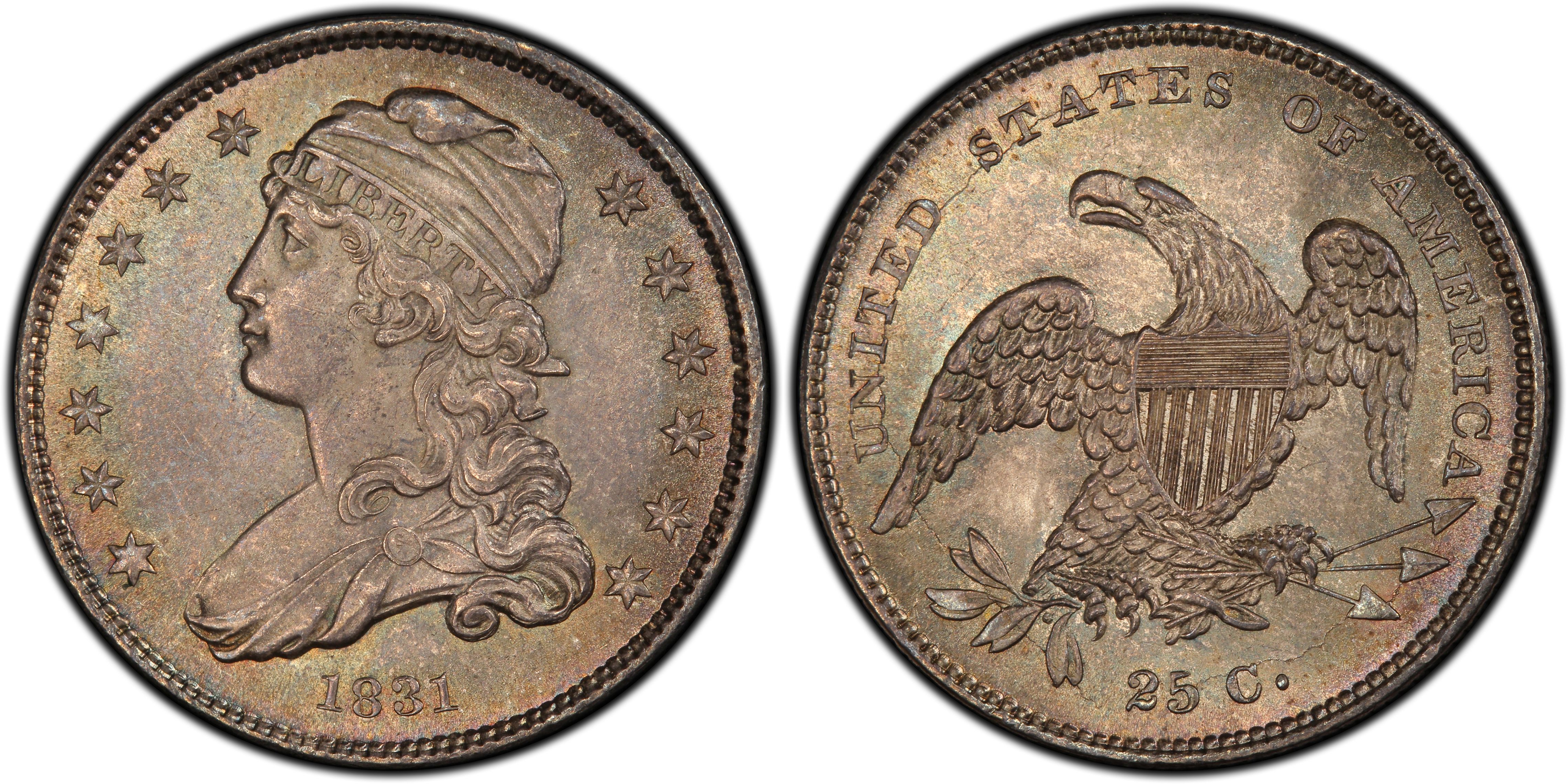 #1 MS66 PCGS grade
RARCOA “Auction ‘90” 8/1990:644 - Heritage 6/2006:1310, $46,000 - Joseph C. Thomas Collection - Heritage 4/2009:2328, $37,375 - Larry Hanks (as agent(?) - D. Brent Pogue Collection - Stack’s/Bowers & Sotheby’s 5/2015:1079, $35,250 |
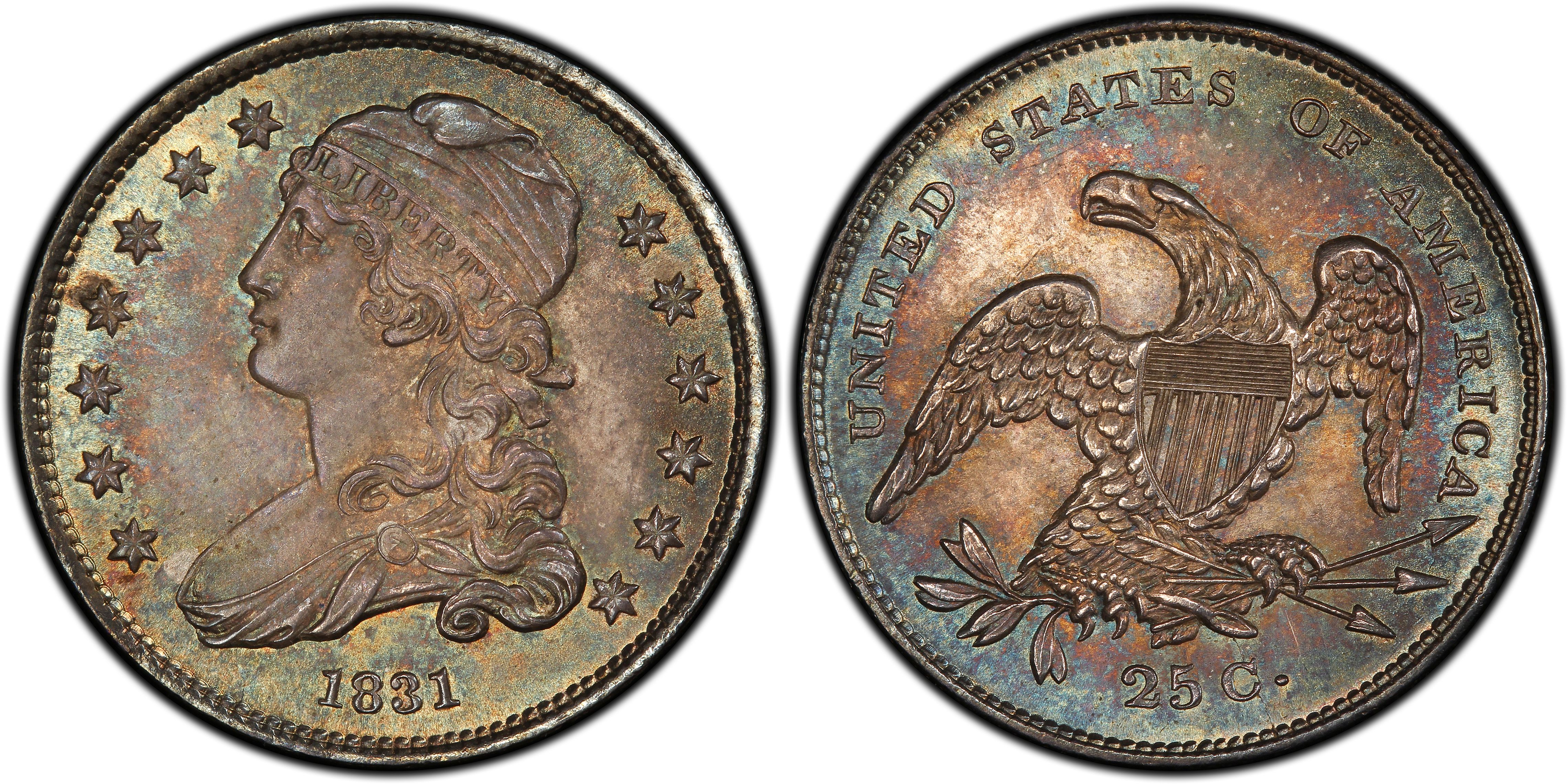 #1 MS66 PCGS grade
American Numismatic Rarities "Classics Sale" 3/2004:533, $36,800 - James W. Lull Collection - Bowers & Merena 1/2005:680, $41,400 - D. Brent Pogue Collection - Stack’s/Bowers & Sotheby’s 5/2015:1081, $55,812.50 |
 #1 MS66 PCGS grade
Bob R. Simpson Collection |
 #1 MS66 PCGS grade
Craig M. Morgan, M.D. Collection - Bowers & Merena 11/1998:110, $17,250 - Eugene H. Gardner Collection - Heritage 6/2014:30352, $47,000 |
|
#1 MS66 estimated grade
"Colonel" E.H.R. Green Collection - Partnership of Eric P. Newman & Burdette G. Johnson (St. Louis Stamp & Coin Co.) - Eric P. Newman, who paid $3 - Eric P. Newman Numismatic Education Society - Heritage 11/2013:33349, $117,500 |
 #8 MS65+ PCGS grade
|
 #9 MS65 PCGS grade
Madison Collection - Heritage 1/2008:2781, $51,750 - D. Brent Pogue Collection - Stack’s/Bowers & Sotheby’s 5/2015:1080, $39,656.25 |
 #9 MS65 PCGS grade
|
 #9 MS65 PCGS grade
|