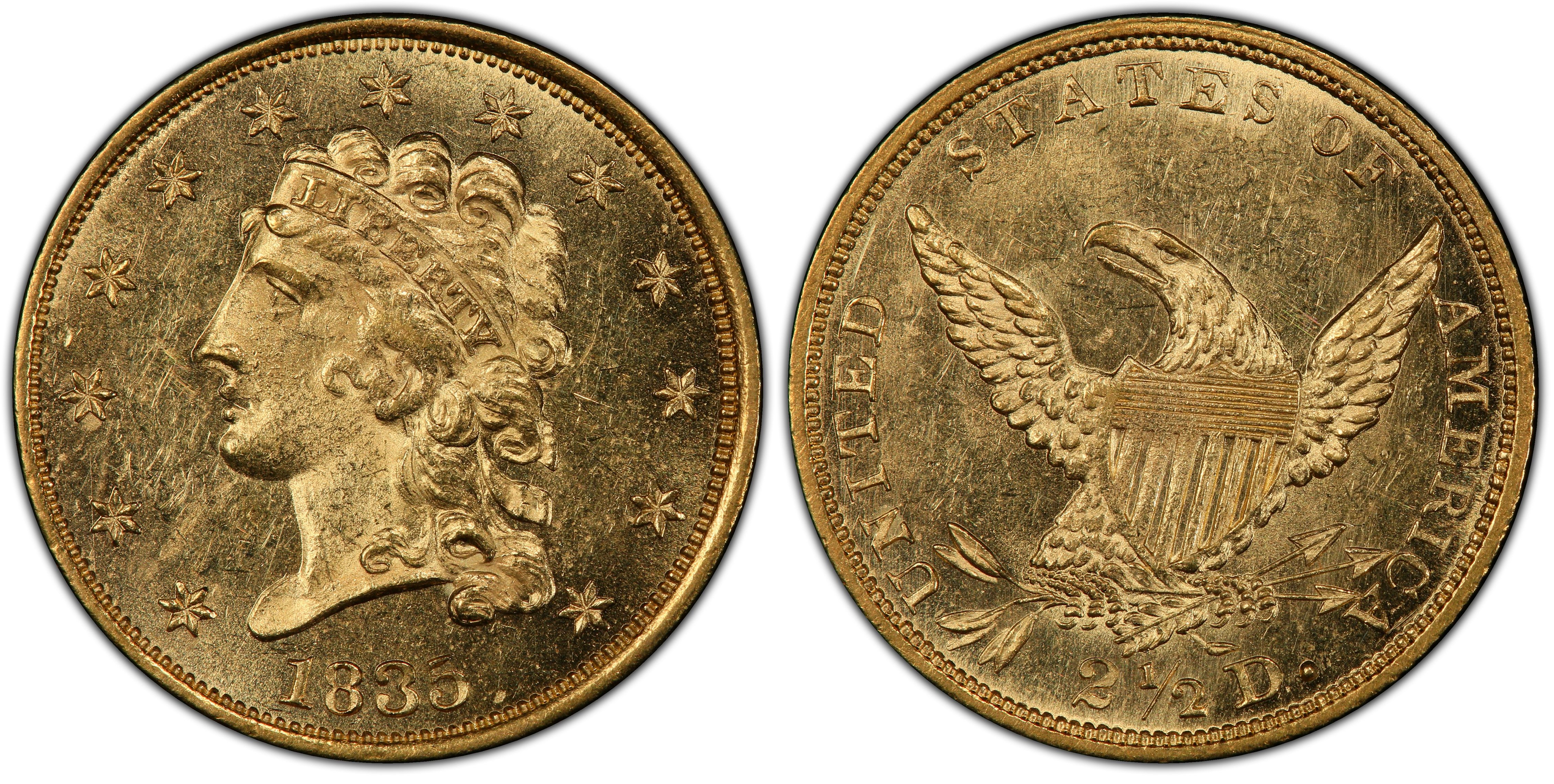
PCGS MS64
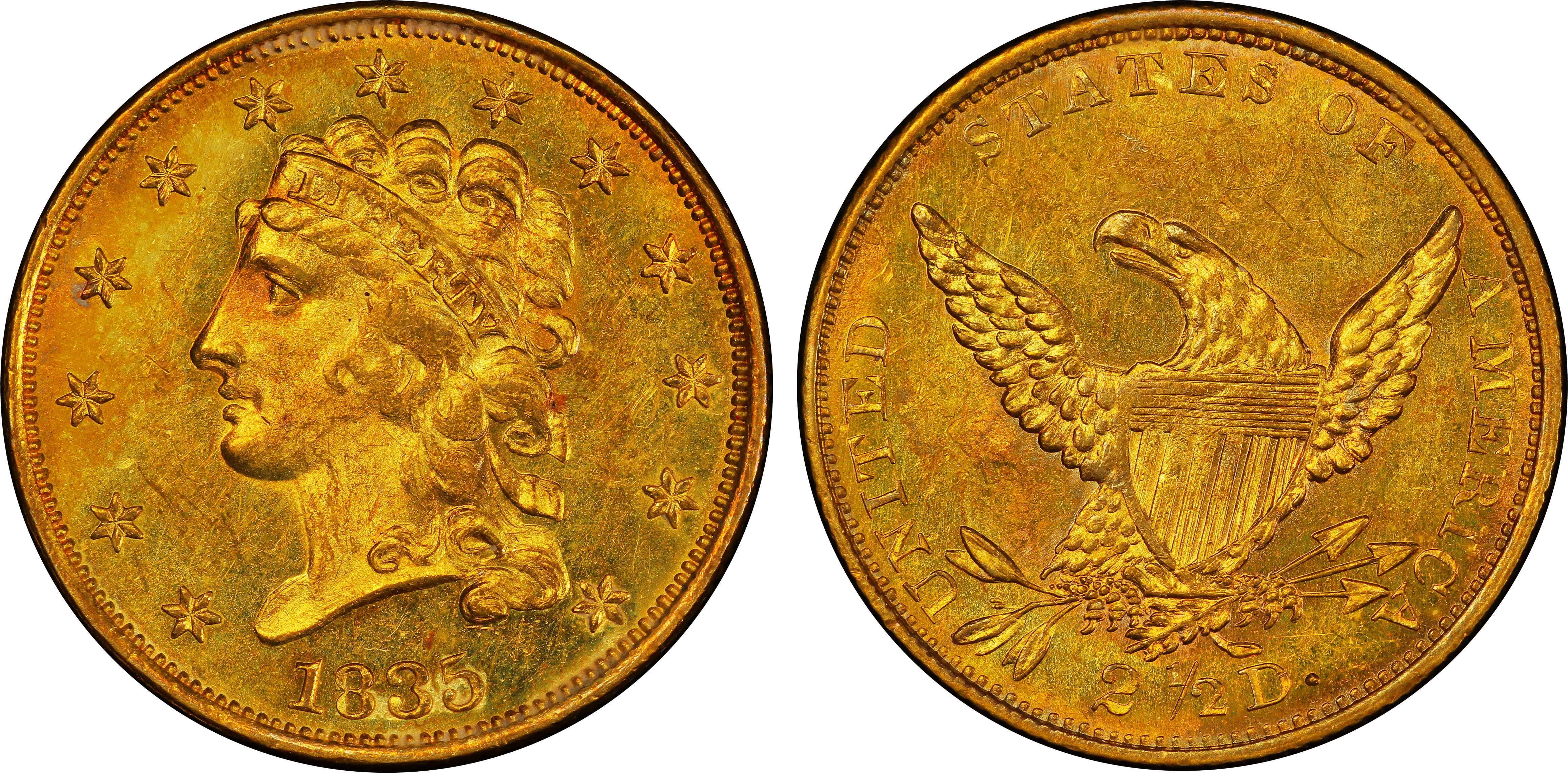
PCGS MS64
- PCGS #:
- 7693
- Designer:
- William Kneass
- Edge:
- Reeded
- Diameter:
- 18.20 millimeters
- Weight:
- 4.18 grams
- Mintage:
- 131,402
- Mint:
- Philadelphia
- Metal:
- 90% Gold, 10% Copper
- Auction Record:
- $52,875 • MS65+ • 09-15-2015 • Stack's Bowers
Major Varieties
- 1835 $2.50
Go To Grade
Current Auctions - PCGS Graded
Current Auctions - NGC Graded
For Sale Now at Collectors Corner - PCGS Graded
For Sale Now at Collectors Corner - NGC Graded
Rarity and Survival Estimates Learn More
| Survival Estimate | |
|---|---|
| All Grades | 475 |
| 60 or Better | 100 |
| 65 or Better | 6 |
| Numismatic Rarity | |
|---|---|
| All Grades | R-6.0 |
| 60 or Better | R-8.0 |
| 65 or Better | R-9.7 |
| Relative Rarity By Type All Specs in this Type | |
|---|---|
| All Grades | 8 / 11 TIE |
| 60 or Better | 9 / 11 |
| 65 or Better | 3 / 11 TIE |
| Relative Rarity By Series All Specs in this Series | |
|---|---|
| All Grades | 8 / 11 TIE |
| 60 or Better | 9 / 11 |
| 65 or Better | 3 / 11 TIE |
Condition Census What Is This?
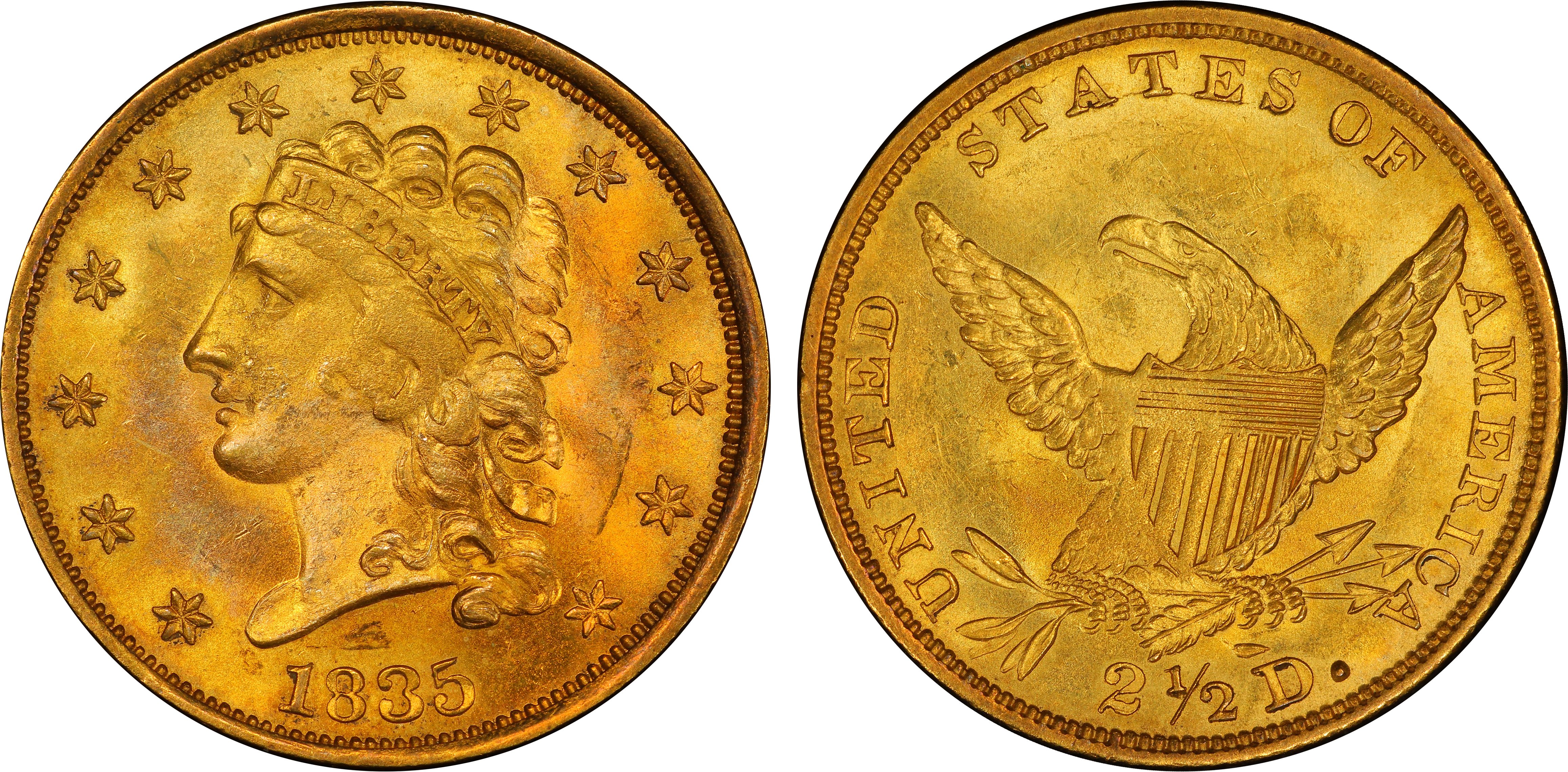 #1 MS65+ PCGS grade
Bowers & Merena 9/2002:449 - American Numismatic Rarities 1/2004:399, $28,750 - D. Brent Pogue Collection - Stack's/Bowers & Sotheby's 9/2015:2060, $52,875 |
| #1 MS65 PCGS grade |
|
#3 MS64 PCGS grade
Stack’s 1/2005:3152, $17,250 |
|
#3 MS64 PCGS grade
Superior 5/2006:996, $18,975 |
| #3 MS64 estimated grade |
| #6 MS63 PCGS grade |
| #6 MS63 PCGS grade |
| #6 MS63 PCGS grade |
| #6 MS63 PCGS grade |
| #6 MS63 PCGS grade |
David Akers (1975/88):
Although the mintage is slightly more than for the 1834, the auction records clearly indicate (and experience confirms it) that the 1835 is significantly more difficult to obtain in high grades. Choice, well struck specimens are particularly hard to obtain, and most of the ones that I have seen are frosty and weakly struck on the hair curls over Liberty's ear.