1875-S 25C (Regular Strike)
Series: Liberty Seated Quarters 1838-1891
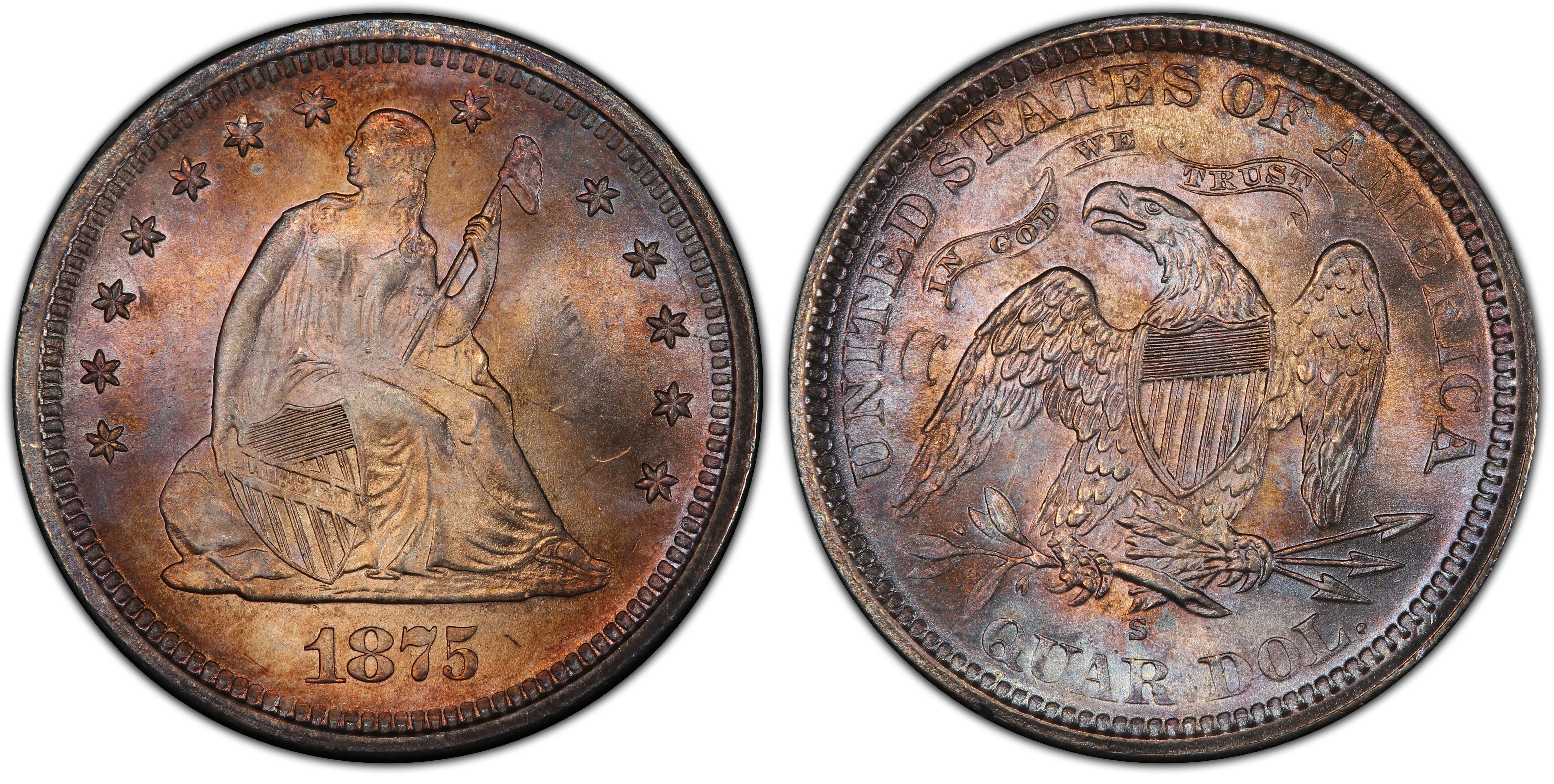
PCGS MS66
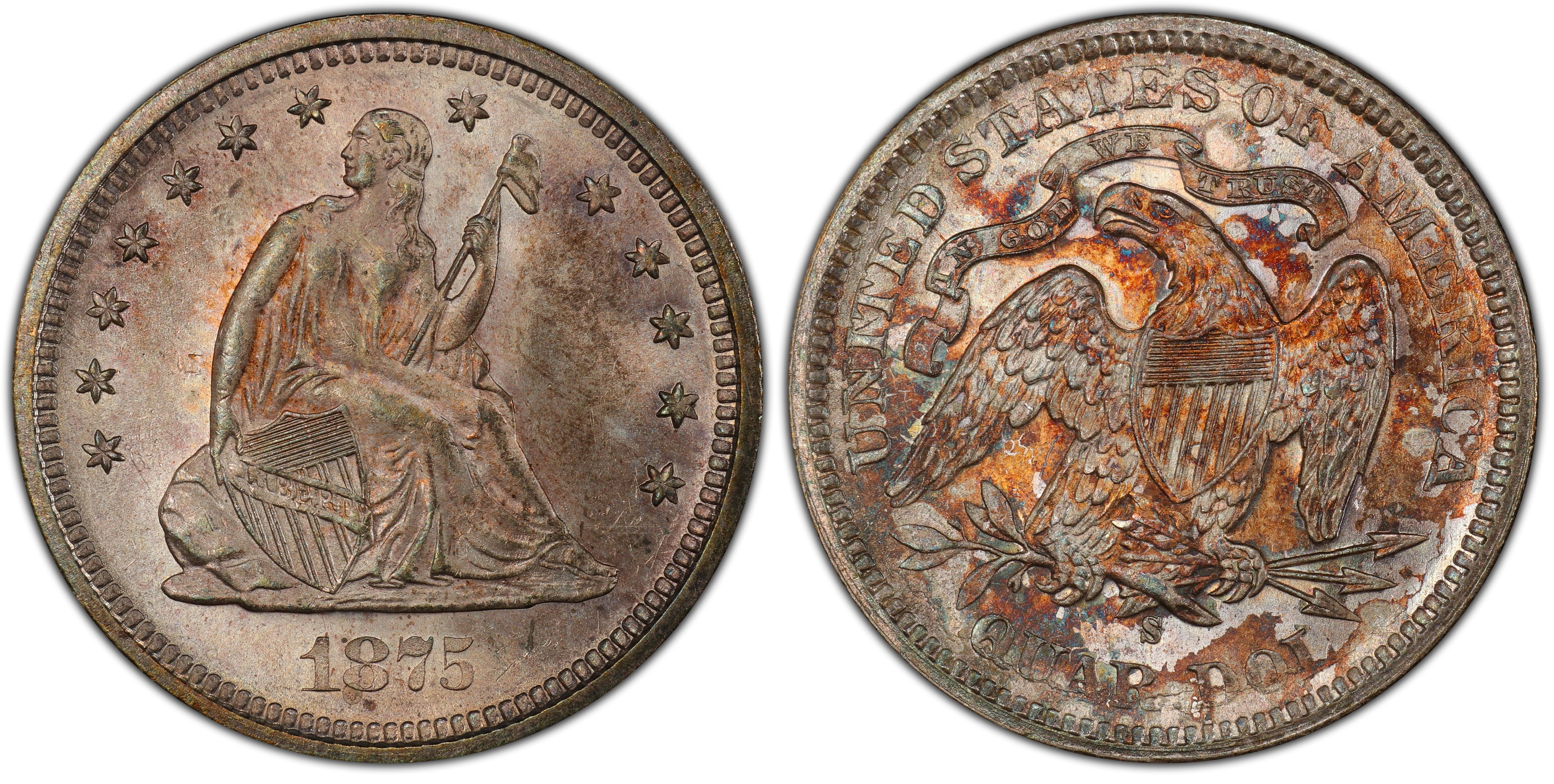
PCGS MS65+

PCGS MS65
- PCGS #:
- 5500
- Designer:
- Robert Ball Hughes/Christian Gobrecht
- Edge:
- Reeded
- Diameter:
- 24.30 millimeters
- Weight:
- 6.30 grams
- Mintage:
- 680,000
- Mint:
- San Francisco
- Metal:
- 90% Silver, 10% Copper
- Auction Record:
- $6,900 • MS65 • 03-14-2006 • American Numismatic Rarities
Major Varieties
- 1875-S 25C
Go To Grade
Current Auctions - PCGS Graded
Current Auctions - NGC Graded
For Sale Now at Collectors Corner - PCGS Graded
For Sale Now at Collectors Corner - NGC Graded
Rarity and Survival Estimates Learn More
| Survival Estimate | |
|---|---|
| All Grades | 700 |
| 60 or Better | 100 |
| 65 or Better | 12 |
| Numismatic Rarity | |
|---|---|
| All Grades | R-5.6 |
| 60 or Better | R-8.0 |
| 65 or Better | R-9.5 |
| Relative Rarity By Type All Specs in this Type | |
|---|---|
| All Grades | 25 / 48 |
| 60 or Better | 22 / 48 |
| 65 or Better | 17 / 48 TIE |
| Relative Rarity By Series All Specs in this Series | |
|---|---|
| All Grades | 70 / 114 TIE |
| 60 or Better | 65 / 114 TIE |
| 65 or Better | 42 / 114 TIE |
Condition Census What Is This?
| #1 MS66 PCGS grade |
| #1 MS66 PCGS grade |
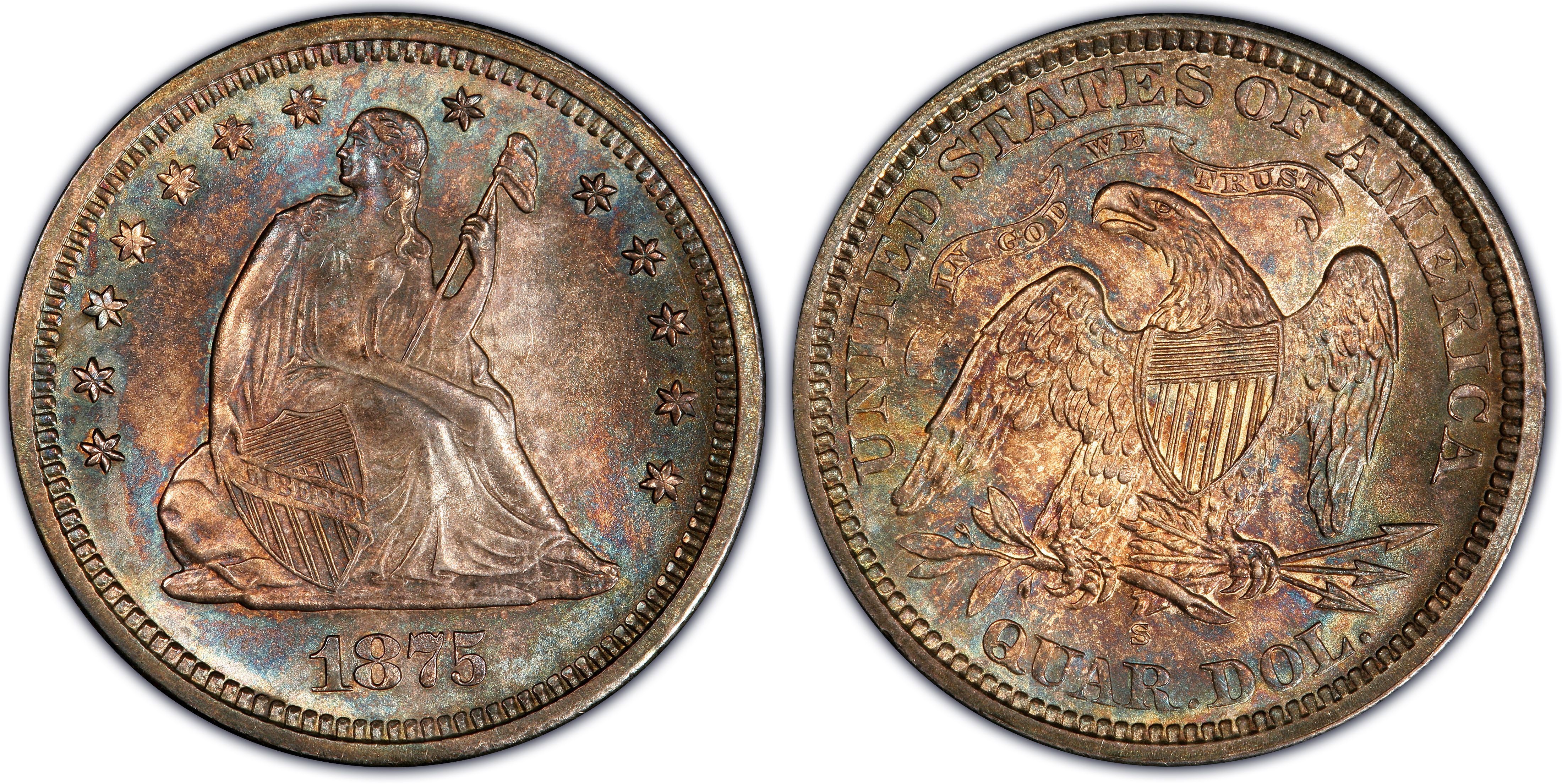 #3 MS65 PCGS grade
|
| #3 MS65 PCGS grade |
| #3 MS65 PCGS grade |
| #3 MS65 PCGS grade |
| #3 MS65 PCGS grade |
| #3 MS65 PCGS grade |
| #3 MS65 PCGS grade |
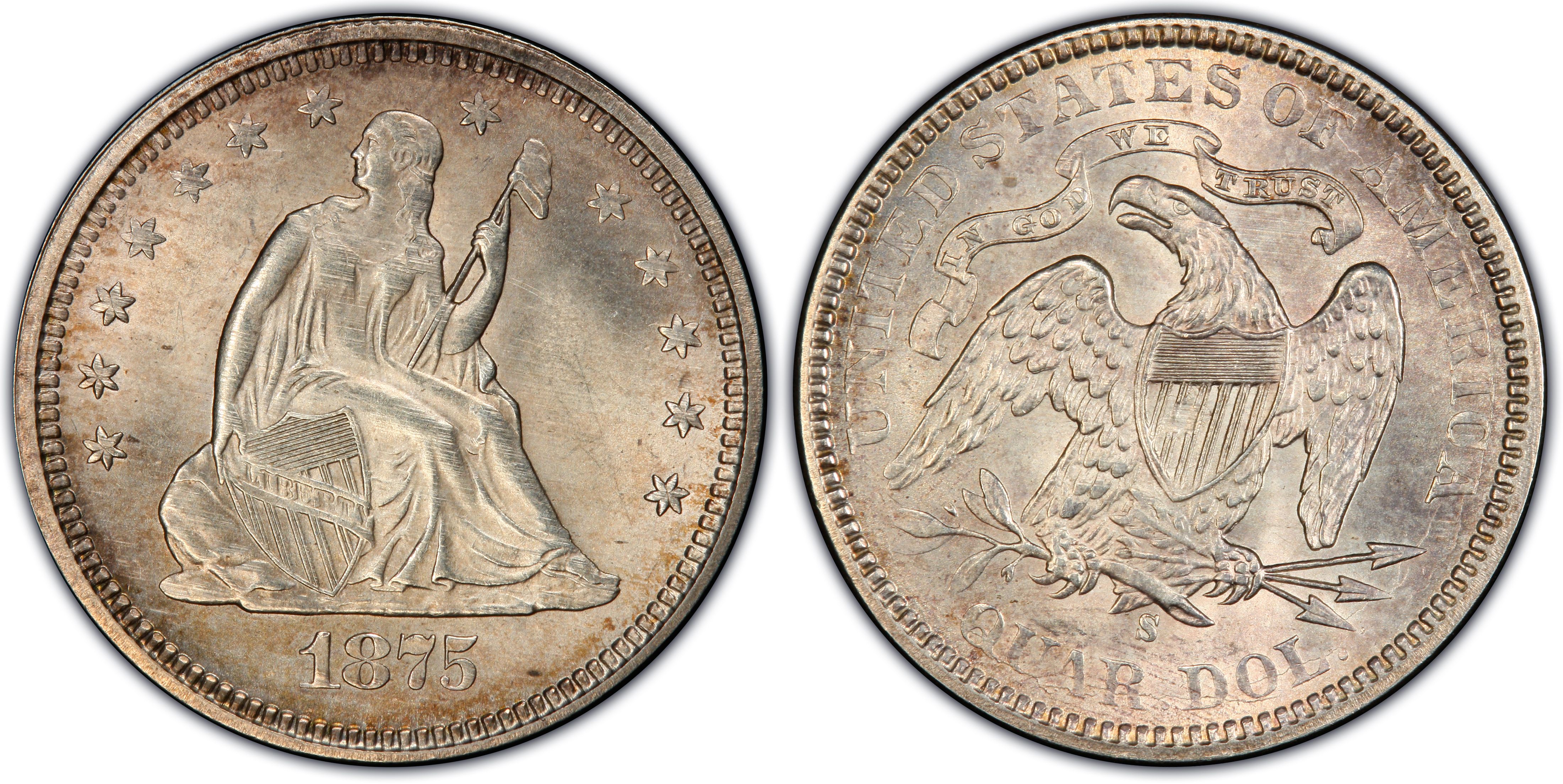 #10 MS64 PCGS grade
|
Ron Guth:
The 1875-S Quarter Dollar is a relatively common date but commands a small premium over the truly high-mintage dates of the era. Mint State versions are neither common nor rare -- they are simply scarce. The highest population appears at the MS64 level, though the number may be inflated due to resubmissions. This date usually shows strong denticles but some of the stars may be softly struck. The luster is usually soft and frosty.